
Transform your form management with Trust Formation
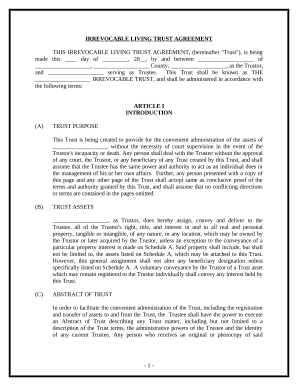
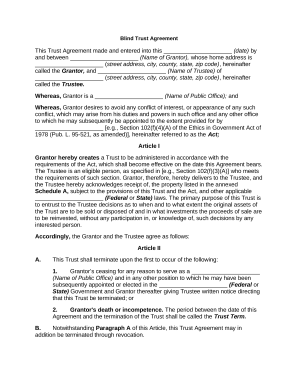
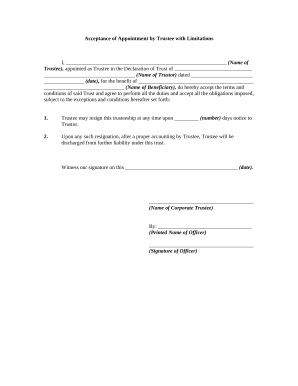
Your workflows always benefit when you are able to find all of the forms and files you will need at your fingertips. DocHub offers a wide array of forms to alleviate your daily pains. Get hold of Trust Formation category and quickly find your form.
Begin working with Trust Formation in several clicks:
- Gain access to Trust Formation and find the document you need.
- Click on Get Form to open it in our online editor.
- Begin editing your file: add fillable fields, highlight sentences, or blackout sensitive data.
- The app saves your modifications automatically, and once you are ready, you are able to download or share your form with other contributors.
Enjoy effortless record management with DocHub. Explore our Trust Formation online library and discover your form right now!
Video Guide on Trust Formation management

Commonly Asked Questions about Trust Formation
What are the five elements necessary to form a trust?
The big keys you need to make a trust are: Intent to make a trust (California Probate Code section 15201); Mental Capacity to make a trust; A trust must have property (PC 15202) There must be a legal purpose to trust (PC15203) A trust must have a beneficiary (PC 15205)
What happens when a trust is formed?
In general, a trust is a relationship in which one person holds title to property, subject to an obligation to keep or use the property for the benefit of another. A trust is formed under state law. You may wish to consult the law of the state in which the organization is organized.
What are the three types of trust?
With that said, revocable trusts, irrevocable trusts, and asset protection trusts are among some of the most common types to consider.
What are the essential elements of trust?
After reviewing extensive literature on the topic, I believe that trust can be defined in terms of the following components: consistency, compassion, communication, and competency.
What are the main elements of a trust?
Key elements of a trust require a formal trust deed that outlines how the trust operates. require the trustee to undertake formal yearly administrative tasks. assets are protected. can be difficult to dissolve or make changes once established.
What is trust and how is it formed?
Subject to the provisions of section 5, a trust is created when the author of the trust indicates with reasonable certainty by any words or acts (a) an intention on his part to create thereby a trust, (b) the purpose of the trust, (c) the beneficiary, and (d) the trust-property, and (unless the trust is declared by
Formation How is trust formed?
Subject to the provisions of section 5, a trust is created when the author of the trust indicates with reasonable certainty by any words or acts (a) an intention on his part to create thereby a trust, (b) the purpose of the trust, (c) the beneficiary, and (d) the trust-property, and (unless the trust is declared by State Acts - India Code: Section Details indiacode.nic.in show-data indiacode.nic.in show-data
What are the components of a legal trust?
Trusts must have the following basic elements: Creator of the trust (trustor/grantor) Manager of the trust (trustee or fiduciary) Person who will receive property from the trust (beneficiary) Property.
What is the 5 5 trust rule?
A 5 by 5 Power in Trust is a clause that lets the beneficiary make withdrawals from the trust on a yearly basis. The beneficiary can cash out $5,000 or 5% of the trusts fair market value each year, whichever is a higher amount.


