Definition and Purpose of the Acceptance Appointment Trustee Form
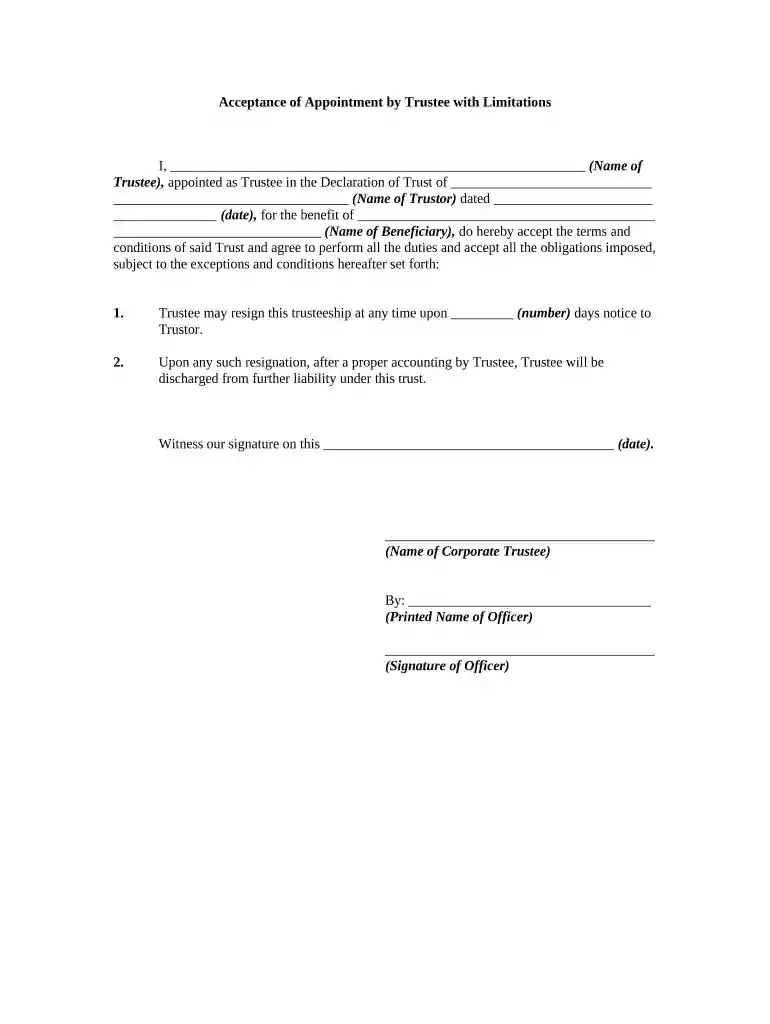
The acceptance appointment trustee form is a crucial legal document utilized when an individual agrees to act as a trustee under a Declaration of Trust. This form serves to formally acknowledge the acceptance of the trustee's responsibilities and obligations, such as managing trust assets in accordance with the terms set forth in the trust document.
Key Components of the Form
- Trustee's Details: Includes full name, address, and contact information of the person accepting the role of trustee.
- Trust Information: References the specific trust by name or identifier, establishing the context in which the trustee operates.
- Acceptance Statements: The form contains explicit statements that indicate the trustee's acceptance of their duties and powers defined by the trust.
- Signatures: Typically, the form requires the signature of the trustee, along with any necessary witnesses or notaries to validate the appointment.
How to Use the Acceptance Appointment Trustee Form
Using the acceptance appointment trustee form involves several steps to ensure it is completed correctly and fulfills its legal purpose.
Steps to Follow
- Obtain the Form: Access the latest version of the form through secure online platforms or legal document services.
- Complete Required Sections: Fill out the necessary personal and trust-specific information. Clarity is critical to avoid confusion regarding the trustee's obligations.
- Review Terms and Conditions: A thorough understanding of the trust's terms is essential, as the trustee must comply with these regulations.
- Sign and Date the Form: Upon completion, the trustee must sign and date the form. If required, have the signatures witnessed or notarized to ensure legality.
- File or Distribute as Needed: Depending on the trust’s stipulations, provide copies of the signed form to relevant parties, such as the trustor or beneficiaries.
How to Obtain the Acceptance Appointment Trustee Form
Acquiring the acceptance appointment trustee form can be done through various channels to ensure it meets legal standards.
Options for Retrieval
- Online Document Platforms: Websites offering legal document templates often have the most current versions available for download. DocHub is a reliable option to consider for document creation.
- Legal Advisors: Consulting with an attorney who specializes in estate planning can help, as they often provide tailored forms based on specific client needs.
- Trust Companies: These institutions frequently have standardized forms for trust management and can provide the necessary documents.
Important Terms Related to the Acceptance Appointment Trustee Form
Understanding key terminology associated with the acceptance appointment trustee form is vital for effective use and compliance.
Common Terms Explained
- Trustee: The individual or entity appointed to manage the trust's assets and execute its terms.
- Trustor: The person who establishes the trust and outlines its terms.
- Beneficiary: An individual or group entitled to receive benefits from the trust.
- Declaration of Trust: The formal document that outlines the structure and purpose of the trust.
Legal Use of the Acceptance Appointment Trustee Form
The acceptance appointment trustee form is legally binding, signifying the trustee’s commitment to uphold the responsibilities defined by the trust document.
Key Legal Considerations
- Compliance with State Laws: The requirements for the form may vary by state, necessitating local legal knowledge.
- Record Keeping: It is advisable to retain copies of the signed acceptance form for future reference and legal protection.
- Impact of Non-Compliance: Failure to properly fill out this form can lead to disputes regarding the trustee’s authority and responsibilities.
Examples of Using the Acceptance Appointment Trustee Form
Practical applications of the acceptance appointment trustee form illustrate its importance in various scenarios.
Scenarios to Consider
- Family Trusts: A sibling is appointed trustee of a family trust after the death of the trustor, requiring formal acceptance to manage the family assets.
- Charitable Trusts: An individual accepts the role of a trustee for a charitable trust, outlining their responsibility in managing funds for philanthropic purposes.
- Business Trusts: A business partner steps in as trustee to manage assets in a business trust, necessitating documented acknowledgment of their authority and responsibilities.
Steps to Complete the Acceptance Appointment Trustee Form
Completing the acceptance appointment trustee form requires attention to both detail and legal requirements to ensure the document is valid and enforceable.
Detailed Completion Guide
Gather Required Information:
- Personal details of the trustee
- Reference materials such as the Declaration of Trust.
Fill Out the Form:
- Clearly write all information, ensuring accuracy to avoid future disputes.
Sign the Document:
- The trustee's signature confirms acceptance, often needing witnesses or notary authentication for certain jurisdictions.
Retain Copies:
- Store a signed copy securely, and distribute copies to all relevant parties involved in the trust.
Follow-Up:
- Verify that all parties have received and acknowledged the form as necessary.
Why Should You Use the Acceptance Appointment Trustee Form?
Understanding the benefits of utilizing the acceptance appointment trustee form can ensure proper trust management and legal compliance.
Advantages of the Form
- Clear Expectations: Formalizes the trustee’s role and responsibilities, minimizing misunderstandings.
- Legal Protection: Provides a documented agreement that can protect against disputes over authority.
- Supports Compliance: Helps ensure that all actions taken by the trustee are within the legal bounds set forth by the trust and applicable law.
These detailed sections provide thorough insight into the acceptance appointment trustee form, exploring its definition, usage, procurement, legal implications, and examples. This structure offers comprehensive coverage and guidance for those involved in the management of trusts.