
Self-Employment Documents

Create a new Self-Employment Document

Cleaning contract
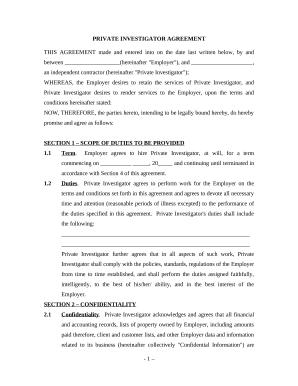
Private investigator form
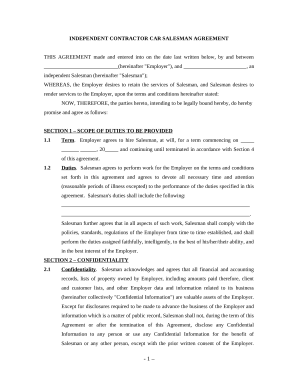
Salesman agreement
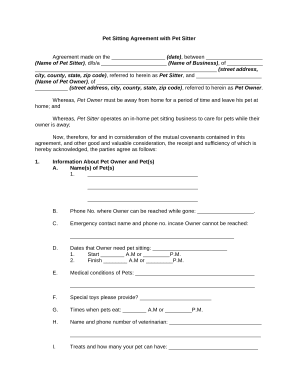
Pet sitting agreement
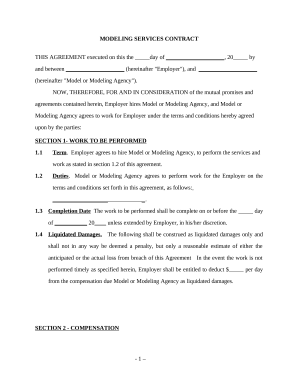
Modeling contract template
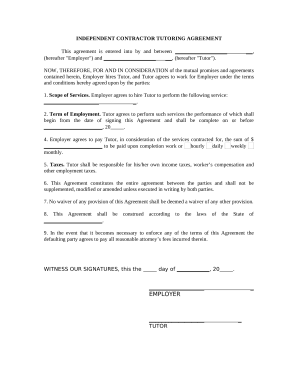
Tutoring agreement form contract

Farm contract form
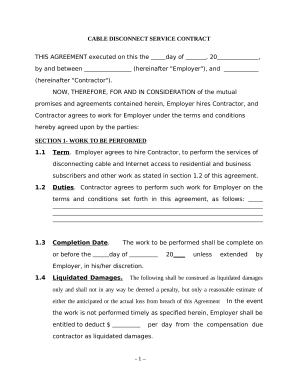
Service contract agreement
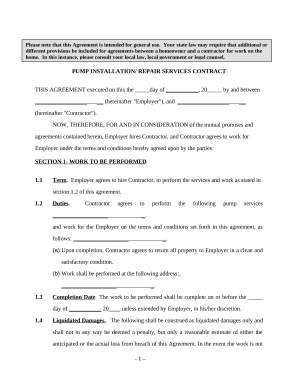
Installation services contract
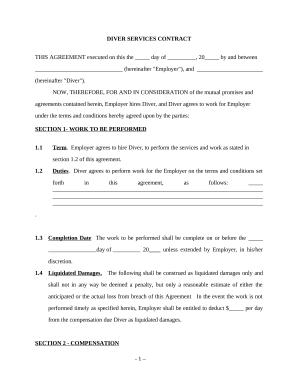
Diver Services Contract - Self-Employed
Supplier contract

Agreement to Install Solar Panels on Roof - Self-Employed - New Jersey
Get and manage Self-Employment Documents online
Accelerate your file management using our Self-Employment Documents category with ready-made form templates that suit your requirements. Get the document template, edit it, fill it, and share it with your contributors without breaking a sweat. Begin working more efficiently together with your documents.
The best way to use our Self-Employment Documents:
- Open our Self-Employment Documents and search for the form you require.
- Preview your form to ensure it’s what you want, and click on Get Form to start working on it.
- Modify, add new text, or highlight important information with DocHub features.
- Fill out your form and preserve the modifications.
- Download or share your form with other recipients.
Examine all of the possibilities for your online file management using our Self-Employment Documents. Get your totally free DocHub profile today!
Video Guide on Self-Employment Documents management

Commonly Asked Questions about Self-Employment Documents
What is considered self-employment documentation?
Self-Employed Pay Stubs To be considered legally valid, a self-employed pay stub must include: Gross pay The total amount you received for your services. Deductions Social security, Medicare, state and local taxes.
Documents What documents do I need for self employed?
Youll need to keep records of: all sales and income. all business expenses. VAT records if youre registered for VAT. PAYE records if you employ people. records about your personal income. your grants, if you claimed through the Self-Employment Income Support Scheme - check how much you were paid if you made a claim. Business records if youre self-employed: What records to keep .gov.uk self-employed-records what-reco .gov.uk self-employed-records what-reco
Definition What is self-employment documentation?
It can be a spreadsheet, a document from an accounting software program, a handwritten ledger book, or anything that records all self-employment income and expenses. Self-employment ledger - Glossary - HealthCare.gov healthcare.gov glossary self-employment healthcare.gov glossary self-employment
Do I file a 1099 for self-employment?
As a self-employed individual, youre required to report all income. If your net earnings are over $400, then youll have to pay self-employment taxes using Schedule SE . Youll need to submit the 1099-NEC when you file your taxes, but remember, estimated tax payments are usually required throughout the year.
What do I need to file as self-employed?
Do I need to file a 1040 or Schedule C if Im self-employed? Yes, you will need to file Form 1040. You will also need to include Schedule 1 and Schedule C with your tax return. These are the required forms when you are self-employed.
How to prove that you are self-employed?
Types of proof of income documents Your tax returns. Tax returns, including Self Assessment tax returns, are official documents filed with HMRC that detail your income, expenses, and tax liabilities. Bank statements. Invoices and contracts. Profit and loss statements. An accountants certification.
Do I need a W-2 if I am self-employed?
There is no W-2 self-employed specific form that you can create. Instead, you must report your self-employment income on Schedule C (Form 1040) to report income or (loss) from any business you operated or profession you practiced as a sole proprietor in which you engaged for profit.
How to show proof of employment if self-employed?
A bank statement is our top recommended method to prove self-employment income because all the money you earn from your business is almost guaranteed to pass through the bank. But, for this to work effectively, you need to have a dedicated business bank account that you only use for business transactions.
What do I need to file taxes as self-employed?
The following forms are necessary to file self-employment taxes: Form 1040, also known as your U.S. individual income tax return. Schedule C, which records your profit or loss from your business. Schedule F if youre a farmer. Schedule SE, which helps you calculate your self-employment tax.
What do you need when self-employed?
Self-employment checklist our top 15 5. Get to know your tax responsibilities 6. Choose a business bank account 7. Look into other services (from accounting to tax, to legal support) 8. Keep super-tight business records 9. Look into self-employed insurance11 more rows