Supplier contract 2025

Get Form
framing contract template Preview on Page 1

Here's how it works

01. Edit your framing contract template online
Type text, add images, blackout confidential details, add comments, highlights and more.
02. Sign it in a few clicks
Draw your signature, type it, upload its image, or use your mobile device as a signature pad.
03. Share your form with others
Send it via email, link, or fax. You can also download it, export it or print it out.

How to use or fill out supplier contract with our platform

Form edit decoration
9.5
Ease of Setup
DocHub User Ratings on G2
9.0
Ease of Use
DocHub User Ratings on G2
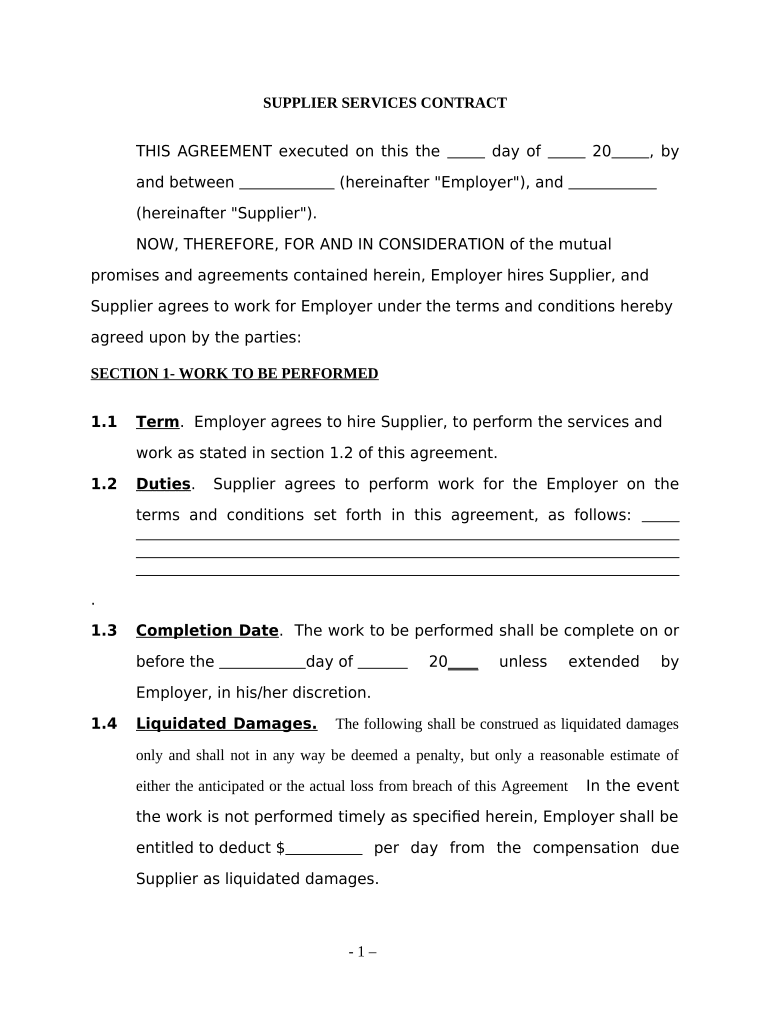
  1. Click ‘Get Form’ to open the supplier contract in the editor.
  2. Begin by filling in the date and names of both parties at the top of the document. This establishes who is entering into the agreement.
  3. In Section 1, outline the work to be performed. Specify the duties and completion date clearly to avoid any misunderstandings.
  4. Move to Section 2 and enter the compensation details. Indicate how much will be paid and the payment schedule (e.g., daily, weekly, monthly).
  5. Review Section 3 regarding independent contractor status. Ensure that both parties understand this relationship clearly.
  6. In Section 4, provide any necessary representations and warranties from the Supplier. This ensures accountability for their work.
  7. Finally, complete Section 5 with any miscellaneous provisions and ensure all signatures are added at the end of the document.

Start using our platform today for free to streamline your supplier contract process!

be ready to get more

Complete this form in 5 minutes or less

Get form

Got questions?

We have answers to the most popular questions from our customers. If you can't find an answer to your question, please contact us.
Contact us
How to draft a contract in 13 simple steps Start with a contract template. Understand the purpose and requirements. Identify all parties involved. Outline key terms and conditions. Define deliverables and milestones. Establish payment terms. Add termination conditions. Incorporate dispute resolution.
A supplier contract (supply agreement) is a legally binding document that sets out how goods or services will be provided to your business, protecting both sides. Your supply agreement should cover product/service details, price, deadlines, quality, risk allocation, warranties, and dispute procedures.
A supplier contract is a formal agreement between a company and an external party that provides goods or services. It defines the scope of supply, delivery timelines, pricing, and the responsibilities of each party, including how issues such as delays or defects will be handled.
The following points should be included in a supplier agreement: Type of materials and products sourced. Quantity, and quality of the goods/service. Price and payment terms. Confidentiality clauses. Delivery time frame. Procurement terms and conditions.
Types of supplier contracts It typically includes terms related to pricing, quantity, delivery schedules, quality standards, payment terms, and dispute resolution. An MSA establishes the overall terms and conditions that will govern future transactions between the parties.

People also ask

A supplier agreement should include essential terms such as payment terms, delivery obligations, liability clauses and warranties. Management contracts and services schedules provide structure to ensure duties and expectations are met for successful business relationships.
A well-drafted Supply Agreement clarifies the roles and responsibilities of both parties, docHubly reducing the chance of disputes. Furthermore, it limits your liability in the event of unforeseen issues, secures consistent revenue streams, and provides other important protections tailored to your business needs.
Prepare a contract Drafting a contract. Provide details of the parties. Describe services or results. Set out payment details. Assign intellectual property rights. Explain how to treat confidential information. Identify who is liable indemnity. Provide insurance obligations.

Related links