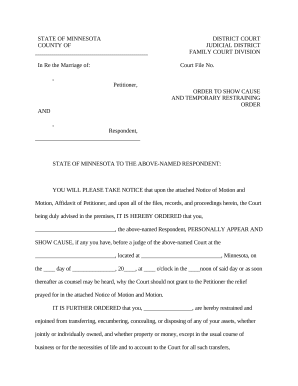
Get and manage Restraining Order Documents online

Boost your file managing with our Restraining Order Documents online library with ready-made document templates that suit your needs. Access your form, modify it, fill it, and share it with your contributors without breaking a sweat. Begin working more effectively with the documents.

The best way to manage our Restraining Order Documents:

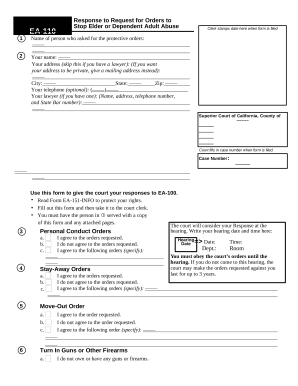
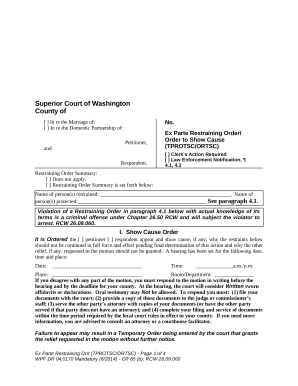
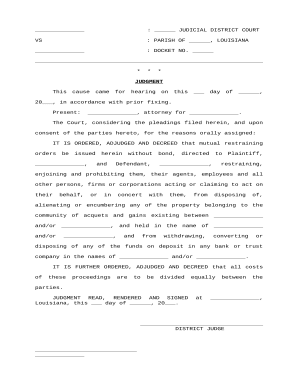
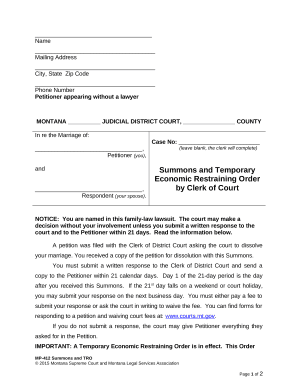
  1. Open our Restraining Order Documents and look for the form you want.
  2. Preview your document to ensure it’s what you want, and click on Get Form to begin working on it.
  3. Edit, add new text, or point out important information with DocHub features.
  4. Complete your form and save the adjustments.
  5. Download or share your form template with other recipients.

Explore all of the possibilities for your online file administration with the Restraining Order Documents. Get your totally free DocHub profile today!


Video Guide on Restraining Order Documents management

video background

Commonly Asked Questions about Restraining Order Documents

If it is a Refrain From Order of Protection, you can live together and have contact, but you are prohibited from harassing, intimidating, threatening or otherwise interfering with the person protected by the Order.
In order to fight an order of protection, you must go to court with evidence that the order is not warranted.
To get an order of protection in family court, the victim must allege that the abuser committed one or more family offenses against him or her in a family offense petition, in situations where the victim and the abuser are/were related by blood, marriage, in an intimate relationship, or have a child in common: (1)
An Order of Protection issued in Family Court will not show up on a criminal background check, since cases in Family Court are not criminal cases. However, an Order of Protection issued in connection with a criminal case is a public record, and can be discovered in a criminal background check.
Essentially, violating a New York restraining order can result in contempt of the court. When an individual intentionally disobeys a court order, they will be charged with criminal contempt in the second degree. This is a Class A misdemeanor, which is punishable by a maximum of one year in jail and a fine of $1,000.
Penal Code 273.6 says: Any intentional and knowing violation of a protective order is a misdemeanor crime punishable by up to one year in county jail, and fine of up to $1,000, or both jail and a fine.
In New York, an order of protection is a legal term that refers to a protective order, commonly referred to as a restraining order, issued by the court as a means to help keep a person safe from further abuse or other harm or harassment.
Violations Of A New York Order Of Protection For violating a New York order of protection the court could hold you in contempt. Criminal contempt in the second degree is a class A misdemeanor that can be punished by a maximum one year in jail and/or a find of $1,000.