Manage Personal Representative Legal Forms easily online

Document managing can overpower you when you can’t locate all the forms you require. Fortunately, with DocHub's substantial form collection, you can get all you need and easily deal with it without switching between apps. Get our Personal Representative Legal Forms and start working with them.

How to use our Personal Representative Legal Forms using these easy steps:

  1. Browse Personal Representative Legal Forms and select the form you require.
  2. Preview the template and then click Get Form.
  3. Wait for it to open in the online editor.
  4. Adjust your document: include new information and pictures, and fillable fields or blackout certain parts if needed.
  5. Complete your document, save changes, and prepare it for delivering.
  6. When ready, download your form or share it with other contributors.

Try out DocHub and browse our Personal Representative Legal Forms category with ease. Get your free profile right now!


Video Guide on Personal Representative Legal Forms management

video background

Commonly Asked Questions about Personal Representative Legal Forms

Fiduciary Relationship: File Form 56 with the appropriate Internal Revenue Service Center when you establish or terminate a fiduciary relationship, where the person for whom you act is required to file tax returns. IRS Tax Form 56: Notice Concerning Fiduciary Relationship - Fincent fincent.com irs-tax-forms form-56 fincent.com irs-tax-forms form-56
The primary difference between the Personal Representative (PR) and the person appointed under a power of attorney the attorney in fact (the POA) is that the PR is administering the estate after the person has passed away and the POA is caring for the person while they are incapacitated, but still living. What is the difference between the Personal Representative and Shawn J. Roberts difference-personal-represent Shawn J. Roberts difference-personal-represent
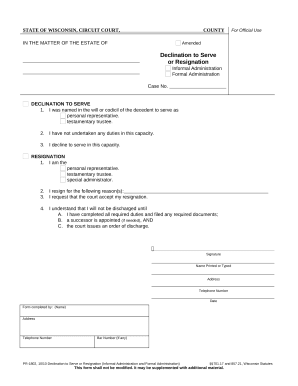
This is all part of the probate process. To begin your duties, you need to file an Acceptance of Appointment form. Then the court will send you the Letters of Authority for Personal Representative. This document defines your role and notifies you of any restrictions that court has placed on you. How to Get Started as a Personal Representative Stimpson Law Category: Probate Stimpson Law Category: Probate
If you create a trust, you name a person to be the trustee of the trust. The trustee is duty bound to follow the instructions in the trust instrument and the law governing trusts. The person whom you nominate to settle you estate is your personal representative, sometimes called your executor. Selecting Your Executor And Trustee - Semmes Semmes articles selecting-executor-trustee Semmes articles selecting-executor-trustee
In reality, there isnt a docHub difference between the two, and the terms can be used interchangeably in many cases. The primary difference lies in which state has jurisdiction over the probate. Some states use the term Personal Representative, and some states use the term Executor. Personal Representative Vs. Executor: Whos Who in Estate Vollrath Law personal-representative-v Vollrath Law personal-representative-v
This is all part of the probate process. To begin your duties, you need to file an Acceptance of Appointment form. Then the court will send you the Letters of Authority for Personal Representative. This document defines your role and notifies you of any restrictions that court has placed on you. How to Get Started as a Personal Representative | Stimpson Law stimpsonlaw.com how-to-get-started-as-a- stimpsonlaw.com how-to-get-started-as-a-
Generally, the person who oversees your estate is known as your personal representative. California law also refers to a personal representative as an executor or administrator. All three terms describe the same function, although there is a legal distinction between their method of appointment.
Personal representatives are fiduciaries and have the duty to act in good faith, with honesty, loyalty, and candor, and in the best interests of the estates beneficiaries. It is legal and often common for a personal representative to be a beneficiary of the estate for which they are the executor.