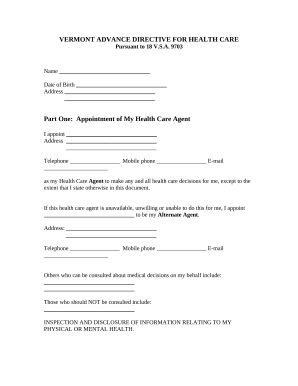
Handle Advance Healthcare Directives easily online

Document administration can stress you when you can’t locate all the forms you need. Luckily, with DocHub's considerable form categories, you can find everything you need and quickly manage it without changing between software. Get our Advance Healthcare Directives and start utilizing them.

How to use our Advance Healthcare Directives using these simple steps:

  1. Browse Advance Healthcare Directives and choose the form you need.
  2. Review the template and click on Get Form.
  3. Wait for it to open in our online editor.
  4. Adjust your document: include new information and pictures, and fillable fields or blackout certain parts if required.
  5. Prepare your document, save adjustments, and prepare it for sending.
  6. When you are ready, download your form or share it with your contributors.

Try out DocHub and browse our Advance Healthcare Directives category with ease. Get your free profile right now!


Video Guide on Advance Healthcare Directives management

video background

Commonly Asked Questions about Advance Healthcare Directives

Final answer: Conditions of Participation is not an advance directive within the Patient Self-Determination Act. Advance directives include Living Will, Durable Power of Attorney for Health Care, and Do Not Resuscitate (DNR) Order. Which of the following is not an example of an advance directive Brainly question Brainly question
Living will. A living will is a written, legal document that spells out medical treatments you would and would not want to be used to keep you alive, as well as your preferences for other medical decisions, such as pain management or organ donation.
The short answer is that a living will is a type of advance directive, while advance directive is a broad term used to describe any legal document that addresses your future medical care. Living wills are advance directives, but not all advance directives are living wills. Advance directive vs. living will: Whats the difference? - FreeWill FreeWill learn advance-directive-vs-l FreeWill learn advance-directive-vs-l
What are advance directives? Advance directives are legal documents that provide instructions for medical care and only go into effect if you cannot communicate your own wishes. The two most common advance directives for health care are the living will and the durable power of attorney for health care. Advance Care Planning: Advance Directives for Health Care National Institute on Aging (.gov) Advance care planning National Institute on Aging (.gov) Advance care planning
Cons of a Living Will It can be complicated to research all the specific interventions you could be subject to and decide whether to accept or deny each treatment. You likely wont be able to address every potential situation that could arise if you become incapacitated.
The most common types of advance directives are the living will and the durable power of attorney for health care (sometimes known as the medical power of attorney). Types of Advance Directives - American Cancer Society cancer.org making-treatment-decisions t cancer.org making-treatment-decisions t
A living trust may be better than a will if: You want to maintain privacy over your property or assets. You have several real estate properties. You have docHub financial assets.
An advance directive, sometimes called a living will, is a written document that tells your health care providers who should speak for you and what medical decisions they should make if you become unable to speak for yourself.
Stated simply: A do-not resuscitate order says that if your heart stops beating, or if you stop breathing, you dont want to be resuscitated. An advance directive is more general. You can specify your wishes if you are incapacitated. Difference between a Do-Not-Resuscitate Order and an Persaud Law Office post what-s-the-di Persaud Law Office post what-s-the-di