Get and manage Legal Interrogatories for Divorce online

Speed up your document managing with our Legal Interrogatories for Divorce library with ready-made templates that meet your needs. Access the document template, modify it, fill it, and share it with your contributors without breaking a sweat. Begin working more effectively with your forms.

How to use our Legal Interrogatories for Divorce:

  1. Open our Legal Interrogatories for Divorce and search for the form you need.
  2. Preview your document to ensure it’s what you want, and click on Get Form to begin working on it.
  3. Change, add new text, or highlight important information with DocHub features.
  4. Complete your form and preserve the adjustments.
  5. Download or share your document with other people.

Examine all the possibilities for your online file administration with our Legal Interrogatories for Divorce. Get a totally free DocHub profile today!


Video Guide on Legal Interrogatories for Divorce management

video background

Commonly Asked Questions about Legal Interrogatories for Divorce

Written interrogatories may be used effectively in almost every lawsuit. They may be used to particularize and elaborate notice pleadings and to refine and narrow the eventual issues for trial.
Be truthful. This is not a time to hide the truth or not answer accurately. Any false or misleading information could cause you to lose major issues in your parentage or divorce case. It could also cause you to be punished by the court and/or responsible for the other partys attorneys fees.
Tips for Responding to Marital Interrogatories, Custody Interrogatories, or Parental Allocation Interrogatories Your answers should be short and concise. Type your responses, please do not handwrite your responses. Be truthful. You must sign and verify that the information provided is true in the presence of a notary.
You have to respond to interrogatories in writing to the best of your ability. If you do not answer an interrogatory question, and then the other side learns that you did in fact know the answer, it could have a negative impact on your case at trial.
You must respond to the request and swear under oath that your response is true. Then youll deliver your response to the other sides attorney (or to the other side, if they dont have an attorney).
Divorce interrogatories are often a part of the discovery process. Discovery is a legal tool that allows each party to the divorce to gain information from the other regarding marital finances, assets, liabilities, and any other relevant divorce matters.
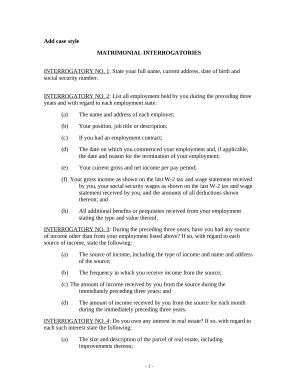
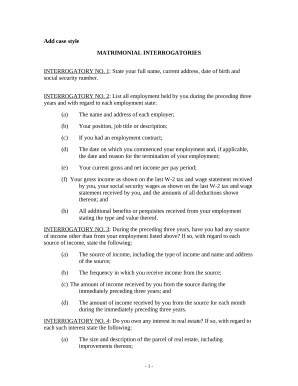
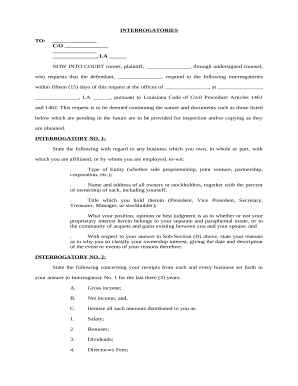
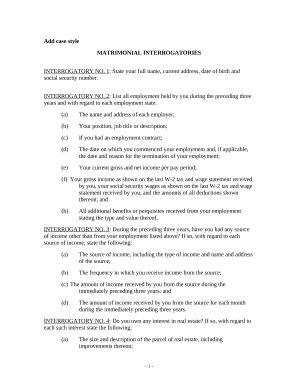
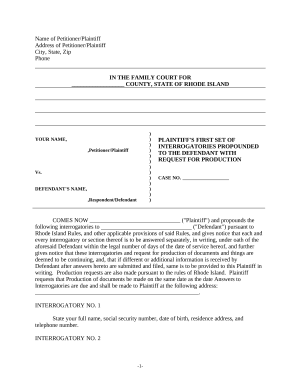
Interrogatories are written questions sent by one party in a lawsuit to another party in that same suit, which the responding party must answer under penalty of perjury. Interrogatories allow the parties to ask who, what, when, where and why questions, making them a good method for obtaining new information.
After the Interrogatories have been answered, the defendants attorney will request that your deposition be taken.
Interrogatories are often used to gather evidence in support of one partys position (or to damage the other spouses argument). For instance, if one party claimed they were unable to afford to pay spousal support, answers to questions about their income, expenses, and discretionary spending could show otherwise.
You can object to an interrogatory if the information sought is known by the requesting party or available to both parties equally. For example, you should raise this objection if the answers are publicly available or in a third-partys custody or control. Interrogatory Objections in Civil Litigation and Tort Claims cpollardlaw.com personal-injury-attorney-virginia cpollardlaw.com personal-injury-attorney-virginia