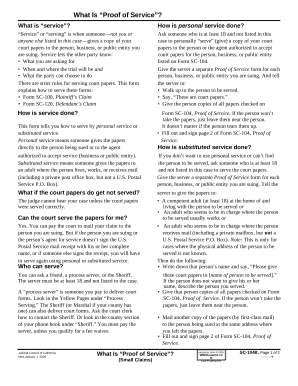
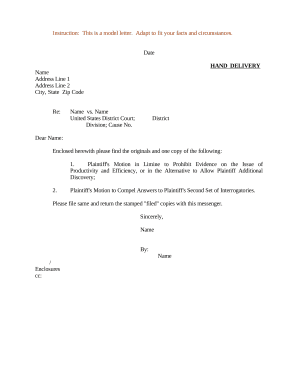
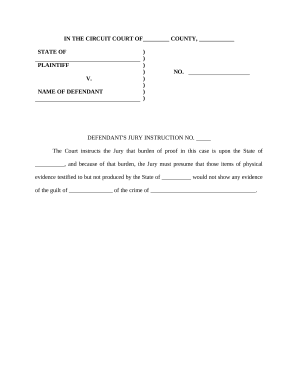
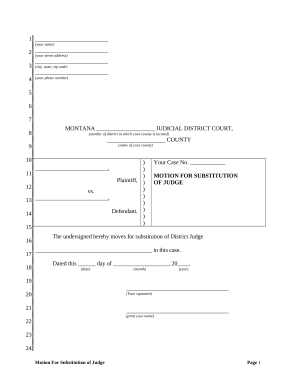
Improve your template management with Legal Forms for Court Proceedings

Your workflows always benefit when you can obtain all of the forms and files you may need on hand. DocHub delivers a a huge collection of forms to alleviate your daily pains. Get a hold of Legal Forms for Court Proceedings category and quickly find your form.

Begin working with Legal Forms for Court Proceedings in a few clicks:

  1. Access Legal Forms for Court Proceedings and locate the document you need.
  2. Click on Get Form to open it in our online editor.
  3. Begin adjusting your document: add fillable fields, highlight sentences, or blackout sensitive information and facts.
  4. The app saves your modifications automatically, and once you are all set, you can download or distribute your form with other contributors.

Enjoy seamless document administration with DocHub. Explore our Legal Forms for Court Proceedings category and look for your form today!


Video Guide on Legal Forms for Court Proceedings management

video background

Commonly Asked Questions about Legal Forms for Court Proceedings

An instrument is a written legal document that records the formal execution of legally enforceable acts or agreements, and secures their associated legal rights, obligations, and duties.
These range from foundational documents like contracts, wills, and deeds to more specialized legal documents such as court pleadings, affidavits, and legal briefs. Court pleadings, for instance, are formal statements filed with a court that outline the issues to be decided in a case.
pleadings - Written statements of the parties in a civil case of their positions. In federal courts, the principal pleadings are the complaint and the answer. precedent - A court decision in an earlier case with facts and law similar to a dispute currently before a court.
The plaintiff files a complaint to initiate a lawsuit. The defendant files an answer to the complaint. The judge will issue a scheduling order laying out a timeline for important dates and deadlines, including when the trial will take place. The parties engage in discovery.
Websters New Collegiate Dictionary gives two definitions that are particularly useful to legal researchers: a prescribed order and set of words and a printed or typed document with blank spaces for insertion of required or requested information. Both kinds of forms are available through the Goodson Law Library,
Documents, photographs, or other items you bring to trial to help prove your case are called exhibits. The judge must to allow you to admit the exhibit as evidence in order for you to use it in your case.
Federal case files are maintained electronically and are available through the internet-based Public Access to Court Electronic Records (PACER) service. PACER allows anyone with an account to search and locate appellate, district, and bankruptcy court case and docket information. Register for a PACER account.
You have to go to the police, the FBI, or the government prosecutor - the District Attorney (local or state law) or the States Attorney (federal law) - and ask that a case be filed. The prosecutor then decides whether the case is strong enough and/or important enough to pursue.
To begin a civil lawsuit in federal court, the plaintiff files a complaint with the court and serves a copy of the complaint on the defendant.
affidavit: A written statement that someone swears to under oath in front of someone that is legally authorized, like a judge or notary public.