
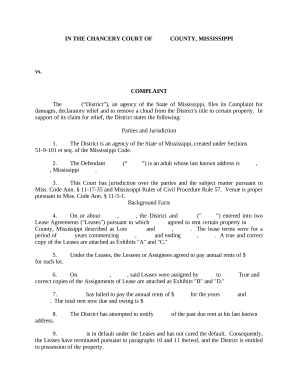
Improve your document management with Legal Eviction Process

Your workflows always benefit when you can easily obtain all the forms and documents you will need on hand. DocHub gives a huge selection of document templates to ease your day-to-day pains. Get hold of Legal Eviction Process category and easily discover your form.

Begin working with Legal Eviction Process in several clicks:

  1. Gain access to Legal Eviction Process and locate the form you need.
  2. Click Get Form to open it in our online editor.
  3. Begin modifying your file: add more fillable fields, highlight paragraphs, or blackout sensitive data.
  4. The app saves your adjustments automatically, and once you are all set, you can download or share your form with other contributors.

Enjoy effortless document administration with DocHub. Check out our Legal Eviction Process online library and find your form right now!


Commonly Asked Questions about Legal Eviction Process

In New York State, an eviction of a tenant is lawful only if an owner has brought a court proceeding and obtained a judgment of possession from the court. A sheriff, marshal or constable can carry out a court ordered eviction. An owner may not evict a tenant by use of force or unlawful means.
If you have been living in your home for over a year, your landlord must give at least 60 days notice. If you have been living in your home for more than 2 years, your landlord must give at least 90 days notice. rent as a security deposit. When you move out, they must return the security deposit within 14 days.
New York Eviction Time Estimates ActionDuration Maximum continuance 14 days Issuance of warrant of possession Unspecified Time to quit after writ is posted 14 days Total 1-5 months4 more rows Nov 3, 2023
The duration of NYC evictions typically ranges from 3 to 6 months. However, the timeline can vary depending on the reason for eviction. Evicting a tenant for lease violations can be resolved within 3 months, while holdover cases may take up to a year, especially if notice requirements were not met.
In New York, eviction processes incur a variety of charges such as court filing fees and service fees. For District Courts, a landlord can expect to spend on average $150 for the court filing fee. If the filing is in a Town, Village, or Justice Court, the fee is slightly lower, averaging about $125.
In New York State, the time frame after receiving an eviction notice varies based on the type of notice given and the reason for eviction. For non-payment of rent, the tenant typically receives a 14-day notice to pay rent or vacate. For violations of the lease terms, a 10-day notice to cure the violation is common.
Under the new Good Cause Eviction law, New Yorkers have the right to continue living in their homes without fear of unreasonable eviction or extreme rent increases. In many situations, tenants of market rate housing will now be covered by more expansive protections. Read below for details.
