Increase your production with Legal Debt Collection Letters

Form administration takes up to half of your office hours. With DocHub, it is possible to reclaim your time and effort and improve your team's productivity. Get Legal Debt Collection Letters online library and discover all form templates relevant to your day-to-day workflows.

The best way to use Legal Debt Collection Letters:

  1. Open Legal Debt Collection Letters and utilize Preview to obtain the relevant form.
  2. Click Get Form to start working on it.
  3. Wait for your form to open in the online editor and start modifying it.
  4. Add new fillable fields, symbols, and pictures, change pages, and many more.
  5. Complete your template or prepare it for other contributors.
  6. Download or share the form by link, email attachment, or invite.

Accelerate your day-to-day file administration with the Legal Debt Collection Letters. Get your free DocHub profile today to discover all templates.


Video Guide on Legal Debt Collection Letters management

video background

Commonly Asked Questions about Legal Debt Collection Letters

Ignoring or avoiding the debt collector may cause the debt collector to use other methods to try to collect the debt, including a lawsuit against you. If you are unable to come to an agreement with a debt collector, you may want to contact an attorney who can provide you with legal advice about your situation.
A debt collector must send you an initial letter within five days of contacting you to tell you the amount of the debt you owe, the name of the creditor to whom you owe the debt, your rights to dispute the debt and how to request verification of the debt.
Four Steps to Take if You Received a Debt Collection Letter From a Lawyer Carefully Review the Letter to Determine the Claim. Consider Sending a Debt Validation Request. Gather and Organize All Relevant Financial Documents and Records. Be Proactive: Debt Does Not Go Away on its Own.
Within five days after a debt collector first contacts you, it must send you a written notice, called a validation notice, that tells you (1) the amount it thinks you owe, (2) the name of the creditor, and (3) how to dispute the debt in writing.
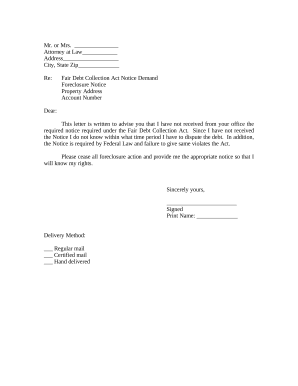
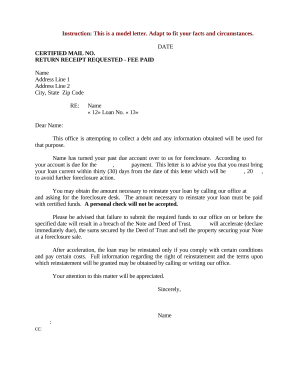
These letters often include details like the amount owed, the due date, and any applicable interest or late fees. Its important to note that debt collection letters should adhere to legal regulations and guidelines, such as those outlined by the Fair Debt Collection Practices Act (FDCPA) in the United States.
Debt collectors are not allowed to: Speak to other people about your debt without your permission, or threaten to do so. Add interest or charges to the debt that are excessive compared to the costs they have incurred. Threaten or abuse you. My Rights and Debt Collectors - My Credit Controllers mycreditcontrollers.co.uk Articles debt-c mycreditcontrollers.co.uk Articles debt-c
You can send creditors debt settlement negotiation letters, but creditors wont lower the amount of your debt unless they truly believe: Youre unable to pay. You havent paid in awhile. You may file for bankruptcy, which could cancel your debt, if they dont settle.
It is important to write your notices in plain language that the least sophisticated consumer can easily read and understand. The term current creditor should be used to identify who the agency is collecting the debt on behalf of.
A debt settlement letter is, in effect, a written legal contract. Its important to make direct, explicit, and detailed statements. Include your personal contact information, full name, mailing address, and account number. Specify the amount that you can pay, as well as what you expect from the creditor in return.