
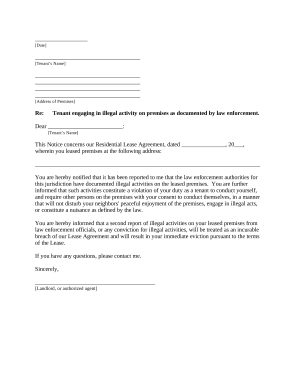
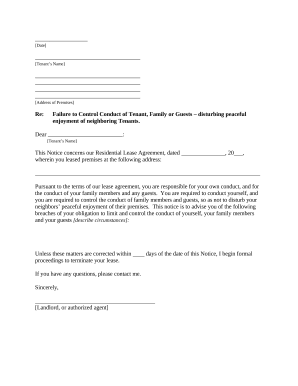
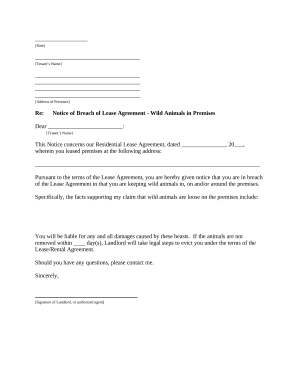
Transform your template managing with Landlord Notices

Your workflows always benefit when you are able to discover all of the forms and documents you need at your fingertips. DocHub supplies a huge selection of forms to relieve your day-to-day pains. Get a hold of Landlord Notices category and quickly find your form.

Begin working with Landlord Notices in a few clicks:

  1. Gain access to Landlord Notices and locate the document you need.
  2. Click on Get Form to open it in our online editor.
  3. Start changing your document: add fillable fields, highlight paragraphs, or blackout sensitive facts.
  4. The application saves your adjustments automatically, and once you are ready, you are able to download or distribute your file with other contributors.

Enjoy easy record administration with DocHub. Explore our Landlord Notices online library and find your form today!


Video Guide on Landlord Notices management

video background

Commonly Asked Questions about Landlord Notices

In the state of California, landlords may serve a Three-Day Notice allowing them to start the eviction process by filing the Unlawful Detainer in court for a tenant that does not pay up on late rent payments within the three-day notice period.
California passed a new landlord-tenant law that will provide additional protections for renters around just cause evictions. Set to take effect on April 1, 2024, the law will require landlords to have just cause to terminate tenancy after a tenant has been placed in the unit for 12 months.
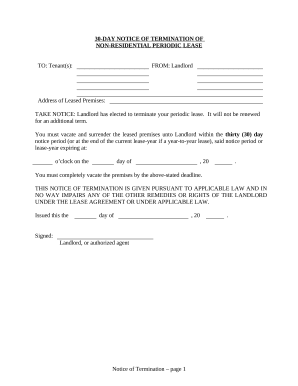
A landlord uses a 30-day Notice to Quit (move out) to end a month-to-month tenancy if the tenant has been renting for less than 1 year. A landlord uses a 60-day Notice to Quit if their tenant has been renting for 1 year or more.
Several factors can void a three-day notice in California, including: Incorrect rent amount stated in the notice. Ambiguous or unclear payment instructions. Failing to accurately identify the rental property or tenants. Improper service methods, including not following state laws on how the notice must be delivered.
If you get a section 21 notice, its the first step your landlord has to take to make you leave your home. You wont have to leave your home straight away. If your section 21 notice is valid, your landlord will need to go to court to evict you. You might be able to challenge your eviction and stay longer in your home. If you get a section 21 eviction notice - Citizens Advice citizensadvice.org.uk renting-privately if citizensadvice.org.uk renting-privately if
Dear (Name of landlord or manager), This letter constitutes my written (number of days notice that you need to give based on your lease agreement) -day notice that I will be moving out of my apartment on (date), the end of my current lease. I am leaving because (new job, rent increase, etc.
The eviction process can take 30 - 45 days, or longer. The time starts from when you have eviction court forms delivered to your tenant to the time they must move out. Choose any box, below, to learn more about the eviction process and get step-by-step instructions.
30-DAY, 60-DAY AND 90-DAY NOTICES TO MOVE If you are not behind in your rent but the landlord wants you to move out, they must give you a written notice. Only a 30-day notice is required if all tenants have lived there less than a year. A 60-day notice is required if all tenants have lived there a year or longer.
Your landlord cannot start an eviction case until the deadline in the notice has passed. The notice must be either (1) given to you in person; (2) given to another adult in your home and mailed to you; or (3) posted on your home and mailed to you. Just an email or text message, or verbal notice, is not enough.
