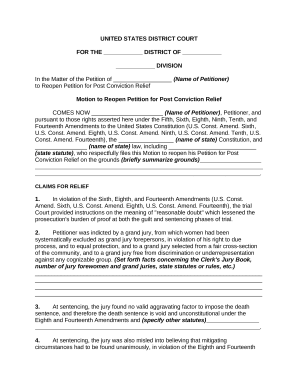
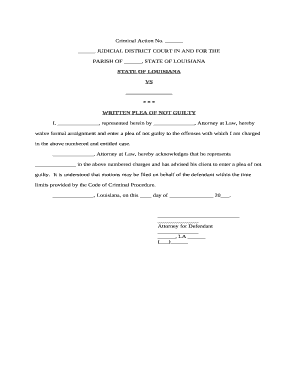
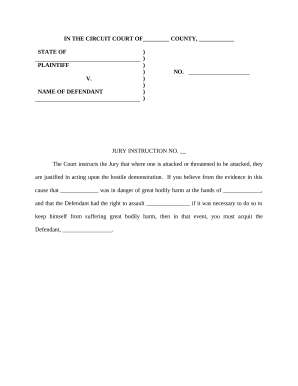
Improve your document management with Criminal Defense Documents

Your workflows always benefit when you are able to find all of the forms and files you need at your fingertips. DocHub offers a a huge library of document templates to ease your daily pains. Get hold of Criminal Defense Documents category and quickly find your document.

Begin working with Criminal Defense Documents in several clicks:

  1. Access Criminal Defense Documents and get the form you need.
  2. Click Get Form to open it in our editor.
  3. Start changing your file: add fillable fields, highlight sentences, or blackout sensitive facts.
  4. The app saves your modifications automatically, and after you are ready, you can download or share your form with other contributors.

Enjoy easy document management with DocHub. Check out our Criminal Defense Documents category and discover your form right now!


Video Guide on Criminal Defense Documents management

video background

Commonly Asked Questions about Criminal Defense Documents

While it is impossible to list every potential defense in a criminal trial, consider some of the most common defenses below. Lack of Evidence. Actual Innocence. Authorization or Consent. Constitutional Violations. Insanity. Duress. Self-Defense or Defense of Others. Mistake.
When it comes to criminal cases, there are usually four major criminal defense strategies that criminal attorneys employ: innocence, constitutional violations, self-defense, and insanity.
At the end of the day, prosecutors can file formal charges only if they believe the evidence will prove the suspects guilt beyond a reasonable doubta much higher standard than the probable cause needed for an arrest. Who Do Prosecutors Represent? Prosecutors are government representatives.
(a) A prosecutor should seek or file criminal charges only if the prosecutor reasonably believes that the charges are supported by probable cause, that admissible evidence will be sufficient to support conviction beyond a reasonable doubt, and that the decision to charge is in the interests of justice.
The three conditions are that at least one person has been: Arrested. Charged with the commission of the offense. Turned over to the court for prosecution (whether following arrest, court summons, or police notice).
In criminal law, prosecutors hold a crucial power known as prosecutorial discretion. It allows them the authority to make important decisions at different stages of a case, such as: Determining whether to press charges. Negotiating plea bargains. Accepting guilty pleas.
Certain types of defenses in criminal law, such as the alibi defense, are affirmative defenses. This means the defendant (you) must prove the defense, and in the case of an alibi, it means that the defendant must prove that he or she was somewhere other than the scene of the crime at the time of the crime.
Because the prosecutor filed the charge, they also have the discretion to dismiss it if they believe the facts and circumstances warrant it. Likewise, a judge can dismiss the case if they find no legal basis for the charge, if the defendants rights have been violated, or if the state has failed to prove its case.