Get and manage Business Contracts Forms online

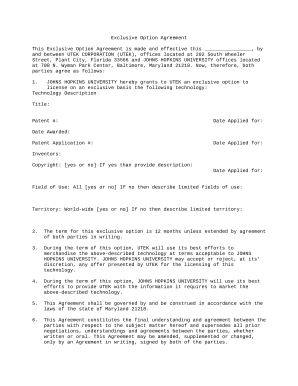
Accelerate your document operations with the Business Contracts Forms category with ready-made document templates that suit your needs. Get your document, edit it, complete it, and share it with your contributors without breaking a sweat. Begin working more effectively with the forms.

The best way to manage our Business Contracts Forms:

  1. Open our Business Contracts Forms and find the form you need.
  2. Preview your document to ensure it’s what you want, and click Get Form to start working on it.
  3. Edit, include new text, or highlight important information with DocHub features.
  4. Prepare your form and save the adjustments.
  5. Download or share your form template with other recipients.

Discover all the possibilities for your online file management using our Business Contracts Forms. Get your totally free DocHub account right now!


Video Guide on Business Contracts Forms management

video background

Commonly Asked Questions about Business Contracts Forms

Read below for tips on writing business contracts for your small business. Get It in Writing. Use Language You Can Understand. Be Detailed. Include Payment Details. Consider Confidentiality. Include Language on How to End the Contract. Consider State Laws Governing the Contract.
These contract templates are typically used when you want to sell new goods, services, or items that require delivery. Its a way to go over and finalize between both parties before accepting the contract. It determines the payment details, the delivery of the product, cancellations, and more.
Follow these tips to create a solid business agreement. Get It in Writing. Keep It Simple. Deal With the Right Person. Identify Each Party Correctly. Spell Out All of the Details. Specify Payment Obligations. Agree on Circumstances That Terminate the Contract. Agree on a Way to Resolve Disputes. Ten Tips for Making Solid Business Agreements and Contracts - Nolo nolo.com legal-encyclopedia make-busi nolo.com legal-encyclopedia make-busi
Creating a Self-Contract Stick to just one goal. Write down the steps you need to take to achieve the goal. Set a deadline for the contract to one day, or a week at most. Keep it short and focused, but formal. Focus on the upsides of the contract. Change the contract if you feel that youve accomplished it already. How to Make A Self-Contract For Your Personal Goals - Endless Events Endless Events make-self-contract-personal-g Endless Events make-self-contract-personal-g
Verbal and written contracts Contracts can be verbal (spoken), written or a combination of both. Some types of contract such as those for buying or selling real estate or finance agreements must be in writing. Written contracts may consist of a standard form agreement or a letter confirming the agreement.
How to draft a contract between two parties: A step-by-step checklist Know your parties. Agree on the terms. Set clear boundaries. Spell out the consequences. Specify how you will resolve disputes. Cover confidentiality. Check the legality of the contract. Open it up to negotiation. How to Draft Contracts Everything You Need to Include docHub how-to-draft-a-contract docHub how-to-draft-a-contract
Why You Need a Business Contract Lawyer. If youre asking whether you need a lawyer to draft a contract, legally, the answer is no. Anyone can draft a contract on their own and as long as the elements above are included and both parties are legally competent and consent to the agreement, it is generally lawful. Do I Need a Lawyer to Draft Business Contracts? Kirk Kirk Law legal-resources do-i-ne Kirk Kirk Law legal-resources do-i-ne
How To Draft a Contract Step by Step Information Gathering. List Your Services or Products. Determine Term Length. Lay Out the Consequences. Determine Dispute Resolution Terms. Create Signature and Date Lines. How To Draft a Contract: 6 Steps to Follow (2023) Contracts Counsel how-to-draft-a-con Contracts Counsel how-to-draft-a-con
How to draft a contract between two parties: A step-by-step checklist Know your parties. Agree on the terms. Set clear boundaries. Spell out the consequences. Specify how you will resolve disputes. Cover confidentiality. Check the legality of the contract. Open it up to negotiation.