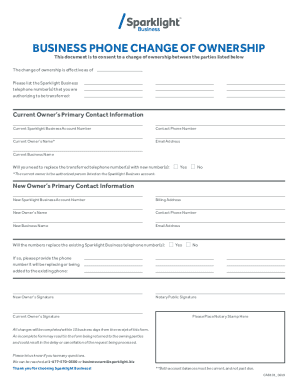
Enhance your document operations with Legal ownerships Business Forms

Your workflows always benefit when you can obtain all of the forms and files you need on hand. DocHub provides a a large collection templates to relieve your daily pains. Get a hold of Legal ownerships Business Forms category and quickly browse for your document.

Begin working with Legal ownerships Business Forms in several clicks:

  1. Open Legal ownerships Business Forms and locate the form you require.
  2. Click on Get Form to open it in the editor.
  3. Begin adjusting your form: add fillable fields, highlight paragraphs, or blackout sensitive information and facts.
  4. The application saves your changes automatically, and once you are ready, you can download or distribute your form with other contributors.

Enjoy fast and easy document managing with DocHub. Explore our Legal ownerships Business Forms online library and locate your form today!


Video Guide on Legal ownerships Business Forms management

video background

Commonly Asked Questions about Legal ownerships Business Forms

The most common forms of business ownership are sole proprietorship, partnership, limited liability partnership, limited liability company (LLC), series LLC, and corporations, which can be taxed as C corporations or S corporations.
The three major forms of business in the United States are sole proprietorships, partnerships, and corporations. Each form has implications for how individuals are taxed and resources are managed and deployed.
An S corporation protects the personal assets of its shareholders. Absent an express personal guarantee, a shareholder is not personally responsible for the business debts and liabilities. Creditors cannot pursue the personal assets (house, bank accounts, etc.) of the shareholders to pay business debts.
You may prefer an LLC if you: want a high degree of management flexibility in running your company. want to allocate profits and losses based upon criteria other than ownership percentage. prefer to avoid the state-mandated requirements imposed on corporations, such as annual meetings.
LLCs can have an unlimited number of members; S corps can have no more than 100 shareholders (owners). Non-U.S. citizens/residents can be members of LLCs; S corps may not have non-U.S. citizens/residents as shareholders.
The Bottom Line: Choosing the Best Option for Your Business S-corps are best suited for more experienced business owners because of the strict requirements that apply to them. LLCs that are controlled by multiple members may have an easier time converting to an S-corp because they require a board of directors.
Sole Proprietorship: Best for Cost. General Partnership: Best for New Partners. Limited Liability Company (LLC): Best for Liability Structure. Limited Liability Partnership (LLP): Best for Professional Businesses. C-Corporation: Best for Outside Investment Opportunities.
It can be difficult to raise cash through a stock offering because an S corporation can issue only one class of stock, which must have identical rights regarding dividends and the distribution of company assets if the business is light can be difficult to raise cash through a stock offering because an S corporation can