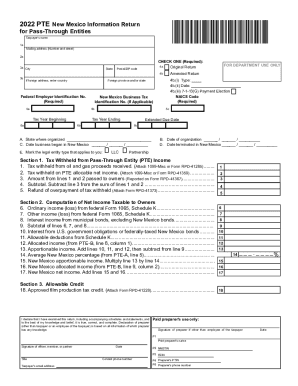
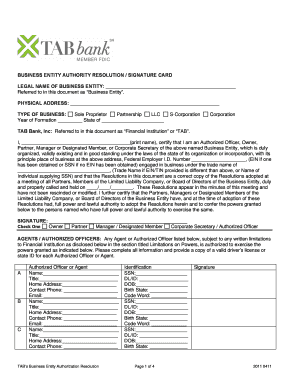
Get and handle Entities Business Forms online

Improve your form management with the Entities Business Forms online library with ready-made document templates that suit your needs. Get your form, change it, fill it, and share it with your contributors without breaking a sweat. Start working more efficiently together with your documents.

The best way to manage our Entities Business Forms:

  1. Open our Entities Business Forms and find the form you want.
  2. Preview your document to ensure it’s what you want, and click on Get Form to begin working on it.
  3. Modify, add new text, or highlight important information with DocHub features.
  4. Complete your form and save the changes.
  5. Download or share your form template with other recipients.

Discover all of the possibilities for your online document management with our Entities Business Forms. Get your totally free DocHub profile today!


Video Guide on Entities Business Forms management

video background

Commonly Asked Questions about Entities Business Forms

Types of Business Entities. U.S. state governments recognize many different legal entity types, but most small businesses incorporate under one of five entity types: sole proprietorship, partnership, C corporation, S corporation, or limited liability company (LLC).
There are three common types of businessessole proprietorship, partnership, and corporationand each comes with its own set of advantages and disadvantages.
The three major forms of business in the United States are sole proprietorships, partnerships, and corporations.
The 3 types of business entities that are most common are the sole proprietorship, limited liability company (LLC), and corporation. Each has their own distinct advantages and disadvantages, depending on what you and your business need.
Types of Business Entities Sole Proprietorship. This is a business run by one individual for their own benefit. PartnershipsGeneral and Limited. Limited Liability Company (LLC) Corporation. Advantages/Disadvantages.
Entity forms can be used as Nested forms, as Forms to Add and Edit records in tables, Search forms and Form links. To make a Form reusable keep in mind that you have to create it in the Form option of an entity. Thus, the context of the form will be the entity.
In simplest terms, a business entity is an organization created by an individual or individuals to conduct business, engage in a trade or partake in similar activities. There are various types of business entities sole proprietorship, partnership, LLC, corporation, etc.
Examples of an entity are a single person, single product, or single organization. Entity type. A person, organization, object type, or concept about which information is stored. Describes the type of the information that is being mastered.
An entity refers to a person or organization possessing separate and distinct legal rights, such as an individual, partnership, or corporation. An entity can, among other things, own property, engage in business, enter into contracts, pay taxes, sue and be sued.
The 3 most common types of business entities are sole proprietorship, limited liability company (LLC) and company. Each has its own pros and cons, depending on what you and your business need.