Raise your output with Legal Forms for Secured Transactions

Form administration consumes to half of your office hours. With DocHub, it is easy to reclaim your time and effort and improve your team's productivity. Access Legal Forms for Secured Transactions online library and discover all document templates related to your daily workflows.

Easily use Legal Forms for Secured Transactions:

  1. Open Legal Forms for Secured Transactions and use Preview to obtain the suitable form.
  2. Click on Get Form to begin working on it.
  3. Wait for your form to upload in the online editor and begin modifying it.
  4. Add new fillable fields, icons, and pictures, adjust pages order, and many more.
  5. Complete your form or set it for other contributors.
  6. Download or share the form by link, email attachment, or invite.

Improve your daily file administration using our Legal Forms for Secured Transactions. Get your free DocHub profile right now to explore all forms.


Video Guide on Legal Forms for Secured Transactions management

video background

Commonly Asked Questions about Legal Forms for Secured Transactions

A. The UCC-1 form is used to establish a creditors claim on personal property as collateral. By filing this form, creditors notify the public and other potential creditors of their interest in specific assets. It creates a public record that determines the priority of competing claims.
Article 9 of the UCC governs secured transactions, including procedures for settling debts. Under Article 9, if a debtor defaults on debt, the creditor may repossess the secured property. Louisiana State University Law School. Louisianas Non-Uniform Variations in U.C.C.
Uniform Commercial Code (UCC) Article 9 governs secured transactions in personal property. The 2010 Amendments to Article 9 modify the existing statute to respond to filing issues and address other matters that have arisen in practice following a decade of experience with the 1998 version. Uniform Commercial Code uniformlaws.org acts ucc uniformlaws.org acts ucc
A secured transaction is an arrangement in which a buyer or borrower (referred to as the debtor) guarantees payment of an obligation by granting a security interest in property to the seller or lender (referred to as the secured party). The property in which the security interest exists is called collateral.
The law of secured transactions consists of five principal components: (1) the nature of property that can be the subject of a security interest; (2) the methods of creating the security interest; (3) the perfection of the security interest against claims of others; (4) priorities among secured and unsecured creditors Introduction to Secured Transactions github.io s25-01-introduction-to-se github.io s25-01-introduction-to-se
Most every purchase and sale of goods or services is governed by either the Uniform Commercial Code, (UCC) or common law of contracts (CLC). With minor exceptions, this includes every consumer and commercial transaction throughout the United States and its territories.
Commercial Law in the United States is largely governed by the Uniform Commercial Code (UCC). The UCC is a model code which is jointly created and revised by two non-governmental organizations, the American Law Institute (ALI) and the National Conference of Commissioners on Uniform State Laws (NCCUSL).
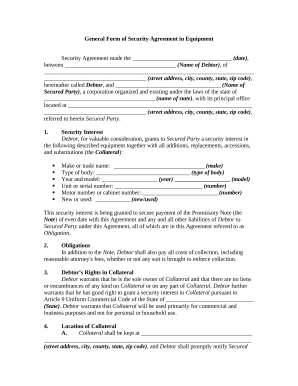
To overly simplify the basic commercial transaction, the three documents necessary to create a secured transaction are: (1) the promissory note; (2) the security agreement and (3) the financing statement. The promissory note is the document that creates the obligation.