
Pesticide Application Forms - Page 2
View and choose Pesticide Application Forms from our comprehensive document catalog. Simplify your application submission workflows with DocHub: modify, complete, and safely store completed forms online.

Create a new Pesticide Application Form
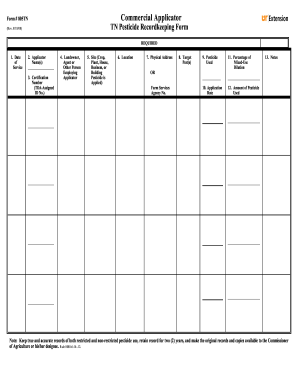
Commercial Applicator TN Pesticide Recordkeeping Form - psep utk
Lost passport replacement application form

Ne p57 form
Fillable Online Form DC430 SOIL EROSION APPLICATION FORM ...

Pa 406 pesticide applicator change of information - texasagriculture

EPA Form 8570-1: Application for Pesticide Registration Amendment Pesticide Registration Forms
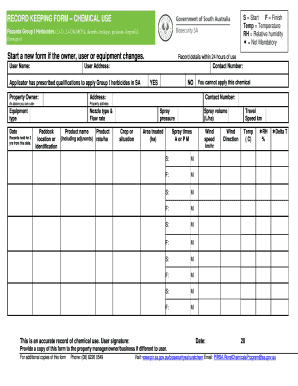
Pesticide record keeping excel
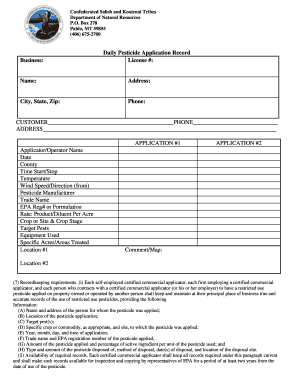
Printable pest control record sheet
- 1
-
2
Improve your form administration with Pesticide Application Forms
Your workflows always benefit when you can easily locate all the forms and documents you will need at your fingertips. DocHub supplies a a huge library of form templates to ease your everyday pains. Get a hold of Pesticide Application Forms category and quickly browse for your document.
Begin working with Pesticide Application Forms in a few clicks:
- Browse Pesticide Application Forms and locate the document you require.
- Click Get Form to open it in our online editor.
- Begin editing your document: add more fillable fields, highlight paragraphs, or blackout sensitive facts.
- The application saves your adjustments automatically, and after you are all set, you can download or share your file with other contributors.
Enjoy smooth form administration with DocHub. Explore our Pesticide Application Forms online library and get your form today!
Video Guide on Pesticide Application Forms management

Commonly Asked Questions about Pesticide Application Forms
What is an example of a pesticide application?
Spraying pre- and post-emergent crops An example of pre-emergent pesticide application is atrazine application for corn. Similarly, glyphosate mixtures are often applied pre-emergent on agricultural fields to remove early-germinating weeds and prepare for subsequent crops.
Who regulates the registration and use of pesticides?
The Department of Pesticide Regulation (DPR) regulates pesticides under a comprehensive program that encompasses enforcement of pesticide use in agricultural and urban environments.
Who is legally authorized to apply pesticide?
Federal law and regulations require any person who applies or supervises the use of restricted use pesticides (RUPs) be certified as a private or commercial applicator. Apply pesticides for the production of an agricultural commodity on land you or your employer owns or rents
What are the methods of applying pesticides?
Pesticides are dispersed by different methods like spraying, dusting etc. For spraying of pesticides different types of nozzles such as hydraulic, air blast, centrifugal and heat energy type are used. Water is a common carrier of pesticides but air or oils are also used as carriers.
Which individual should apply pesticides?
A pest control operator. The use of pesticides is regulated to ensure safety, and professional pest control operators are trained in the proper handling and application of these chemicals.
Who must pesticides be approved by?
Federal Insecticide, Fungicide, and Rodenticide Act (FIFRA) - Requires all pesticides sold or distributed in the United States (including imported pesticides) to be registered by EPA. Registration is based on evaluation of scientific data and assessment of risks and benefits of a products use.
Who should apply pesticides?
In every state, pest management professionals must be licensed to apply a pesticide including rodenticides or fumigants. There are very specific license categories that are required depending on the pest and where that pest is found as well as the type of pesticide that is going to be applied.
How long must pesticide application records be kept in MN?
(d) The record must be completed no later than five days after the application of the pesticide. (e) A commercial applicator must give a copy of the record to the customer. (f) Records must be retained by the applicator, company, or authorized agent for five years after the date of treatment.


