Type text, add images, blackout confidential details, add comments, highlights and more.
02. Sign it in a few clicks
Draw your signature, type it, upload its image, or use your mobile device as a signature pad.
03. Share your form with others
Send it via email, link, or fax. You can also download it, export it or print it out.
How to use or fill out 1041a 2017 form with our platform
Ease of Setup
DocHub User Ratings on G2
Ease of Use
DocHub User Ratings on G2
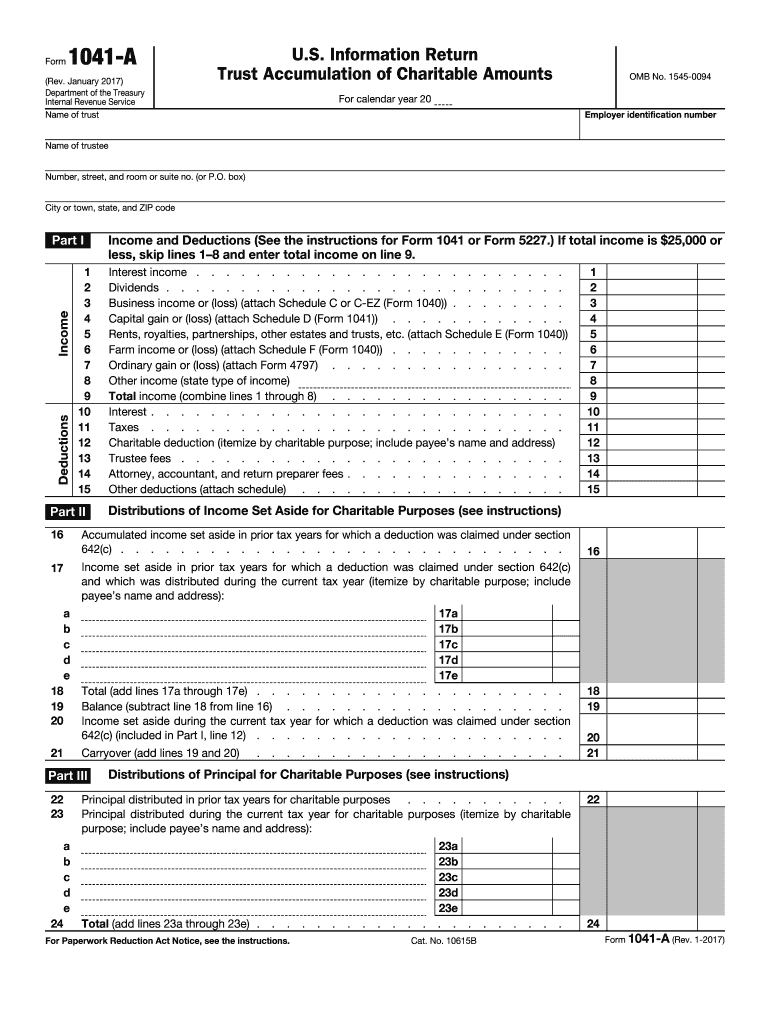
Click ‘Get Form’ to open the 1041-A form in the editor.
Begin by entering the trust's name and employer identification number at the top of the form. This information is crucial for identifying the trust.
In Part I, provide details about income sources such as interest, dividends, and business income. Make sure to attach any necessary schedules for detailed reporting.
Move to Part II and list deductions including taxes and charitable contributions. Be specific about each deduction type to ensure compliance.
For distributions of income set aside for charitable purposes in Part III, itemize each distribution clearly, including payee names and amounts.
Complete Part IV by filling out balance sheets. Report both beginning-of-year and end-of-year book values for assets and liabilities accurately.
Finally, sign the form in the designated area and ensure all required attachments are included before submitting it through our platform.
Start using our platform today to fill out your 1041-A form easily and for free!
1041a 2017 form printable1041a 2017 form pdf1041a 2017 form download1041a 2017 form instructionsForm 1041-A instructionsForm 1041 a instructions 20241041-A ExtensionForm 1041-A filing requirements
Security and compliance
At DocHub, your data security is our priority. We follow HIPAA, SOC2, GDPR, and other standards, so you can work on your documents with confidence.
26 U.S. Code 1041 - Transfers of property between spouses
(a) General ruleNo gain or loss shall be recognized on a transfer of property from an individual to (or in trust for the benefit of). (1). a spouse, or.Read more
Use Form 1041-A to report the charitable information required by section 6034 and the related regulations. Who Must File. The trustee must file Form 1041-A forRead more
Cookie consent notice
This site uses cookies to enhance site navigation and personalize your experience.
By using this site you agree to our use of cookies as described in our Privacy Notice.
You can modify your selections by visiting our Cookie and Advertising Notice.