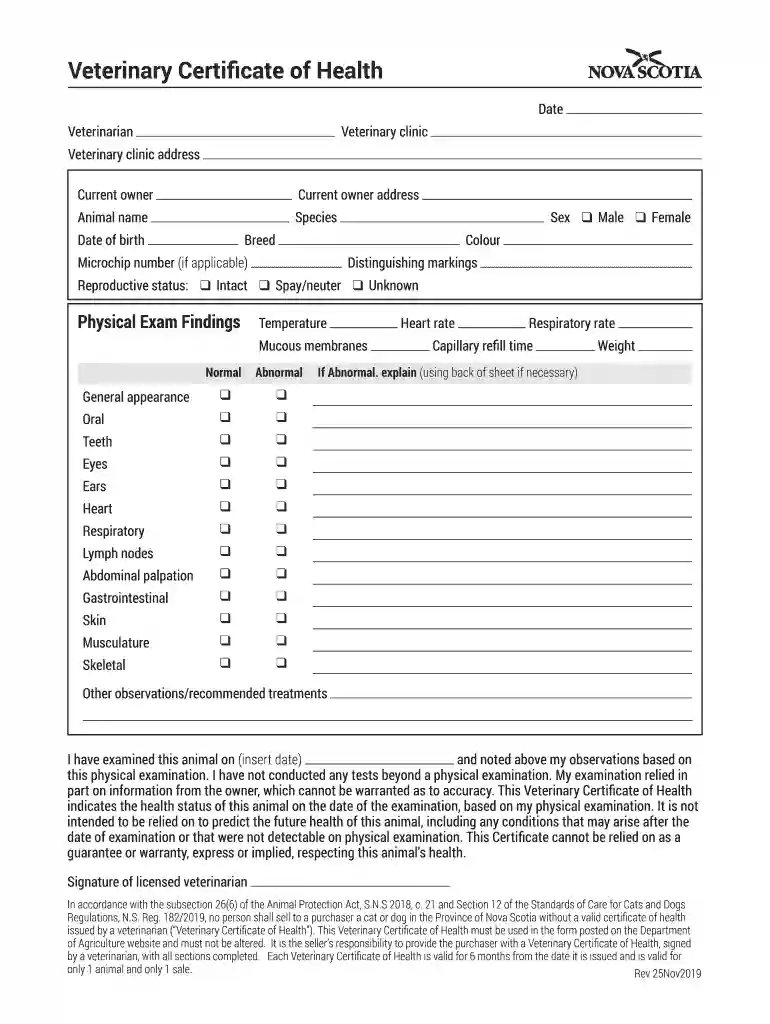
Veterinary Certificate of Health 2026

Get Form
puppy health certificate template Preview on Page 1

Here's how it works

01. Edit your puppy health certificate template online
Type text, add images, blackout confidential details, add comments, highlights and more.

02. Sign it in a few clicks
Draw your signature, type it, upload its image, or use your mobile device as a signature pad.

03. Share your form with others
Send veterinary certificate sample via email, link, or fax. You can also download it, export it or print it out.

Definition and Purpose of the Veterinary Certificate of Health

A Veterinary Certificate of Health is an official document prepared by a licensed veterinarian that certifies the health status of an animal based on a thorough physical examination. This certificate is crucial for pet owners, breeders, and sellers, as it serves to ensure that animals are in good health before being sold or transported.

Key Features of the Veterinary Certificate of Health

  • Animal Identification: The certificate includes specific details regarding the animal, such as breed, age, and identification numbers (like microchip numbers).
  • Health Examination Findings: It outlines the results of the veterinarian's physical examination, including vaccinations, health concerns, and general wellbeing.
  • Legal Compliance: In certain jurisdictions, a valid Veterinary Certificate of Health is required by law for the sale or transfer of animals, ensuring compliance with local regulations.
  • Limitations: The document often includes a disclaimer that specifies the limitations of the examination and that the certificate reflects the health status only at the time of the examination.

This document plays a critical role in animal transactions, as it provides potential buyers with assurance regarding the health and legal standing of the animal involved.

How to Obtain a Veterinary Certificate of Health

Obtaining a Veterinary Certificate of Health involves a straightforward process. It typically requires the involvement of a licensed veterinarian who conducts a physical examination of the animal.

Steps to Acquire the Certificate

  1. Schedule an Appointment: The first step involves scheduling an appointment with a veterinarian who has the authority to issue health certificates.
  2. Complete the Examination: During the visit, the veterinarian will perform a comprehensive health assessment of the animal. This may include checking vital signs, reviewing vaccination history, and assessing for any visible signs of illness.
  3. Receive the Certificate: If the animal passes the examination, the veterinarian will issue a Veterinary Certificate of Health detailing the findings and affirming the animal’s fitness for sale or travel.

In some cases, for specific health regulations, additional tests might be necessary, depending on the animal's species and the intended destination.

Key Elements of the Veterinary Certificate of Health

A Veterinary Certificate of Health must contain several crucial elements to be considered valid and complete. These elements ensure that it serves its purpose effectively in legal and transactional contexts.

Essential Components

  • Veterinarian’s Information: Name, contact information, and license number of the veterinarian issuing the certificate.
  • Owner’s Information: Details about the animal’s owner, including name and address.
  • Animal Details: Comprehensive description of the animal including breed, age, sex, and identification numbers.
  • Health Findings: Specific results from the health examination, including vaccination status and any medical treatments administered.
  • Signature and Date: The veterinarian's signature, confirming the accuracy of the findings, along with the date of issuance.

These elements are critical in establishing the authenticity and legal standing of the certificate, particularly when it is used for legal transactions or travel requirements.

Legal Use of the Veterinary Certificate of Health

The Veterinary Certificate of Health has legal implications, especially in the context of animal sales and interstate travel. Understanding its legal use is essential for both sellers and buyers in the United States.

Legal Requirements and Implications

  • Interstate Travel: Many states mandate a health certificate for animals crossing state lines to minimize the risk of diseases.
  • Regulations on Sales: Various states require sellers to provide a valid health certificate when offering cats and dogs for sale, providing potential owners with assurance.
  • Legal Liability: If an animal sold without a proper health certificate is found to be unwell, the seller could be liable for any costs incurred by the buyer for veterinary treatment.

It is crucial for all parties involved in animal transactions to be aware of and comply with these legal requirements to avoid potential disputes and liabilities.

Examples of Using the Veterinary Certificate of Health

When issuing a Veterinary Certificate of Health, various scenarios arise where the document is utilized. Detailed examples help illustrate its application in real-world situations.

Common Scenarios

  • Puppy Sales: A breeder must provide a Veterinary Certificate of Health to potential buyers, showing that the puppies have been examined and are fit for adoption.
  • Travel Requirements: Pet owners traveling with their dogs may be required to present a health certificate to airlines or state border control for entry.
  • Adoption Agencies: An animal rescue organization may require a health certificate to verify the health status of animals before adoption events.

Each of these scenarios highlights the importance of the certificate in protecting the health of animals and ensuring compliance with local laws.

State-Specific Rules for the Veterinary Certificate of Health

State regulations regarding the Veterinary Certificate of Health can vary significantly, impacting how the certificate is issued and used.

Variances Across States

  • Specific Testing Requirements: Some states may require specific vaccinations or health tests to be conducted before issuing the certificate, such as rabies or parvovirus tests for dogs.
  • Expiration Dates: Certain jurisdictions set an expiration date for how long the certificate remains valid, which can affect transport and sales.
  • Documentation Format: While some states may accept electronic versions of the veterinary certificate, others may require a physical copy with an original signature.

Understanding these state-specific rules is essential for compliance and helps ensure the smooth transfer of animals across different states.

See more Veterinary Certificate of Health versions

We've got more versions of the Veterinary Certificate of Health form. Select the right Veterinary Certificate of Health version from the list and start editing it straight away!
Versions Form popularity Fillable & printable
2019 4.8 Satisfied (137 Votes)
be ready to get more

Complete this form in 5 minutes or less

Get form

Security and compliance

At DocHub, your data security is our priority. We follow HIPAA, SOC2, GDPR, and other standards, so you can work on your documents with confidence.

Learn more
ccpa2
pci-dss
gdpr-compliance
hipaa
soc-compliance
be ready to get more

Complete this form in 5 minutes or less

Get form