




Definition and Meaning of the NJ Restraining Order Form
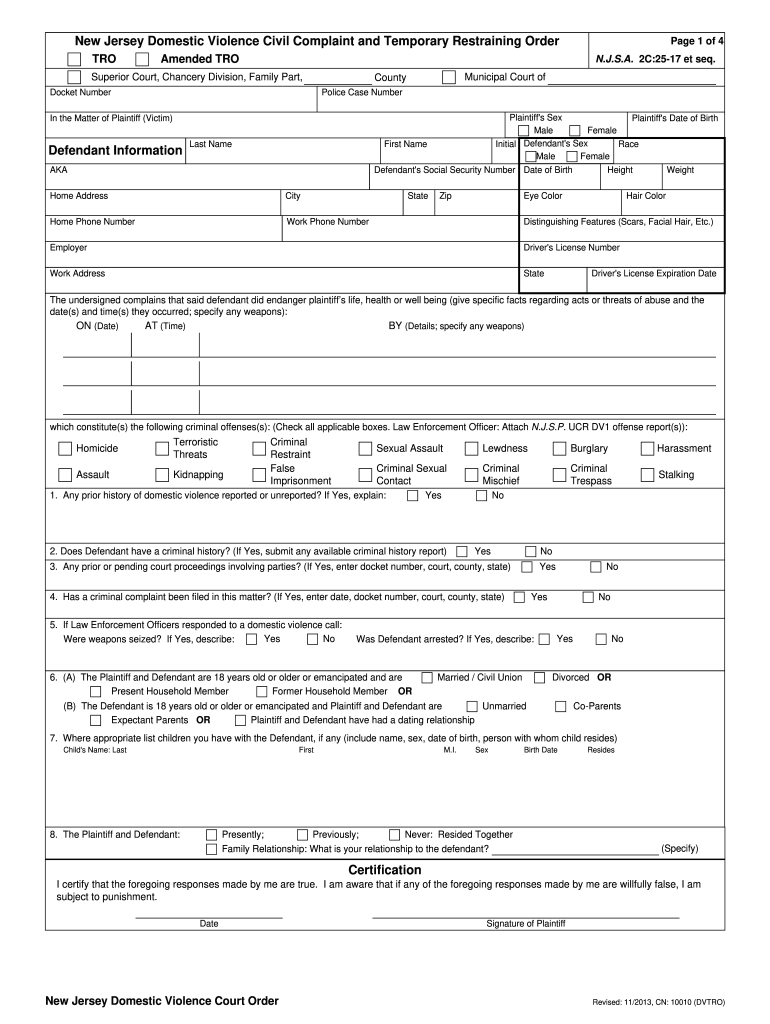
The New Jersey restraining order form is a legal document that individuals can complete to seek protection from harassment, assault, stalking, or other forms of domestic violence. This form is officially known as the Domestic Violence Civil Complaint and Temporary Restraining Order (TRO). It is vital for victims who need immediate legal relief from their abuser, enabling them to request various protections, including prohibitions against contact or possession of weapons by the offender. The document outlines the nature of the abuse suffered, personal details about both the victim and the defendant, and the specific legal relief sought by the plaintiff.
The NJ restraining order form establishes the foundation for a court proceeding, helping victims to articulate their claims and the reasons for requesting protective measures. By laying out the events that led to the request, as well as desired outcomes, it helps the court assess the situation effectively.
Steps to Complete the NJ Restraining Order Form
Completing the NJ restraining order form involves several critical steps, which must be carried out meticulously to ensure the form is valid and effective.
-
Gather Necessary Information:
- Collect details about the incidents of abuse, including dates, locations, and specifics of the incidents.
- Identify and include personal information for both yourself (the plaintiff) and the defendant, such as names, addresses, and relationship to one another.
-
Complete the Form:
- Clearly fill out the form, providing all requested information about the incidents.
- Be specific about the relief sought, such as no contact orders or temporary custody arrangements.
-
Review for Accuracy:
- Ensure all information is accurate and complete. Inaccuracies can delay proceedings or cause the application to be dismissed.
-
File the Form:
- Submit the completed form to the appropriate court. This can usually be done in person at the courthouse, or in some cases, online.
-
Prepare for the Hearing:
- After filing, be prepared to attend a hearing, where you will present your case to a judge. Bring any evidence or documentation that supports your claims.
Important Terms Related to the NJ Restraining Order Form
Understanding important terminology related to the NJ restraining order form can aid individuals in navigating the legal process effectively.
- Plaintiff: The individual filing for the restraining order, seeking protection.
- Defendant: The individual against whom the restraining order is sought.
- Temporary Restraining Order (TRO): A short-term order issued to provide immediate protection until a court hearing can be held.
- Final Restraining Order (FRO): A long-term order that can be issued following a court hearing when the judge finds sufficient evidence of abuse.
- ** Consent Order:** An agreement reached by both parties, often resulting in a binding resolution without the need for a court hearing.
Recognizing these terms can provide clarity throughout the filing process and court hearings.
Legal Use of the NJ Restraining Order Form
Utilizing the NJ restraining order form legally protects victims and delineates the specific measures they seek against their abusers. The form adheres to state laws under New Jersey statutes, which govern domestic violence and harassment cases.
- Court Jurisdiction: The restraining order requests must be filed in a court with jurisdiction over domestic violence cases within New Jersey.
- Evidence Requirements: The plaintiff must demonstrate to the court that domestic violence has occurred by proving the validity of the claims stated in the form.
- Legal Consequences: Breaching a restraining order can lead to significant penalties, including criminal charges against the defendant.
Understanding the legal framework and implications of the restraining order form is crucial for both plaintiffs and defendants to ensure their rights and obligations are respected.
Key Elements of the NJ Restraining Order Form
Each section of the NJ restraining order form serves a critical purpose in conveying the plaintiff's circumstances and needs to the court.
- Incident Description: A detailed narrative of the abuse or harassment, including specific incidents and how they have impacted the plaintiff’s life.
- Defendant’s Information: Comprehensive details about the defendant, including how the plaintiff knows them and any prior incidents of abuse reported.
- Relief Requested: Clearly states the specific protections sought, such as no contact orders, monetary damages, or custody arrangements.
- Attachments and Supporting Documents: Any additional documentation that supports the claims made in the form, such as photographs, texts, or witness statements, should be included as appendices.
Meticulously completing these elements ensures that the file is robust and increases the likelihood of a favorable outcome at the hearing.
Examples of Using the NJ Restraining Order Form
Utilizing the NJ restraining order form can vary depending on individual circumstances, presenting different scenarios in which it is appropriate.
- Domestic Violence Situations: A victim of physical abuse may file for a TRO to gain immediate protection from their abuser while seeking a final order.
- Stalking Cases: Individuals experiencing unwanted contact or fear of harm from a stalker may use the form to request no contact, ensuring their safety.
- Harassment at Work: A person facing harassment from a coworker may file for an order if the situation escalates, affecting their work environment and mental health.
In each example, the NJ restraining order form serves as a critical tool for victims to assert their rights and seek necessary protection.