
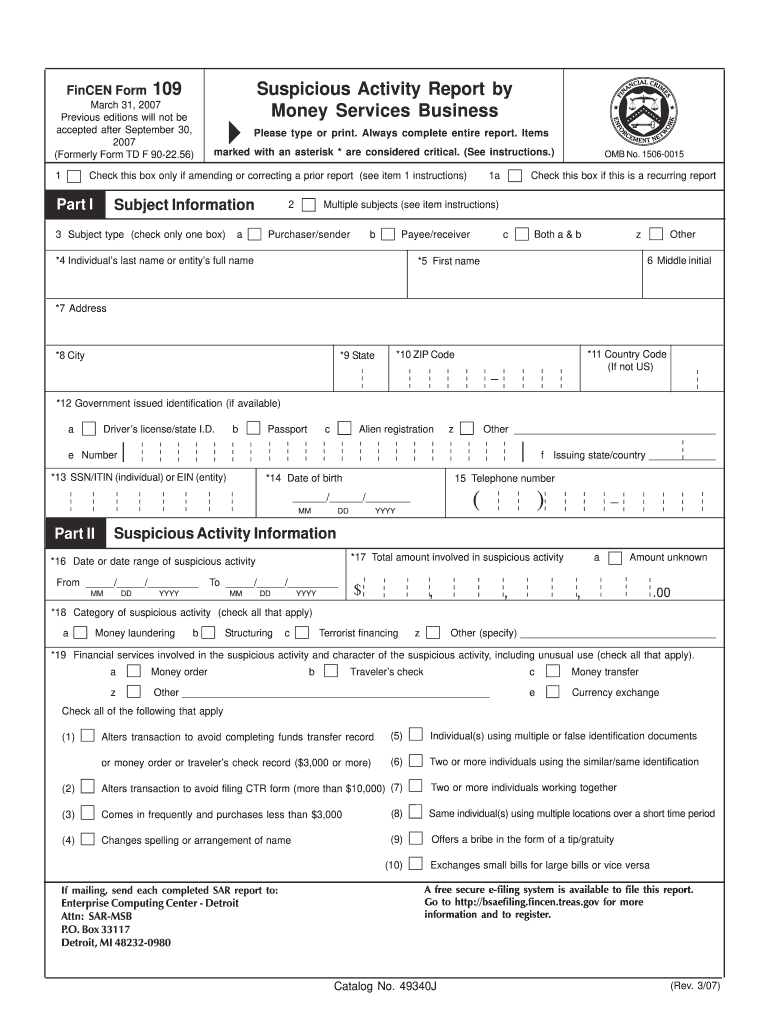







Definition and Meaning of Form 109
Form 109 is utilized by Money Services Businesses (MSBs) for reporting suspicious activities associated with potential illegal financial transactions, such as money laundering or terrorist financing. As a Suspicious Activity Report (SAR), this form is crucial for maintaining regulatory compliance within the financial industry. By capturing comprehensive information about the individuals involved and the specifics of the suspicious activity, the form serves as a preventive measure against financial crimes. Entities responsible for filling out this form must ensure that the narrative section is clear and thorough to effectively communicate the nature and context of the suspicious transaction to regulatory authorities.
How to Use Form 109
To properly complete Form 109, it is essential to follow a structured approach:
- Initial Identification: Begin by identifying the subject of the report, which includes capturing their name, address, and relevant identification information.
- Description of Activity: Provide a precise narrative detailing the suspicious activity. This involves explaining what was unusual or suspicious, including any patterns or anomalies in transaction behavior.
- Transaction Details: Outline the financial transactions that raised suspicions, specifying dates, amounts, and any other pertinent transactional data.
- Supporting Documentation: Attach any supporting evidence or documents that corroborate the suspicious activity narrative if required.
Adhering to these steps ensures that the report is both accurate and comprehensive, aiding regulatory bodies in further investigations.
How to Obtain Form 109
Form 109 can be typically obtained through the following methods:
- Online Platforms: Financial institutions and MSBs often have direct access to electronic versions of Form 109 via secure online platforms provided by regulators or dedicated compliance software.
- Regulatory Bodies: Contacting relevant regulatory authorities, such as the Financial Crimes Enforcement Network (FinCEN), can yield the necessary forms and instructions for their use.
- Compliance Departments: For businesses with dedicated compliance teams, accessing these forms through internal channels ensures that they are using the most current version.
Ensuring access to the correct form version is vital for maintaining compliance with the reporting requirements.
Steps to Complete Form 109
Completing Form 109 requires meticulous attention to detail and adherence to regulatory guidelines:
- Gather Information: Collect all necessary information regarding the suspicious activity and the entities involved.
- Complete Form Sections: Address all required sections of the form, including personal information, activity description, and transaction details.
- Review and Validate: After filling out the form, review all sections to verify accuracy and completeness.
- File the Form: Submit the completed form through the preferred or mandated channels, whether electronic submission via compliance software or mailing to the designated regulatory authority.
Following these steps helps ensure the report’s integrity and contributes to effective regulatory compliance.
Key Elements of Form 109
Key elements of Form 109 include:
- Subject Information: Details about the individuals or entities involved.
- Activity Description: A comprehensive narrative of the suspicious activity.
- Transaction Information: Essential details about the transaction(s) in question.
- Narrative Section: Provides context and important details to assist regulators.
Each element must be completed thoroughly to fulfill the form's purpose of alerting regulators to potentially illegal activities.
Legal Use of Form 109
Form 109 is legally mandated under compliance frameworks designed to combat financial crimes. The information collected is used strictly for regulatory oversight and investigation, falling under confidentiality and privacy protections. Misuse of the information contained in these forms is prohibited, ensuring that it is solely utilized for its intended legal purpose. This highlights the necessity for businesses to handle these reports with due diligence and adhere to all legal obligations surrounding them.
Penalties for Non-Compliance
Failing to submit Form 109 when required can result in severe penalties, including fines and regulatory sanctions. Non-compliance can expose businesses to reputational damage as well as legal repercussions, underscoring the importance of adhering to reporting requirements. To mitigate the risk of non-compliance, businesses should establish robust internal processes and training programs that emphasize the importance of accurate and timely reporting of suspicious activities.
Digital vs. Paper Version
Organizations have the option to complete Form 109 in digital or paper format. Digital submissions offer advantages such as ease of editing, faster processing, and better integration with compliance software. Paper submissions may be preferred in cases where digital access is limited or where hard copy requirements exist. Regardless of the format, ensuring the accuracy and completeness of the form is paramount to fulfilling regulatory obligations.




