




01. Edit your hold harmless letter online
Type text, add images, blackout confidential details, add comments, highlights and more.

Type text, add images, blackout confidential details, add comments, highlights and more.

Draw your signature, type it, upload its image, or use your mobile device as a signature pad.

Send vehicle hold harmless agreement template via email, link, or fax. You can also download it, export it or print it out.
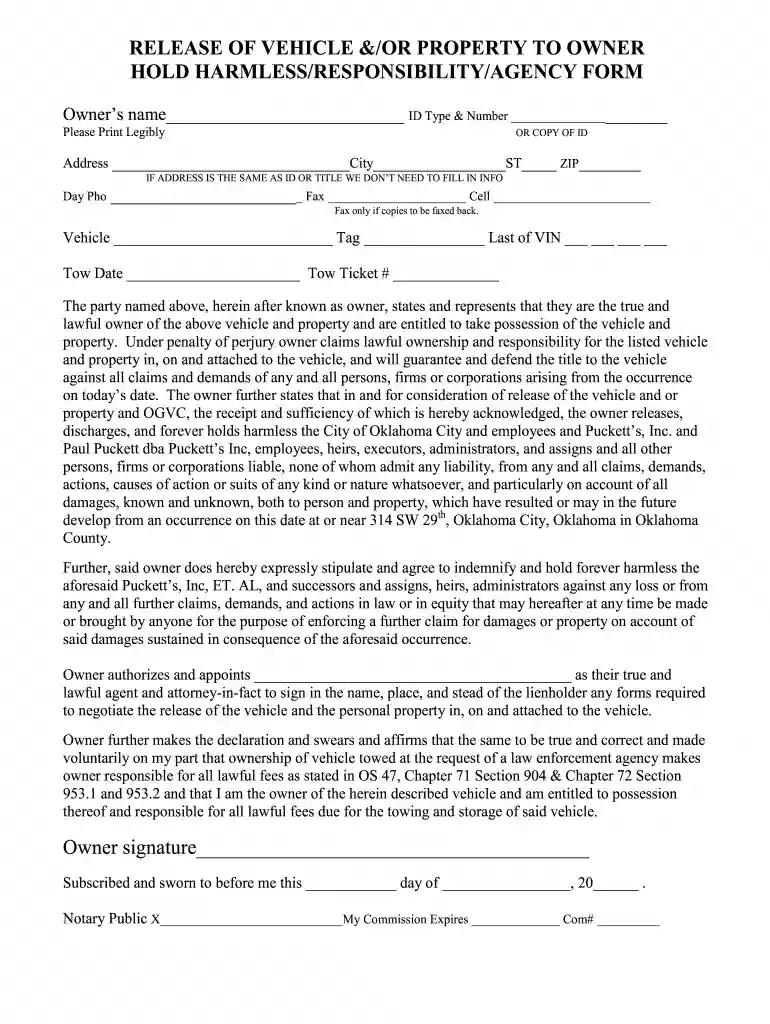
A hold harmless letter for towing is a legal document that protects a towing company, municipality, or other involved parties from liability when towing a vehicle. This letter serves as an agreement in which the vehicle owner acknowledges their responsibility for the towing and associated costs, thereby releasing the towing entity from claims related to the towing incident. By signing this document, the vehicle owner also affirms their lawful ownership of the vehicle in question.
This form is often required by municipalities or towing companies to ensure that all parties understand their rights and responsibilities regarding the towing process.
Utilizing the hold harmless letter for towing involves several steps that both the vehicle owner and the towing company must follow to ensure proper legal protection is achieved. Here’s how to effectively use this letter:
Obtain the Form: The vehicle owner can typically acquire the necessary letter from the towing company or local government website. It's essential to ensure that the form is the correct version and applicable to the specific jurisdiction.
Complete the Details: Carefully fill out the owner’s information, vehicle details, and any other required sections. Accuracy is crucial, as errors could lead to complications.
Review the Terms: Make sure to read the entire document to understand the implications of signing. This includes the acknowledgment of fees and waiver of liability.
Sign and Date: The vehicle owner must sign and date the letter to validate the agreement. This step legally binds the owner to the terms outlined in the document.
Submit to the Towing Company: Deliver the completed letter to the towing company or relevant authority as required, ensuring all parties have the signed copy for their records.
This process helps ensure that all parties involved have a clear understanding of their rights and responsibilities related to the towing of the vehicle.
Understanding specific terms associated with the hold harmless letter can aid in comprehending its implications better.
Familiarity with these terms is beneficial for vehicle owners or operators when dealing with legal documents related to vehicle towing.
The hold harmless letter for towing has specific legal parameters that validate its use. Here are the legal considerations and responsibilities:
Legal usage of this document protects all parties, reduces risks of litigation, and clarifies the responsibilities regarding vehicle towing.
Completing a hold harmless letter for towing is a straightforward process. Here’s a step-by-step guide to ensure that the document is filled out correctly:
Download or Obtain the Document: Get the official hold harmless letter from a trusted source, ensuring that it complies with local laws.
Fill In Owner Information:
Provide Vehicle Details:
Signature and Date: Ensure the vehicle owner signs and dates the letter. Check for any witnesses or notary requirements based on state laws.
Distribution: Keep a copy of the signed letter for personal records, and submit it to the towing company or relevant authority.
By following these steps, vehicle owners can ensure that their hold harmless letter is completed accurately and legally binding.
Real-world instances exemplify the necessity and application of a hold harmless letter for towing.
Scenario One: A vehicle is parked on a private property without authorization. The property owner calls a towing company to remove the vehicle. The vehicle owner must sign a hold harmless letter, acknowledging that they will not hold the towing company liable for damages resulting from this action.
Scenario Two: A city impounds a vehicle for violating parking regulations. The vehicle owner retrieves their vehicle after payment of towing fees and signs a hold harmless letter, releasing the city from liability for any damages that may have occurred during the impoundment process.
These examples illustrate the importance of the hold harmless letter in protecting both parties involved in the towing situation.
At DocHub, your data security is our priority. We follow HIPAA, SOC2, GDPR, and other standards, so you can work on your documents with confidence.
We hereby agree to indemnify and hold harmless Montgomery County Police Vehicle Recovery Section from any and all claims and actions resulting from theRead more
Feb 24, 2020 The successful Bidder(s) agrees to indemnify the County and hold it harmless and against all claims, liability, loss, damage or expenseRead more
INDEMIFICATION I agree to indemnify and save and hold harmless the University from any loss, liability, theft, damage or cost that may incur due to myRead more


