







Definition & Meaning
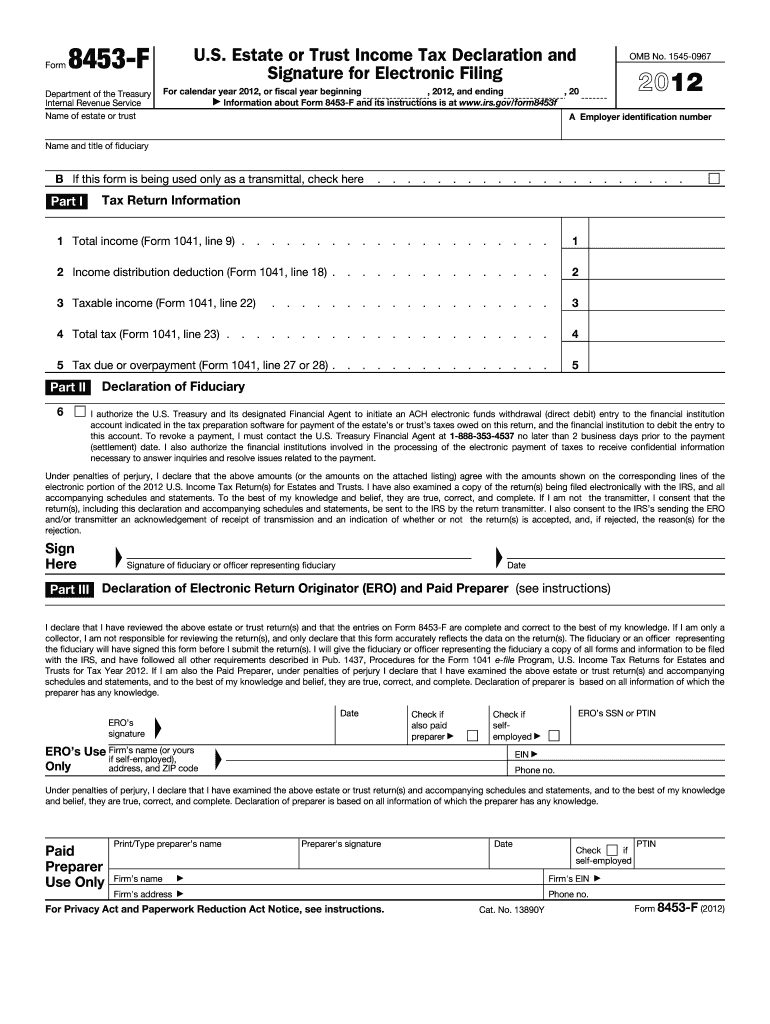
The 2012 Form 8453-F from the Internal Revenue Service (IRS) is specifically designated for U.S. Estate or Trust Income Tax Declaration. This form plays a crucial role in the electronic filing of the Form 1041 for estates and trusts. It ultimately serves to verify the authenticity of the submitted electronic return and grants authorization for the electronic filer. Additionally, it allows for the facilitation of any payments owed through methods such as direct debit.
Key Functions
- Authentication: Acts as a verification mechanism for electronic submissions of Form 1041.
- Authorization: Delegates authority to electronic return originators (EROs) to manage the submission process.
- Payment Facilitation: Offers options for paying taxes directly from a bank account.
Steps to Complete the 2012 Form 8453-F
Completing the 2012 Form 8453-F involves several structured steps to ensure that all parts of the form are correctly filled out. Here's a detailed breakdown of how to efficiently complete this form:
Step-by-Step Process
-
Gather Required Information: Begin by collecting all necessary tax documents, including your Form 1041 details.
-
Review Sections: Familiarize yourself with each section of Form 8453-F, including declarations and tax return information.
-
Complete Tax Return Information: Ensure that the figures and details on your Form 1041 are accurately represented here.
-
Fiduciary Declaration: Fill in the declaration section reserved for fiduciaries, confirming that the information presented is accurate to the best of your knowledge.
-
ERO Declaration: If using an electronic return originator, ensure they complete their section to confirm the authorized submission.
-
Submit Electronically: Once completed, submit it via the approved electronic method alongside the Form 1041.
Considerations
-
Accuracy: Double-check all inputted numbers against your tax return documents.
-
Authorization: Ensure the ERO has completed their parts accurately to avoid delays in processing.
Who Typically Uses the 2012 Form 8453-F
This form is principally used by individuals responsible for the administration of estates and trusts within the United States. Specifically, it supports those who are required to file their income tax returns for these entities.


Primary Users
- Fiduciaries: Individuals or institutions overseeing the estate or trust's financial responsibilities.
- Tax Professionals: Certified personnel managing tax submissions on behalf of estates and trusts.
- Electronic Return Originators (EROs): Individuals or companies authorized to transmit forms electronically to the IRS.
Important Terms Related to the 2012 Form 8453-F
Understanding specific terminology is critical for accurately completing the form. Here are some terms frequently encountered with Form 8453-F.
Glossary
-
Fiduciary: An entity responsible for managing the assets of estates and trusts.
-
Form 1041: A tax form used by estates and trusts to report their income, deductions, and other tax obligations.
-
Electronic Return Originator (ERO): An authorized individual or organization responsible for electronically submitting tax forms.
Filing Deadlines / Important Dates
Adhering to the correct deadlines is essential to avoid penalties associated with late or incomplete submissions.
Key Deadlines
-
Regular Filing Deadline: Typically April 15th, though it may vary depending on IRS announcements each tax year.
-
Extensions: If an extension is filed, the deadline for submission may be extended up to six months, usually until October 15th.
Legal Use of the 2012 Form 8453-F
This section explores the legal implications and usage of the form within the context of U.S. tax law.
Legal Aspects
-
Compliance: Being compliant with IRS guidelines concerning estates and trusts filing requirements is mandatory.
-
Record-Keeping: Maintaining a copy of the form and its associated submissions for future reference is advisable for legal adherence.
Form Submission Methods (Online / Mail / In-Person)
Understanding the available submission methods ensures efficient processing and response from the IRS.
Submission Options
-
Electronic Filing: Preferred method due to its speed and efficiency, especially when electronically authenticating and submitting Form 1041.
-
Mail Submission: Allowed but less favored due to longer processing times.
-
In-Person Drop-off: Usually not applicable for this form as electronic submission is the primary focus.
IRS Guidelines
The IRS provides specific guidelines to aid in the accurate completion and submission of Form 8453-F. Adhering to these is essential for ensuring the form is correctly processed.
Key Guidelines
-
Use of Software: The use of IRS-approved tax preparation software is highly recommended for accuracy and compliance.
-
Accuracy: All information must be verified for accuracy against original documents to prevent errors in reporting.
-
Updates: Regularly review IRS updates affecting Form 8453-F to remain compliant with any changes in filing requirements.
These blocks provide extensive insight into the 2012 Form 8453-F, covering essential details, processes, and related information to support users in their submission efforts.




