



Char address alternate search 2026

Get Form
fingerprinting applicant Preview on Page 1

Here's how it works

01. Edit your fingerprinting applicant online
Type text, add images, blackout confidential details, add comments, highlights and more.

02. Sign it in a few clicks
Draw your signature, type it, upload its image, or use your mobile device as a signature pad.

03. Share your form with others
Send card ssn application via email, link, or fax. You can also download it, export it or print it out.

How to use or fill out char address alternate search with our platform

Form edit decoration
9.5
Ease of Setup
DocHub User Ratings on G2
9.0
Ease of Use
DocHub User Ratings on G2
  1. Click ‘Get Form’ to open it in the editor.
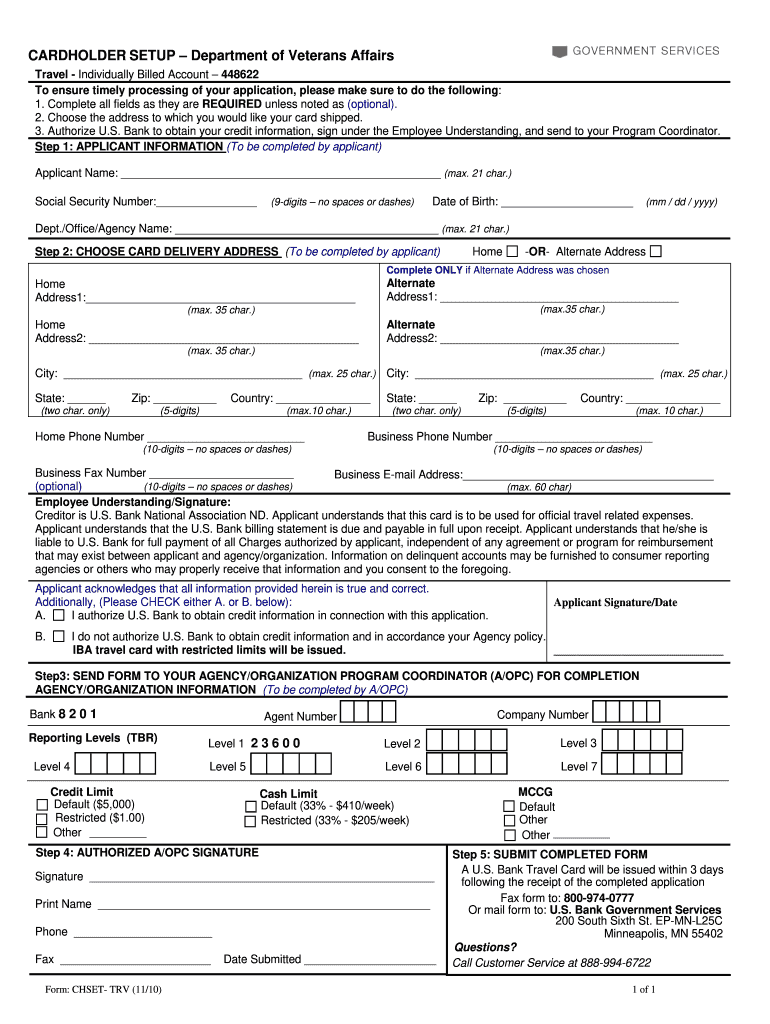
  2. Begin with the APPLICANT INFORMATION section. Fill in your name, Social Security Number (9 digits), and Date of Birth (mm/dd/yyyy). Ensure all fields are completed as they are required.
  3. In the CHOOSE CARD DELIVERY ADDRESS section, select either 'Home' or 'Alternate Address'. If you choose 'Alternate Address', complete the corresponding fields for Alternate Address1 and Alternate Address2, including City, State, Zip, and Country.
  4. Provide your Home Phone Number and Business Phone Number. If applicable, include your Business Fax Number and E-mail Address.
  5. Review the Employee Understanding/Signature section. Check either A or B regarding credit information authorization and sign with the date.
  6. Send the completed form to your Agency/Organization Program Coordinator for further processing.
  7. Finally, submit the completed form via fax or mail as instructed at the bottom of the document.

Start using our platform today to streamline your document editing and form completion process for free!

See more char address alternate search versions

We've got more versions of the char address alternate search form. Select the right char address alternate search version from the list and start editing it straight away!
Versions Form popularity Fillable & printable
2010 4.9 Satisfied (272 Votes)
be ready to get more

Complete this form in 5 minutes or less

Get form

Got questions?

We have answers to the most popular questions from our customers. If you can't find an answer to your question, please contact us.
Contact us
The CHAR data type stores any string of letters, numbers, and symbols. It can store single-byte and multibyte characters, based on the database locale. A CHAR(n) column has a length of n bytes, where 1 n 32,767.
Usually you would use the latter if you intend to modify the content of an array, and the former if you dont. In which case you should also write const char *str so that the compiler will warn you if you try modifying the non-modifiable array to which it points.
The newline character, represented by \n, is a special character that is used when we need to end the current line and start a new one. The backslash in \n is called the escape character and it is always followed by a letter to create an escape sequence that is treated as a single character.
Using Assignment Operator (=) In C++, the easiest method to convert char* (C-style string) to a std::string is by simply assigning it to the std::string object using (=) assignment operator.
both are same. case 2 : if char p[] and char *p in this case also there is not difference, because char p[] simply reduces to char *p when passed as argument to a function, and for the record, even char p[20] is exactly the same thing as the function sees it as char *p.

Security and compliance

At DocHub, your data security is our priority. We follow HIPAA, SOC2, GDPR, and other standards, so you can work on your documents with confidence.

Learn more
ccpa2
pci-dss
gdpr-compliance
hipaa
soc-compliance
be ready to get more

Complete this form in 5 minutes or less

Get form

People also ask

char* is a pointer declaration (nothing gets created like some say), and it points at memory location, no matter if its a variable, or an argument. char() on the other hand is set length array when used as variable, and is assigned values directly. when used as argument though, it has the exact same function as char*.
The char s[] is an array, whereas *s is a pointer. In an array, the total string is stored in the stack section, whereas for the pointer char *s, the pointer variable is stored in the stack section, and the content is stored in the code section.

veteran card application

