






Definition and Meaning of Letter Administration
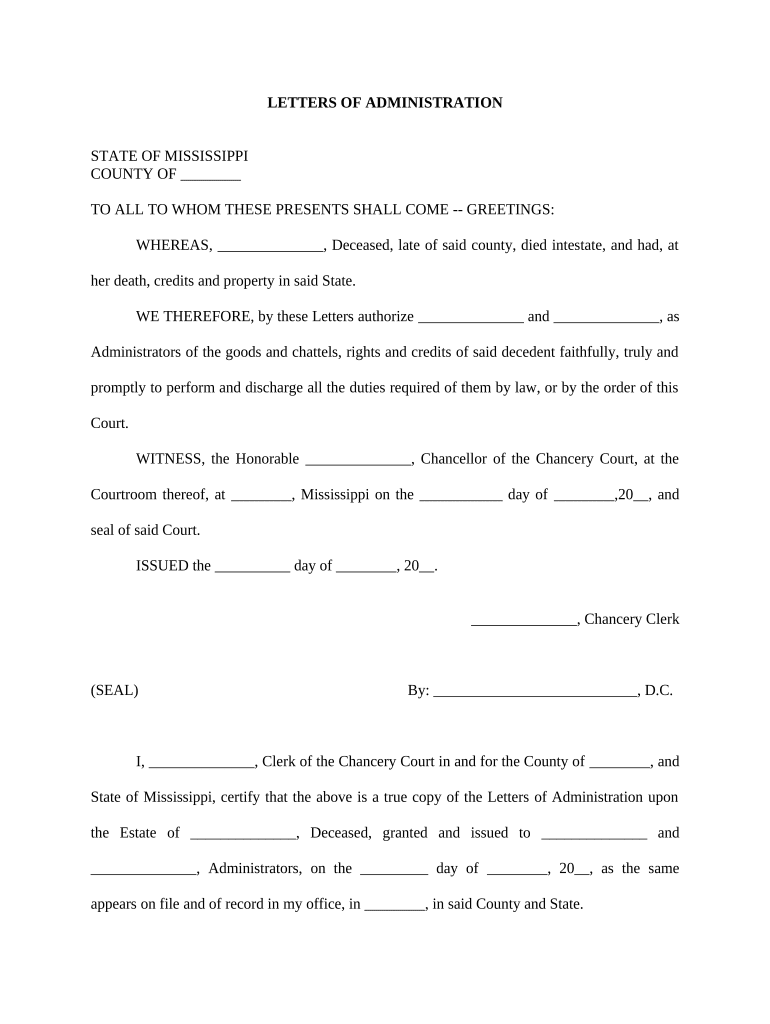
A letter of administration is a legal document issued by a probate court that grants an individual or individuals the authority to manage and distribute the estate of a deceased person who died intestate, meaning without a valid will. This document is essential for ensuring that the decedent's assets are appropriately handled, debts are settled, and distributions are made according to state laws. The letter confers specific responsibilities upon the administrators, allowing them to act on behalf of the estate in various financial and legal matters.
Key Elements Involved
- Authority Granted: Administrators are granted the power to collect the decedent's assets, pay debts, and distribute remaining assets to heirs as dictated by state law.
- Probate Court Role: The court's involvement ensures that all actions taken by the administrator adhere to legal standards, providing a level of oversight and protection for the estate and its beneficiaries.
- Notification Responsibilities: Administrators must inform creditors and distributees about the administration process, providing transparency and adherence to legal requirements.
Importance of Letter Administration
Having a letter of administration is crucial, as it legitimizes the appointed individual's actions concerning managing the estate. It helps avoid disputes among potential heirs or creditors by providing clear legal backing for the administrators’ activities.
Steps to Complete the Letter Administration
Acquiring a letter of administration involves several steps that must be carried out meticulously to ensure compliance with legal requirements.
- File a Petition: The interested party (typically the next of kin) must file a petition for administration in the probate court of the county where the decedent resided.
- Provide Required Documentation: Certain documents must accompany the petition, including proof of the decedent's death, details of the decedent's estate, and information about potential heirs.
- Death certificate
- Completed application form
- Notices to heirs
- Court Hearing: A court hearing may be required where the judge will assess the petition. Interested parties can voice objections if necessary.
- Issuance of the Letter: If the court approves the petition, the letter of administration is issued, granting the appointed individual the authority to manage the estate.
Important Considerations
- Legal Counsel: It may be beneficial to consult an attorney familiar with probate law to assist with the complexities of the process.
- State Specificity: Some states may have additional requirements or forms that need to be filled out during this process.
Who Typically Uses the Letter Administration
The letter of administration is commonly used by individuals designated to oversee the estate of a deceased person. This role is typically filled by:
- Family Members: Relatives, such as children, spouses, or siblings, who are often the most directly involved in the deceased's affairs.
- Close Friends or Trusted Associates: Individuals who were close to the decedent and are capable of managing the estate responsibly.
- Professional Executors: Some individuals may choose to appoint professional executors, such as attorneys, accountants, or trust companies, especially if the estate is complex.


Responsibilities of Administrators
- Asset Management: Administrators must identify, safeguard, and manage the decedent's assets.
- Debt Settlement: Paying off any obligations and debts owed by the estate.
- Distribution of Assets: Following legal guidelines to ensure fair and lawful distribution of assets to the rightful beneficiaries.
Legal Use of the Letter Administration
The letter of administration serves numerous legal purposes and is recognized across various jurisdictions within the United States. Its legal validity is crucial for:
- Transacting Estate Business: Administrators can open estate bank accounts, liquidate assets, and manage financial affairs on behalf of the estate.
- Court Authority: This document provides evidence of the administrator's legal authority, which is required when dealing with financial institutions or transferring property.
- Risk Avoidance: Without this letter, individuals attempting to manage or distribute estate assets risk legal challenges from other heirs or creditors.
Jurisdictional Variations
Legal requirements for issuing a letter of administration can differ significantly from state to state, with some jurisdictions having specific stipulations regarding the appointment process and qualifications for administrators.
Examples of Using the Letter Administration
Utilization of the letter of administration occurs across various scenarios where individuals must navigate the complex terrain of estate management. Here are practical examples:
- Estate of a Deceased Loved One: A child of the deceased files for a letter of administration to settle the estate of their parent who passed away without a will.
- Business Continuity: The appointed administrator for a deceased business owner uses the letter to continue business operations and settle any debts.
- Asset Liquidation: An appointed family member utilizes the letter to sell real estate owned by the deceased to pay off outstanding debts and distribute remaining funds to heirs.
Scenarios of Specific Interest
- Intestate Succession: If a person dies without a will, the letter of administration is critical to ensuring that state laws govern the distribution of assets.
- Managing Complex Estates: In cases where the decedent owned several properties or had numerous financial accounts, the letter aids in formally consolidating and managing these interests.
These examples illustrate the letter of administration's broad applicability in various contexts, affirming its utility in ensuring that estates are settled in accordance with legal and familial expectations.