
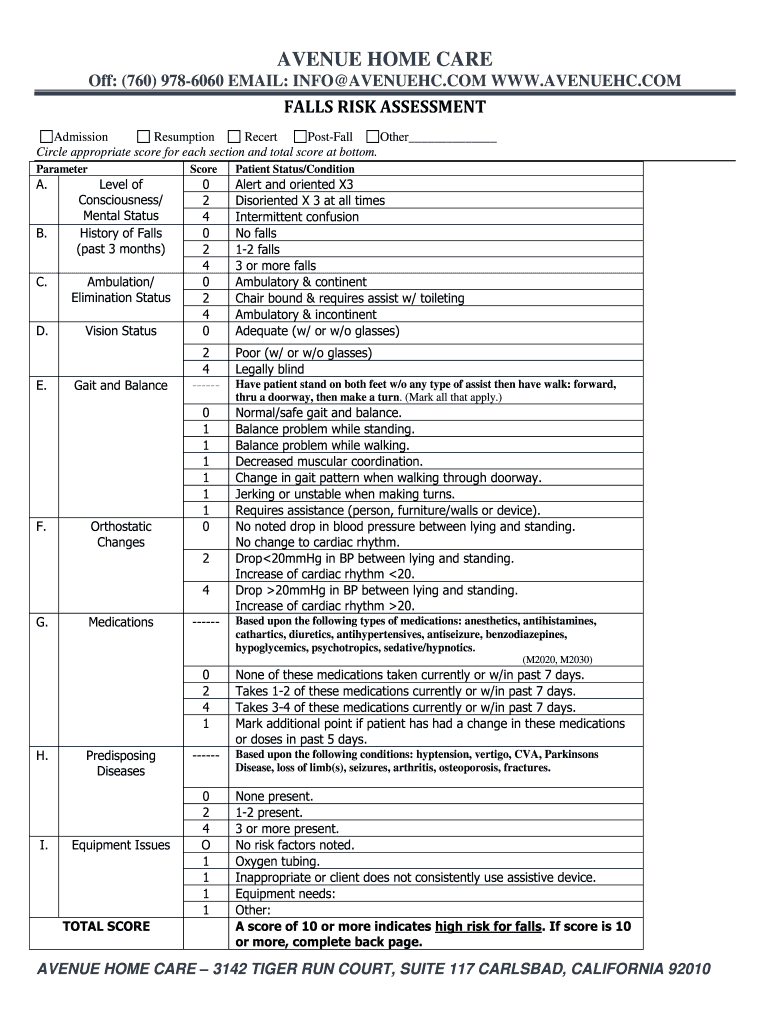







Definition & Meaning of Nursing Home Risk Assessment Template
A nursing home risk assessment template is a structured document designed to identify and evaluate the potential risks associated with various aspects of care within a nursing home environment. This template is critical for ensuring the safety and well-being of residents by systematically assessing factors that could lead to injury or deterioration of health. The assessment typically encompasses a range of areas, including fall risks, medication management, infection control, and mobility assessments.
The objective of using such a template is to ensure that all potential hazards are identified and addressed proactively. This process not only aids in maintaining high standards of care but also complies with regulatory requirements and enhances the overall quality of services provided in nursing homes. Each assessment considers individual resident needs, facilitating tailored care plans that consider unique vulnerabilities.
Key Elements of the Nursing Home Risk Assessment Template
A comprehensive nursing home risk assessment template generally includes several critical elements that guide the assessment process. These elements help in systematically documenting risks and necessary precautions:
-
Resident Information: Basic demographic details, medical history, and current health status that might influence risk factors.
-
Risk Parameters: Specific areas of focus such as fall risk, skin integrity, and adverse reactions to medications. Each risk parameter is identified with its corresponding assessment criteria.
-
Scoring System: An organized means of quantifying risks. Each parameter may have a scoring range that helps identify high-risk residents.
-
Preventive Measures: Recommended actions that should be taken to mitigate identified risks, such as mobility aids for fall prevention or regular medication reviews.
-
Follow-up Actions: Documentation of necessary follow-ups based on the assessment, ensuring ongoing monitoring and adjustment of care plans.
How to Use the Nursing Home Risk Assessment Template
Using the nursing home risk assessment template involves several streamlined steps that are essential for effective evaluation:
-
Gather Resident Information: Collect comprehensive data about the resident, including personal details and medical history, which will provide context for the assessment.
-
Complete the Risk Parameters: Methodically go through each risk area outlined in the template. This includes assessing physical abilities, cognitive function, and any previous incidents or medical conditions that may influence current risk levels.
-
Score Each Parameter: Based on the findings from the risk assessment, assign scores to each parameter. This scoring should follow the standardized guidelines provided within the template, allowing for easy identification of high-risk areas.
-
Document Preventive Measures: Record any preventive actions to be taken. This may include adjusted care routines, specific therapies, or additional staff training focused on identified risks.
-
Review and Update Regularly: The nursing home risk assessment should not be a one-time event. Schedule regular reviews to re-assess risks as residents’ conditions change, ensuring continuous quality of care.
Steps to Complete the Nursing Home Risk Assessment Template
Completing the nursing home risk assessment template is a methodical process that involves several specific steps:
-
Identify the Resident’s Needs: Begin by verifying the resident’s specific care requirements, focusing on any known health issues that could impact their risk level.
-
Conduct a Physical Assessment: Evaluate the resident's physical abilities, including mobility, stability, and sensory functions. This may involve direct observation and specific mobility tests.
-
Review Medication Impact: Analyze all medications the resident is currently taking. Consider potential side effects that could increase the risk of falls, confusion, or other health issues.
-
Engage in Informal Discussions: Talk with care staff and family members to gain insights into the resident’s usual behaviors and any previous incidents that might affect current risk estimations.
-
Finalize and Review: After completing the assessment, review the document for clarity and completeness. Ensure that all sections are filled out accurately and that preventive measures are clearly outlined.
Real-World Examples of Using the Nursing Home Risk Assessment Template
Implementing the nursing home risk assessment template has been shown to enhance the safety and quality of care in various scenarios:
-
Case Study 1: A nursing home in California integrated a fall risk assessment template that identified several residents at high risk. By implementing tailored exercise programs and mobility aids, the facility significantly reduced the incidence of falls by thirty percent in six months.
-
Case Study 2: In a New York facility, a comprehensive risk assessment revealed widespread issues with medication management among residents. By introducing regular medication reviews and staff training on side effect awareness, the nursing home improved adherence to prescribed treatments and minimized adverse reactions.
-
Case Study 3: A nursing home in Texas used a customized assessment template that identified mental health factors impacting resident safety. They enhanced their care plans by incorporating mental wellness activities, which led to improved cognitive function and a notable decrease in incidents related to confusion.
Legal Use of the Nursing Home Risk Assessment Template
Legally, the nursing home risk assessment template must comply with various regulations to ensure it meets federal and state guidelines. This typically includes adhering to the requirements set by the Centers for Medicare & Medicaid Services (CMS) and state health departments.
-
Documentation: Nursing homes are required to keep thorough documentation of risk assessments as part of their operational standards. This documentation can be crucial for compliance audits and could be used in legal situations if claims arise.
-
Privacy and Confidentiality: The assessment must respect resident privacy, ensuring that all personally identifiable information and health details are securely handled according to HIPAA regulations.
-
Informed Consent: Residents or their legal representatives must often provide consent for specific aspects of care planning based on the assessment findings, making it essential that the contents of the risk assessment are communicated clearly and transparently.
-
Updates per State Law: States may have their own additional requirements regarding nursing home assessments. It is vital for facilities to remain informed and compliant with these laws to avert potential penalties or liabilities.




