






Definition & Meaning
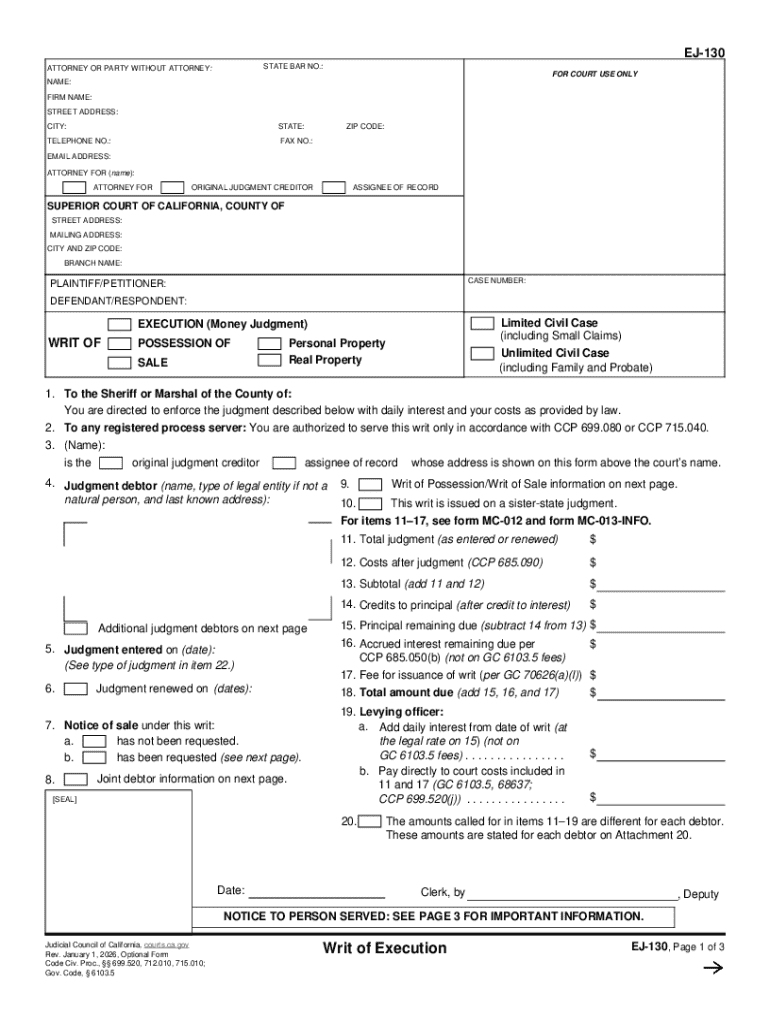
The "Original Judgment Creditor Form" serves as a legal document used predominantly in the legal and financial sectors. It is instrumental when a creditor seeks to claim money awarded through a court judgment from a debtor. This form is an essential tool in the collection process, establishing the creditor's right to collect the specified amount. The document identifies the original creditor and provides necessary information to facilitate the collection of outstanding debts. In legal contexts, the accuracy and completeness of this form can significantly impact the enforcement of a financial judgment.
How to Use the Original Judgment Creditor Form - Fill Out and Sign
Filling out the Original Judgment Creditor Form correctly is crucial. The process generally involves several key steps:
- Identify the Parties Involved: Clearly list the names of both the creditor and the debtor, ensuring there is no ambiguity.
- Input Judgment Details: Include specifics of the court judgment, such as the case number, the date of judgment, and the total amount due.
- Provide Contact Information: Input details such as addresses and contact numbers for all parties to ensure clear communication throughout the collection process.
- Complete All Required Fields: Ensure all mandatory sections of the form are accurately filled to prevent delays in processing.
Steps to Complete the Original Judgment Creditor Form - Fill Out and Sign
Completing the form involves a systematic approach:
- Gather Required Information: Before starting, collect all relevant data, including court documents and financial statements.
- Fill Out the Form: Enter the collected information in the appropriate sections. Utilize tools like text boxes and dropdowns for accuracy.
- Review and Confirm: Double-check all entries for correctness, paying close attention to numerical data.
- Add a Signature: Use DocHub's signature feature to electronically sign the form, ensuring it is legally binding.
Who Typically Uses the Original Judgment Creditor Form - Fill Out and Sign
The primary users of the Original Judgment Creditor Form include:
- Creditors: Individuals or entities entitled to receive payment from a debtor.
- Attorneys: Legal representatives handling the documentation and enforcement of judgments.
- Financial Institutions: Entities involved in debt recovery and management.
These parties utilize the form to formalize claims and facilitate the collection process.


Key Elements of the Original Judgment Creditor Form - Fill Out and Sign
The form contains several critical components:
- Party Identification: Sections detailing the identities of the creditor and debtor.
- Judgment Specifications: Information regarding the court ruling, including judgment date and case number.
- Amount Owed: Detailed breakdown of the total sum the debtor is required to pay.
- Signature Section: Space for signatures to validate the form's authenticity.
These elements must be carefully completed to ensure the document's validity.
Legal Use of the Original Judgment Creditor Form - Fill Out and Sign
The form's legal application is scrutinized by courts to ensure the enforcement of judgments complies with state and federal laws. It is used to initiate wage garnishments, place liens on property, and perform other collection activities legally available to creditors. Proper completion of this form is critical to ensure the creditor's actions are supported by legal documentation.
State-specific Rules for the Original Judgment Creditor Form - Fill Out and Sign
Different U.S. states may have specific regulations governing the use of this form:
- Variation in Filing Procedures: States might require additional documentation or have unique filing deadlines.
- Local Court Requirements: State courts may have specific formats or supplemental forms that need to accompany this document.
- Notarization and Authentication: Some states require the form to be notarized for added legal validity.
Consulting with a legal professional familiar with regional laws is advised for compliance.
Examples of Using the Original Judgment Creditor Form - Fill Out and Sign
In practice, the form can be used in scenarios such as:
- Debt Recovery: A creditor seeking repayment from a defaulted loan can use the form to reclaim funds.
- Court-Ordered Payments: Enforcing alimony or child support payments mandated by a court.
- Business Disputes: Collecting awarded damages following a civil litigation case.
These examples illustrate its applicability in various financial recovery efforts.
Required Documents
To effectively complete the form, certain documents may be needed:
- Court Judgment Proof: Official judgment documents confirming the court's decision.
- Identification: Valid IDs for creditor and debtor to verify parties' identities.
- Correspondence Records: Documentation of any communications between creditor and debtor regarding the judgment.
Having these documents ready ensures a smooth form completion process.
Form Submission Methods (Online / Mail / In-Person)
The Original Judgment Creditor Form can be submitted in various ways:
- Online Submission: Use platforms like DocHub to edit, sign, and submit electronically.
- Mail: Print and send physical copies via postal service for jurisdictions that require hard copies.
- In-Person: Some jurisdictions may necessitate hand-delivery to local court offices or processing centers.
Choosing the appropriate method depends on jurisdictional requirements and the user's preference.
Penalties for Non-Compliance
Failure to properly fill out and submit this form can result in various consequences:
- Delayed Collections: Incorrect submissions can postpone the enforcement of the judgment.
- Legal Sanctions: Non-compliance can lead to fines or penalties imposed by the court.
- Invalidated Claims: Inaccuracies or omissions may render the claim unenforceable, affecting the creditor's legal standing.
Ensuring the form is accurately and completely filled out prevents these legal and financial setbacks.