




01. Edit your c86 form online
Type text, add images, blackout confidential details, add comments, highlights and more.

Type text, add images, blackout confidential details, add comments, highlights and more.

Draw your signature, type it, upload its image, or use your mobile device as a signature pad.

Send jamaica customs c86 form via email, link, or fax. You can also download it, export it or print it out.
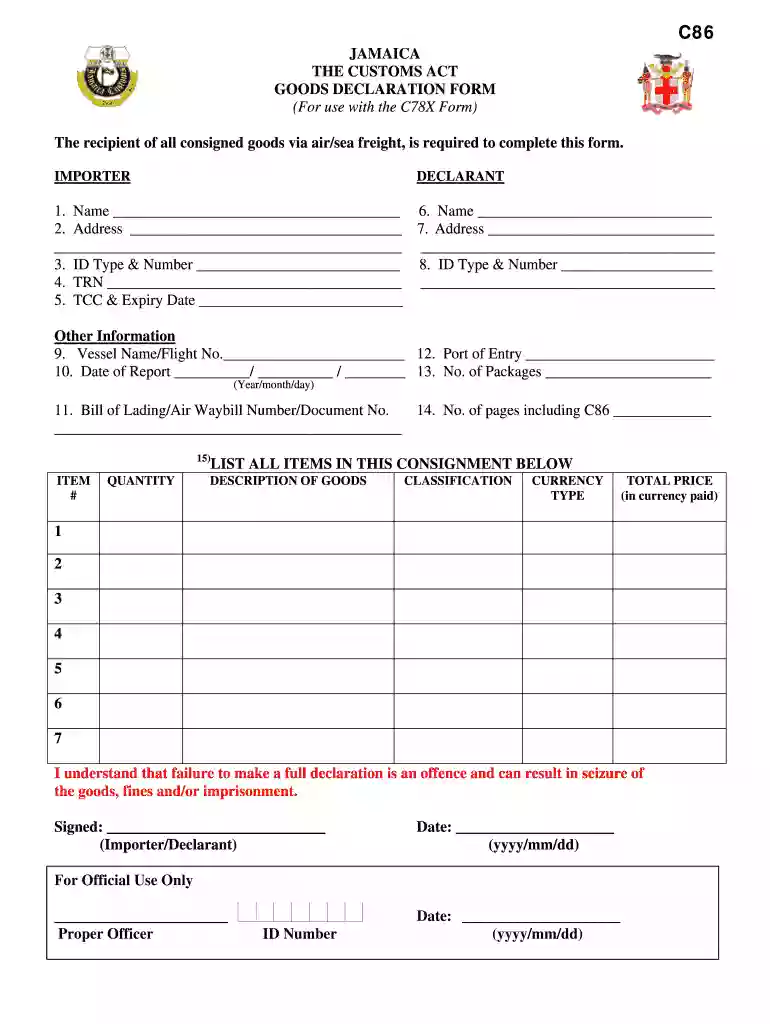
The C86 form, officially known as the Customs Act Goods Declaration Form, is a crucial document that facilitates the declaration of goods imported into Jamaica either through sea or air freight. This form outlines the details pertaining to the consignment, including the identity of the importer, the nature of the goods being imported, and their respective values. A full declaration is legally required, and accuracy in the completion of this form is essential to avoid potential penalties imposed by customs authorities.
The C86 form serves multiple purposes:
Completing the C86 form necessitates several key elements that must be filled out accurately to ensure compliance with customs regulations. The primary sections of the form include:
Importer Information: This section includes the name, address, and contact details of the importer, ensuring that customs can easily reach out if verification or additional information is required.
Consignment Details: Here, importers must provide specifics of the shipment, including:
Value of Goods: Importers are required to declare the total value of the goods and must ensure that this matches any accompanying invoices to prevent discrepancies during the customs inspection process.
Tariff Classification: Accurately indicating the tariff codes is essential for the proper assessment of duties and taxes owed on the shipment.
Signatures and Dates: A legally binding signature from the importer or an authorized representative must be provided to certify the completion of the form.
Completing the C86 form involves several methodical steps to ensure the declaration is both accurate and compliant with Jamaican customs regulations. The process includes:
Gather Required Information: Collect all necessary documentation, including invoices, bills of lading, and any other pertinent papers related to the shipment.
Fill Out the Importer Information: Ensure the correct spelling of names and addresses as this information is crucial for contact and verification.
Detail the Consignment: Fill out sections detailing the shipment, including the mode of transport, item descriptions, quantities, and values.
Classify the Goods: Reference customs tariff guides to accurately classify the imported goods. This will assist in proper duty assessments.
Review for Accuracy: Before submission, review all entries for accuracy and completeness to minimize the chance of delays or penalties during customs processing.
Sign and Submit: Once verified, sign the document in the designated area and submit it to the relevant customs authority or port of entry.
The C86 form holds significant legal weight in the context of importation and trade compliance. Importers who fail to declare all aspects of their consignments accurately may face severe penalties, including fines and the possibility of confiscation of the goods. Additionally, any discrepancies that arise from false declarations can lead to legal actions against the importer. It is essential for all businesses involved in importing goods to be educated about the legal frameworks surrounding the use of the C86 form.
Failure to comply with customs regulations concerning the C86 form can result in various repercussions that can adversely affect businesses. Some potential penalties include:
Monetary Fines: Importers may be subjected to hefty fines based on the severity of the misdeclarations.
Seizure of Goods: Incorrectly declared goods may be seized by customs authorities to enforce compliance.
Criminal Charges: In cases of significant violations, especially those indicating fraud, criminal charges may be filed against the importer.
Loss of Import Licenses: Continued non-compliance may result in the revocation of import licenses, negatively impacting the ability to conduct business.
Reputational Damage: Non-compliance can lead to a loss of credibility and reliability with stakeholders, affecting future business opportunities.
A C86 form is applicable in various import scenarios in Jamaica. Here are several practical examples illustrating its use:
Importing Electronics: A company importing laptops from the United States must accurately describe each item and include their respective values and certifications to comply with local regulations.
Shipping Perishable Goods: An importer dealing with food items would need to provide additional certificates alongside the C86 form to prove that the goods meet health and safety standards.
Importing Personal Effects: Individuals relocating to Jamaica may use the C86 form to declare their personal belongings, ensuring that any applicable exemptions or allowances are noted.
Understanding the necessary steps and implications of using the C86 form is vital for anyone involved in international trade within Jamaica. Accurately completing this form not only ensures compliance with legal requirements but also facilitates smoother customs clearances for imported goods.
We've got more versions of the c86 form form. Select the right c86 form version from the list and start editing it straight away!
| Versions | Form popularity | Fillable & printable |
|---|---|---|
| 2004 | 4.2 Satisfied (42 Votes) |
At DocHub, your data security is our priority. We follow HIPAA, SOC2, GDPR, and other standards, so you can work on your documents with confidence.


