





Definition and Meaning of the Family Empowerment Scale
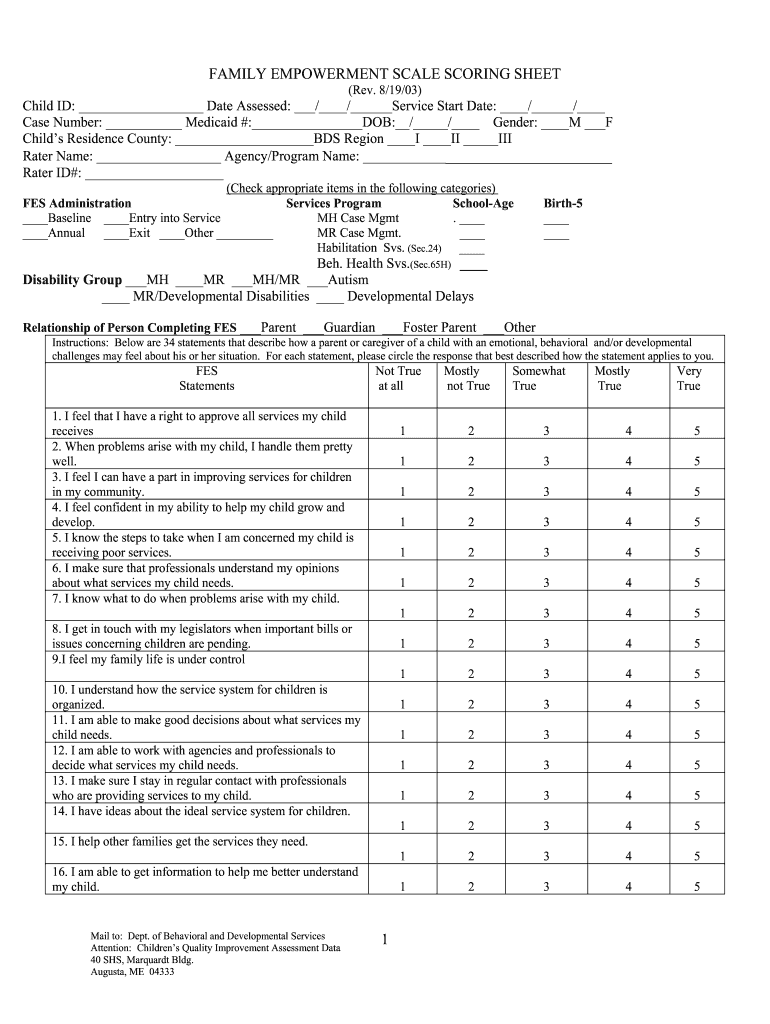
The Family Empowerment Scale (FES) is a standardized assessment tool designed to gauge the feelings and perceptions of parents or caregivers about their empowerment in controlling and managing services for children with emotional, behavioral, or developmental challenges. This instrument aims to highlight the areas where families feel empowered or constrained in their role as advocates for their children.
The scale provides numerically quantified results that categorize responses into three key areas: Family, Service System, and Community/Political. Each area reflects specific elements influencing empowerment, offering clarity on the dynamic between familial support, available services, and community engagement. Higher scores in these categories signify greater feelings of empowerment, suggesting that families are more actively involved in decision-making processes that affect their children.
How to Use the Family Empowerment Scale
Utilizing the Family Empowerment Scale involves several key steps to ensure a comprehensive assessment of a family's empowerment levels.
-
Access the Scale: The FES can typically be found in PDF format, which may be accessed online or via community organizations specializing in children's services.
-
Self-Assessment: Families should read through a series of statements related to their experiences and feelings regarding empowerment. Respondents mark their level of agreement or disagreement, offering a quantitative measure of their perceived empowerment.
-
Scoring Procedure: After completing the scale, participants follow specific scoring instructions that involve categorizing their responses into the designated areas. This will yield a total score for each section.
-
Interpreting Results: Once scores are calculated, families can analyze the results to identify strong areas of empowerment, as well as aspects that may require additional support.
-
Action Steps: Based on the results, families may decide to pursue additional resources or support services to bolster feelings of empowerment in weaker areas identified in the assessment.
Steps to Complete the Family Empowerment Scale
Completing the Family Empowerment Scale requires a systematic approach to ensure accuracy and meaningful results. Below are detailed steps:
-
Gather Necessary Materials: Ensure access to a printed or digital version of the Family Empowerment Scale.
-
Find a Quiet Environment: Choose a setting conducive to reflection and thoughtfulness to allow family members to engage deeply with the questions.
-
Read Instructions Carefully: Familiarize yourself with scoring procedures to ensure that responses are recorded correctly.
-
Complete the Scale Individually or as a Group: Depending on the size and involvement of the family, decide whether to complete the scale as individuals or collectively.
-
Reflect on Responses: Encourage discussion among family members about their choices, which may provide insights into different perspectives on empowerment before finalizing responses.
-
Calculate Scores: Once completed, follow the scoring instructions. Tally responses in each category to determine overall empowerment levels.
-
Review and Act on Findings: Use the scores to understand where the family feels empowered or where additional support may be necessary.
Who Typically Uses the Family Empowerment Scale?
The Family Empowerment Scale finds utility among various stakeholders within the education and healthcare sectors.
-
Parents and Caregivers: They are the primary users, seeking insight into their empowerment regarding services for their children.
-
Social Workers: Professionals who work with families can harness the scale as a tool to measure and enhance family empowerment in support planning.
-
Educators: Teachers and administrators may use insights from the scale to better understand family engagement and address barriers to empowerment within educational settings.
-
Community Organizations: Non-profits and advocacy groups focused on child development can implement the Family Empowerment Scale as part of their evaluation processes to develop more effective programs.

Important Terms Related to the Family Empowerment Scale
Understanding key terminology associated with the Family Empowerment Scale is essential for accurate interpretation:
-
Empowerment: A process that enables individuals or families to gain control over their lives and situations, particularly concerning decision-making.
-
Self-Assessment: An individual's or a group's evaluation of their abilities and perceptions, vital for identifying areas of strength and those needing improvement.
-
Service System: Refers to the network of services and support available to families and children that can impact their overall empowerment.
-
Community Engagement: The involvement of families with their wider community, which includes resources available for personal growth, education, and advocacy.
-
Scoring Procedure: The methodology used to derive quantitative scores from qualitative responses on the scale, highlighting empowerment levels in various domains.
Examples of Using the Family Empowerment Scale
Real-world applications of the Family Empowerment Scale can illustrate its practical benefits:
-
Family Advocacy: A family completes the FES and discovers that they feel less empowered in navigating medical services for their child. With this knowledge, they seek training from a local advocacy group.
-
Support Planning: A social worker utilizes the FES scores during a case conference, resulting in the recommendation of additional resources tailored to the family's identified needs.
-
Program Development: A community organization analyzes FES results from multiple families, identifying common areas of disempowerment. They then adjust their program offerings to address these issues more effectively.
Utilizing the Family Empowerment Scale in these ways provides actionable insights that can lead to meaningful change for families and the systems that support them.