




01. Edit your file restraining order online new mexico online
Type text, add images, blackout confidential details, add comments, highlights and more.

Type text, add images, blackout confidential details, add comments, highlights and more.

Draw your signature, type it, upload its image, or use your mobile device as a signature pad.

Send file a restraining order online via email, link, or fax. You can also download it, export it or print it out.
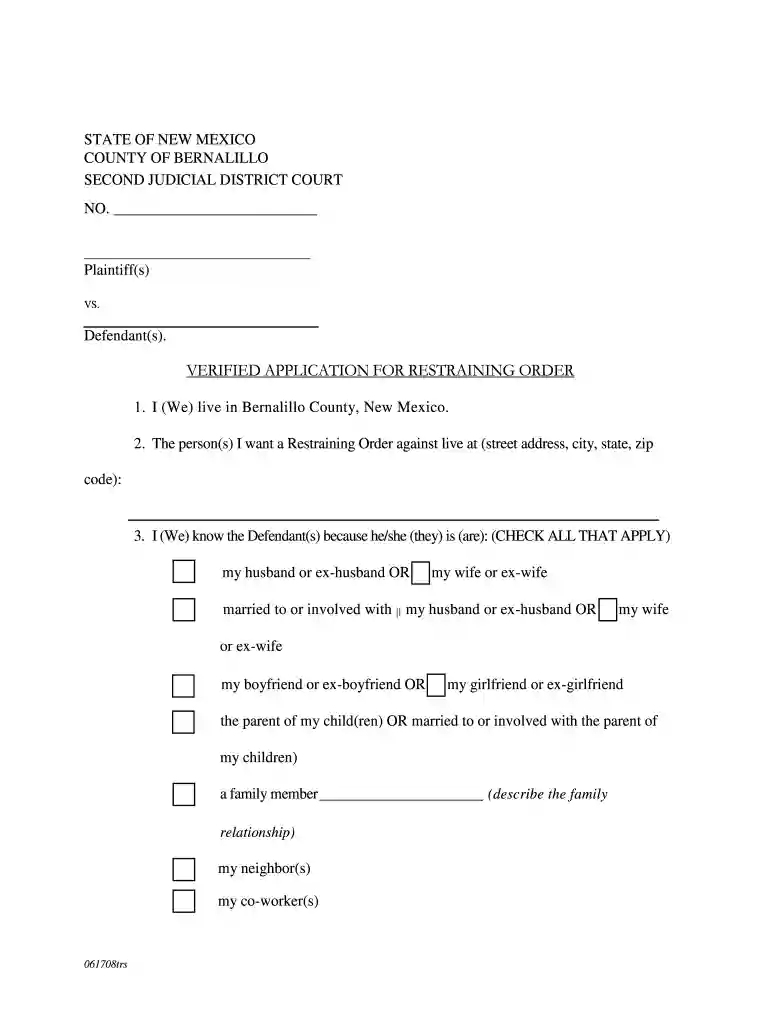
A verified application for a restraining order is a legal document that requests court protection against an individual who has allegedly caused harm or threatened the applicant. This application is filed in accordance with state laws and usually requires the applicant, known as the plaintiff, to provide specific details surrounding the incidents of harm. In New Mexico, the application must be formally verified, confirming that the information provided is truthful and accurate.
This document not only seeks protection for the plaintiff but also serves as a legal mechanism to prevent further contact or harassment from the defendant, known as the respondent in legal terminology. Once the application is submitted, the court evaluates the circumstances presented to determine if a temporary restraining order should be granted prior to a hearing regarding a more permanent protective order.
Key components typically included in a verified application restraining order are:
Filing a restraining order in New Mexico involves several important steps, which ensure that the applicant complies with legal procedures and addresses all necessary aspects of their situation.
Obtain the Correct Forms: The first step is to acquire the verified application for a restraining order and related forms from a courtroom or a legal service provider. This process may involve downloading the forms from an official courthouse website or receiving them directly at the courthouse.
Complete the Application: Fill out the form accurately, providing details about the incidents leading to the application. Include information about any specific incidents, dates, locations, and witnesses, if applicable.
File the Application: Once the form is completed, file it with the appropriate court. In New Mexico, this would typically be the district court within the jurisdiction where the incidents occurred. There may be a fee associated with filing, but fee waivers might be available for those who demonstrate financial hardship.
Attend the Hearing: After filing, a court date will be set for a hearing where both parties can present their cases. A judge will review the evidence and testimonies before deciding on whether to issue a permanent restraining order.
Serve the Respondent: If the court grants a temporary restraining order, the plaintiff must ensure that the respondent is served with the proper legal notice and documentation regarding the order.
Each step must be approached with thoroughness and attention to detail, as failure to comply with specific legal requirements can affect the outcome of the restraining order request.
Understanding specific legal terminology is essential when filing a verified application for a restraining order. Familiarity with these terms can help navigate the process effectively.
Having a grasp of these terms will aid applicants in understanding their rights, responsibilities, and the legal implications surrounding their case.
To increase the chances of successfully obtaining a restraining order, it is important to gather sufficient evidence that supports the claims made in the verified application.
Document Incidents: Keep a detailed record of all incidents of harassment, threats, or abuse. This may include dates, times, locations, and descriptions of what occurred.
Collect Physical Evidence: If applicable, gather any physical evidence that can support the claims, such as photographs of injuries or property damage, emails, text messages, or voicemail recordings. This evidence should be organized chronologically to create a clear narrative.
Witness Statements: If there are witnesses who can corroborate the plaintiff's experiences, obtain written statements or contact information for these individuals so they can testify at the hearing if necessary.
Police Reports: If any incidents have been reported to law enforcement, request copies of police reports. These documents can serve as official proof of the plaintiff's claims.
Consult a Legal Professional: Engaging with an attorney or a legal aid organization can provide invaluable assistance in understanding what constitutes acceptable proof and how to present it effectively in court.
Proving the need for a restraining order hinges upon the ability to provide clear, convincing evidence that a genuine threat exists.
In New Mexico, there are several types of restraining orders that can be sought, depending on the circumstances surrounding each case.
Domestic Violence Restraining Order: This is typically filed by individuals who are experiencing violence or threats from a current or former intimate partner, family member, or someone with whom they have cohabited.
Civil Restraining Order: This category is broader and can be utilized for various non-domestic situations, including harassment or stalking by acquaintances or strangers.
Emergency Protective Order: Often issued in urgent situations where there is an immediate threat to safety, this order can be granted without notice to the respondent and is usually temporary in nature.
Permanent Restraining Order: Following a court hearing, a permanent order can be established, providing long-term protection based on evidence presented during the legal proceeding.
Determining the appropriate type of restraining order is crucial, as different types offer varying levels of protection depending on the context and nature of the threat faced by the applicant.
Once a restraining order is granted, it is essential to understand the next steps to ensure compliance and safety.
Understand the Terms: Review the terms of the order carefully. The restraining order will specify what actions the respondent is prohibited from taking, such as contacting the plaintiff or appearing at certain locations.
Keep a Copy of the Order: Always have a copy of the restraining order on hand and share it with family, friends, or coworkers if necessary. This can help to ensure that individuals are aware of the protective measures in place.
Document Violations: If the respondent violates any terms of the restraining order, document these occurrences immediately. This includes taking notes of the date, time, location, and nature of the violation along with any witness information.
Notify Authorities: If violations occur, it is important to report them to law enforcement promptly. Officers can enforce the terms of the restraining order, which may include arresting the respondent for violations.
Consider Legal Follow-Up: Depending on the nature of the violations or any ongoing concerns, it may be wise to consult with legal counsel for guidance on additional protective measures or potential modifications to the existing restraining order.
By understanding and following these steps, individuals can bolster their safety and ensure that the protective measures granted by the court are effectively upheld.
We've got more versions of the file restraining order online new mexico form. Select the right file restraining order online new mexico version from the list and start editing it straight away!
| Versions | Form popularity | Fillable & printable |
|---|---|---|
| 2008 | 4.8 Satisfied (191 Votes) |
At DocHub, your data security is our priority. We follow HIPAA, SOC2, GDPR, and other standards, so you can work on your documents with confidence.
The court may issue a preliminary injunction or a temporary restraining order only if the movant gives security in an amount that the court considers proper.Read more
An application for the appointment of a receiver shall be in writing, supported by affidavit and served upon the adverse party, together with reasonable noticeRead more
Apr 24, 2013 issue an order denying the application. Such order issued by the. Secretary of Labor under this subparagraph shall be subject to ju- dicialRead more


