






Definition and Meaning of Legal Guardianship Document
A legal guardianship document is a formal agreement that establishes a guardian's legal authority to make decisions on behalf of a minor child or an individual unable to care for themselves. This document is typically required in situations where parents are unable to provide care due to circumstances such as illness, incarceration, or absence. By officially assigning a guardian, the document helps ensure that the best interests of the individual in need of care are prioritized.
Components of a Legal Guardianship Document
The primary elements included in a legal guardianship document often encompass:
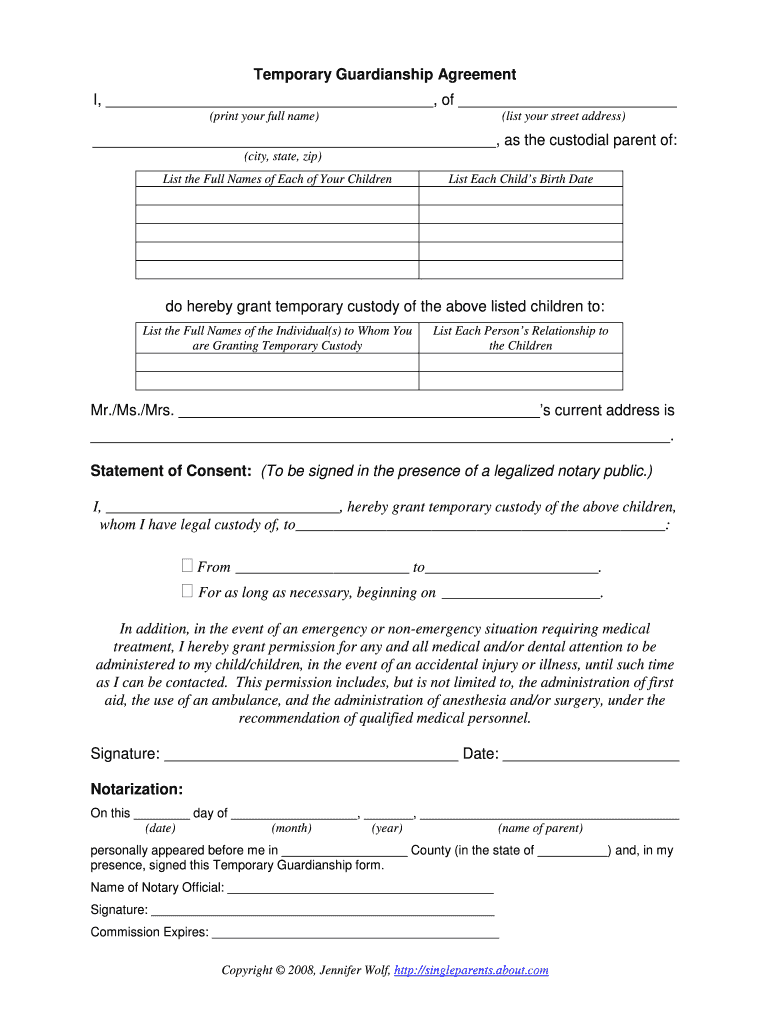
- Guardian's Information: Full name, address, and contact details of the appointed guardian.
- Ward's Information: Name and pertinent information about the child or individual requiring guardianship.
- Duration of Guardianship: Specifies whether the guardianship is temporary or permanent.
- Powers Granted: Details the specific powers and responsibilities assigned to the guardian, which may include medical decisions, educational choices, and daily care responsibilities.
- Notarization Requirement: Many jurisdictions require the document to be notarized to validate the agreement legally.
Understanding these components is essential for both guardians and the parties involved in the guardianship process, as it influences the legal authority and responsibilities conferred by the document.
How to Use the Legal Guardianship Document
Using a legal guardianship document entails proper preparation, submission to a court, and compliance with local laws. Begin by drafting the document, ensuring it includes all required information. Once completed, the document must be submitted for legal validation, often necessitating a court appearance.
Steps in Using the Document
- Drafting the Document: Use templates where possible to ensure all legal requirements are met.
- Filing with the Court: Submit the document to the appropriate court which typically handles guardianship cases within your jurisdiction.
- Court Approval Hearing: Attend any requisite court hearings where the judge reviews the application and may ask questions.
- Obtaining a Court Order: Once approved, you will receive a court order which finalizes the guardianship.
Legal guardianship documents are imperative for protecting the rights and well-being of minors or individuals requiring assistance, thus ensuring clarity in custodial arrangements.
Steps to Complete the Legal Guardianship Document
Completing a legal guardianship document includes several key steps that must be succinctly followed to ensure its legality and effectiveness.
Detailed Steps
- Choose the Guardian: The first step is to decide who will serve as the guardian, ensuring they are legally eligible and suitable for the role.
- Gather Required Information: Collect all necessary information such as the ward's health, educational needs, and preferences.
- Fill Out the Document: Carefully fill in all sections of the document, ensuring accuracy and compliance with local laws.
- Review & Revise: Before submitting, review the documentation for errors and make necessary revisions.
- Notarization: Ensure the document is notarized, if required, to verify authenticity.
Completing these steps accurately is critical as it directly affects the legal recognition of the guardianship and the guardian's authority.
Important Terms Related to Legal Guardianship Document
Understanding specific terminology associated with legal guardianship is essential for grasping its implications and processes effectively.
Key Terms
- Ward: The individual, usually a minor, who is under the care of the guardian.
- Petition for Guardianship: A formal request submitted to the court seeking the establishment of a guardianship.
- Temporary Guardianship: A type of guardianship set for a specific period, often in emergencies.
- Permanent Guardianship: Long-term arrangements typically used when parental rights have been terminated.
- Custodial Rights: Represents the legal rights a guardian has over the ward, including making decisions regarding their welfare.
Grasping these terms aids in navigating the legal systems related to guardianship and protects the interests of the ward.
State-Specific Rules for the Legal Guardianship Document
The requirements and processes for establishing a legal guardianship document can vary significantly by state, making it vital to understand local laws.
Variations in State Laws
- Filing Requirements: Some states may require additional documentation, such as health records of the ward, alongside the guardianship form.
- Court Procedures: The process for court approval, including the need for a hearing or a background check, may differ.
- Notarization: Some jurisdictions mandate notarization, while others may not.
- Duration of Guardianship: States also have differing definitions of temporary versus permanent guardianship.
Understanding these differences ensures compliance and facilitates smoother application processes in your respective state.
Examples of Using the Legal Guardianship Document
Practical examples can illustrate how legal guardianship documents function in real-world scenarios.
Common Scenarios
- Emergency Situations: A parent hospitalized for an extended period may grant temporary guardianship to a family member to care for their child.
- Foster Care: Children in foster care systems may have a legal guardianship arrangement as part of their placement plan.
- Special Needs: Parents of children with special needs may establish a legal guardianship document to ensure continued care and decision-making after reaching adulthood.
These scenarios highlight the importance of legal guardianship documents in diverse contexts, ensuring proper care and rights for individuals who cannot manage for themselves.