
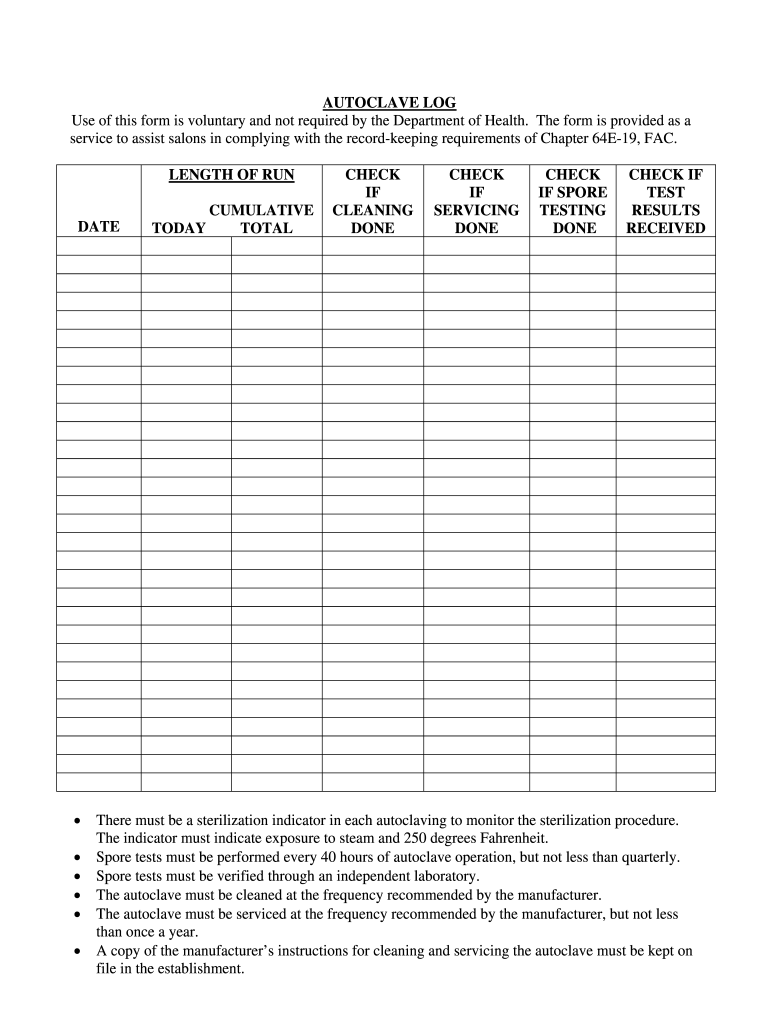







Understanding the Midmark Autoclave Maintenance Log Sheet
The Midmark autoclave maintenance log sheet is a crucial document that assists in tracking sterilization activities in various settings, including medical offices, dental practices, and other facilities that utilize autoclaves for instrument sterilization. This log sheet serves as an official record that outlines the cleaning, servicing, and operational checks performed on the autoclave, ensuring compliance with health and safety regulations.
Maintaining a well-documented log sheet is not just about fulfilling regulatory requirements; it also promotes accountability and safety in settings where sterilization is critical. The log should contain detailed entries regarding spore testing results, routine maintenance checks, and any issues or repairs reported.
Importance of Keeping a Maintenance Log
- Regulatory Compliance: Many states require that health care facilities maintain records of sterilization activities. An accurate log demonstrates adherence to safety guidelines.
- Accountability: Documenting maintenance activities ensures that all personnel involved in sterilization are accountable for their actions.
- Quality Control: Regularly updated logs help identify patterns or recurrent issues that may require further training or immediate action.
How to Use the Midmark Autoclave Maintenance Log Sheet Effectively
Using the maintenance log sheet correctly involves a structured approach that combines timely entries with detailed checks. Here are key aspects to consider:
- Document Regular Maintenance Activities: Detail every maintenance activity performed, including the date, type of maintenance, and who performed it.
- Incorporate Spore Test Results: Record the results of spore tests, including dates and outcomes, to verify the efficacy of sterilization procedures.
- Set Reminders for Routine Checks: Establish a schedule for monthly or weekly maintenance checks and document those activities to ensure regularity and thoroughness.
It is beneficial to understand the structure of the log sheet, which often includes sections for date, activity, observations, and personnel responsible. This organization allows easy review and adherence to standards.
Obtaining the Midmark Autoclave Maintenance Log Sheet
The maintenance log sheet can typically be obtained through several methods:
- Official Manufacturer Website: Visit Midmark's website to download templates or examples of the log sheet specific to their autoclaves.
- Health Care Association Resources: Many health care associations provide sample templates that adhere to regulatory standards.
- File Sharing Platforms: Templates and examples may also be available on document-sharing platforms or cloud services, allowing for easy access and customization.
Having the right version of the log sheet is important, as different autoclave models may have specific requirements.
Steps to Complete the Midmark Autoclave Maintenance Log Sheet
Completing the log sheet accurately involves a few key steps:
- Select the Appropriate Template: Ensure you have the correct version of the Midmark autoclave maintenance log sheet for your model.
- Fill in Identifying Information: Start with the autoclave's serial number, model, and location of use.
- Document Each Maintenance Task: After performing maintenance or testing, enter the details immediately, including:
- Date of the maintenance or test
- Type of task performed (e.g., cleaning, repair)
- Observations or notes on the equipment's performance
- Record Spore Test Data: Include results from sterilizer spore tests, along with the date and responsible technician's name.
- Review Entries Regularly: Periodically review the log to ensure all necessary entries are made and compliant with applicable guidelines.
Attention to detail in this process can significantly impact the overall effectiveness of sterilization practices.
Key Elements of the Midmark Autoclave Maintenance Log Sheet
Important elements to include on the log sheet to ensure comprehensive maintenance tracking:
- Date and Time: An accurate record of when maintenance or testing occurred.
- Operations and Maintenance Tasks: Specific activities performed, such as filter replacements or routine calibrations.
- Results of Sterilization Monitoring: Clear documentation of spore test outcomes and any necessary follow-ups.
- Personnel Involvement: Documentation of who performed the tasks to ensure accountability and traceability in procedures.
Each entry serves as a vital piece of the larger compliance and safety puzzle in facilities reliant on effective sterilization processes.
Examples of Using the Midmark Autoclave Maintenance Log Sheet
There are various scenarios in which the log sheet plays a critical role:
- Routine Compliance Audits: During an audit, a facility must present the log sheet as proof of adherence to sterilization protocols.
- Identifying Issues: If recurring spore test failures occur, detailed maintenance logs may highlight patterns in cleaning or servicing tasks that need addressing.
- Training and Quality Assurance: New staff can use historical data to understand common practices and represent benchmarks for quality assurance in maintenance.
Logging provides insight into the operational health of autoclave units and serves as an educational resource for ensuring compliance with infection control standards.
Legal Use of the Midmark Autoclave Maintenance Log Sheet
Legality surrounding the use of maintenance logs is critical, especially in health care environments. The log sheet should be designed to meet the requirements of relevant authorities and standards, including:
- Adhering to State Regulations: Each state may have different record-keeping requirements for sterilization; be aware of local laws.
- Complying with Accreditation Standards: Organizations like The Joint Commission or the Centers for Disease Control and Prevention (CDC) may require specific documentation practices.
- Maintaining Data Privacy: Ensure that sensitive information about patients or procedures documented in the logs is handled in compliance with HIPAA regulations.
Proper legal handling of maintenance logs protects the facility and reinforces trust with patients and regulatory bodies.




