




01. Edit your domestic partner california online
Type text, add images, blackout confidential details, add comments, highlights and more.

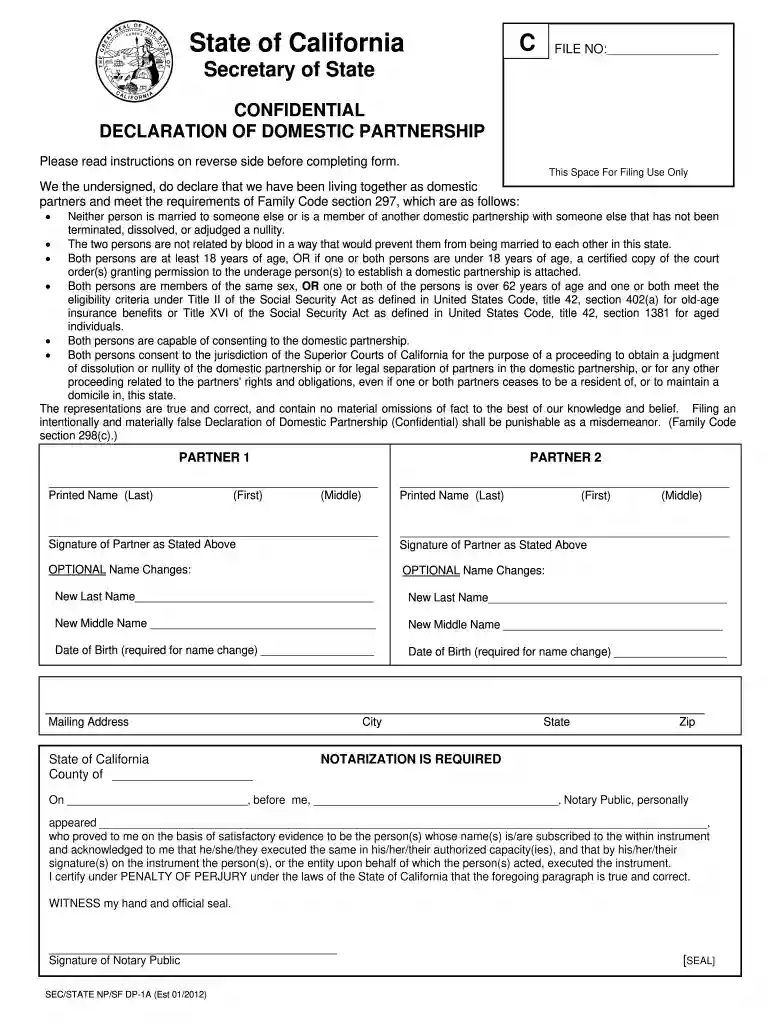
Type text, add images, blackout confidential details, add comments, highlights and more.

Draw your signature, type it, upload its image, or use your mobile device as a signature pad.

Send domestic partnership via email, link, or fax. You can also download it, export it or print it out.
Domestic partnership refers to a legally recognized relationship between two individuals, which provides various rights and responsibilities akin to those of marriage. In California, domestic partnerships were primarily established to afford same-sex couples legal recognition prior to the legalization of same-sex marriage. However, they are available to both same-sex and opposite-sex couples who meet certain criteria.
Registered domestic partners in California gain access to numerous legal rights and benefits that align closely with marriage, including:
To qualify for a domestic partnership in California, couples must meet specific requirements, including:
These criteria ensure that partnerships are formed based on mutual commitment and legal compliance.
Completing the required paperwork for a domestic partnership involves several steps:
After submission, the California Secretary of State will process the declaration and issue a Certificate of Domestic Partnership.
While domestic partnerships offer many benefits, there are also important considerations:
For individuals considering a domestic partnership, several forms may be relevant:
Navigating the details surrounding domestic partnership can provide clarity and assurance for couples dedicated to building a life together while receiving the values of legal recognition and associated benefits.
We've got more versions of the domestic partner california form. Select the right domestic partner california version from the list and start editing it straight away!
At DocHub, your data security is our priority. We follow HIPAA, SOC2, GDPR, and other standards, so you can work on your documents with confidence.
Registered Domestic Partners are given a Declaration of Domestic Partnership Certificate (or SEC/STATE LP/SF DP-1) from the California Secretary of State. NoRead more
Oct 9, 2011 It is hereby declared as the public policy of this state that it is necessary to protect and safeguard the right and opportunity of all persons.Read more
Declaration of Domestic Partnership (Form DP-1). A domestic partnership shall be established in California when both persons file a Declaration of Domestic.Read more


