
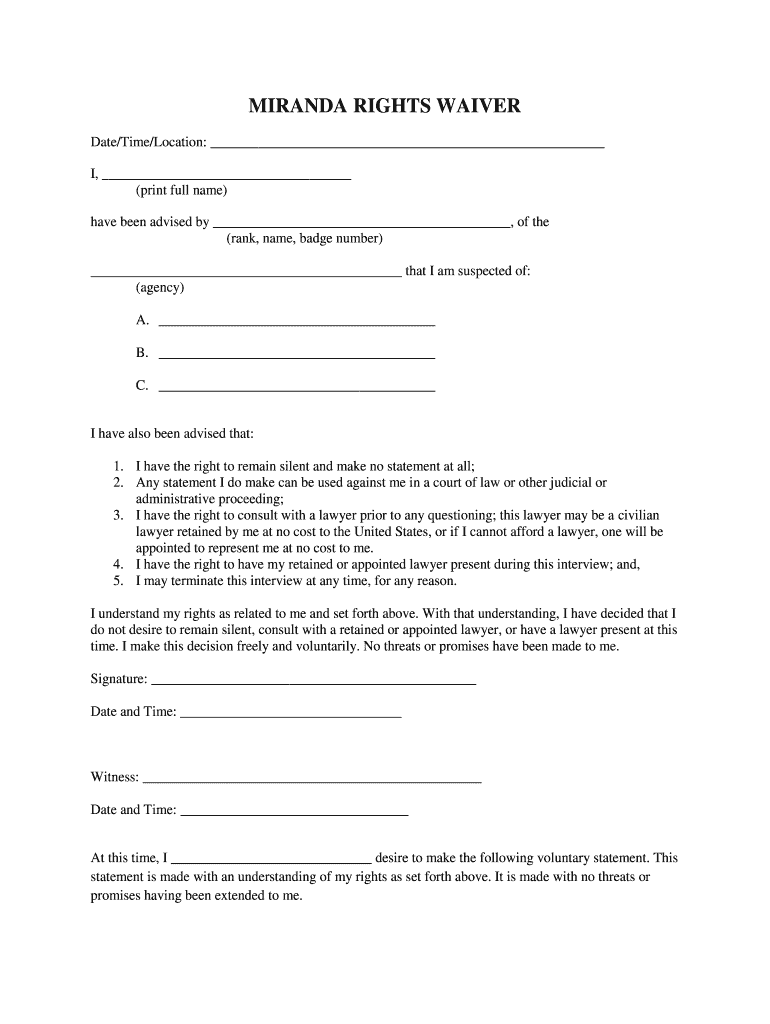







Definition and Meaning of the Miranda Waiver
The Miranda waiver, also known as a Miranda Rights Waiver, is a legal document that confirms an individual's voluntary decision to relinquish their rights during an interrogation by law enforcement. The term derives from the landmark U.S. Supreme Court case Miranda v. Arizona (1966), which established that individuals taken into police custody must be informed of their rights before being interrogated. These rights generally include the right to remain silent and the right to consult with an attorney.
Key Rights Included in Miranda
- Right to Remain Silent: The individual can choose not to respond to questions or provide information that could incriminate them.
- Right to an Attorney: The individual has the right to seek legal counsel before answering questions or signing any documents.
- Understanding and Voluntariness: The waiver must demonstrate that the individual understands these rights and willingly gives them up.
A properly executed Miranda waiver can impact the admissibility of statements made during interrogation in court, reinforcing the importance of understanding and completing this document correctly.
Key Elements and Requirements of a Miranda Waiver
The validity of a Miranda waiver relies on several critical elements that ensure the rights of the individual are protected during police interactions.
Essential Components
- Clear Communication of Rights: Law enforcement must explicitly articulate the rights being waived. The Miranda rights script should be followed to ensure consistency.
- Voluntary Nature of the Waiver: The waiver must be given without coercion or undue influence. The individual should not be subjected to any form of pressure.
- Informed Consent: The person waiving their rights must understand what they are giving up. This includes comprehending the implications of making statements without legal counsel present.
- Documentation: A physical Miranda rights waiver form or documented oral waiver can both be acceptable in different jurisdictions. The specifics can vary based on state law.
Implications of Non-Compliance
If these elements are not satisfied, any statement made by the individual may be deemed inadmissible in court, potentially affecting the prosecution's case.
Steps to Complete the Miranda Waiver
Completing a Miranda waiver involves several essential steps to ensure that it meets legal standards and adequately reflects the individual's decision.
Step-by-Step Process
- Understanding Your Rights: Before completing the waiver, it is crucial to listen carefully to the Miranda rights read by law enforcement.
- Asking Questions: If unclear about any rights, individuals should ask law enforcement for clarification.
- Making a Decision: Decide whether to waive the rights or exercise them. This choice should be made with careful consideration.
- Documenting the Waiver:
- Signature: If a form is presented, the individual must sign to indicate understanding and acceptance of the waiver.
- Date and Time: The waiver should include the date and time of signing to provide a clear record.
- Witnesses: Some jurisdictions may require that a witness observe the signing.
By following these steps, individuals can ensure that they have completed the waiver correctly and that their rights are adequately protected during interrogation.
Legal Use of the Miranda Waiver in Interrogations
In legal contexts, the Miranda waiver serves a vital role in protecting individuals during police interrogations. It is essential for ensuring that any statements made can be used appropriately in court.
When to Use the Miranda Waiver
- Custodial Interrogations: The waiver is crucial when an individual is in custody and subject to questioning from law enforcement.
- Documentation of Waivers: Law enforcement agencies are often required to record the waiver, either in writing or through audio/visual means, to substantiate that the rights were communicated and waived appropriately.
Consequences of Improper Use
If law enforcement fails to provide a Miranda waiver when required, any statements made may be considered inadmissible. This principle serves as a critical safeguard against self-incrimination.
Examples of Using the Miranda Waiver in Real Scenarios
Understanding how the Miranda waiver operates in practice can provide valuable insight into its significance and implications.
Practical Scenarios
-
Example of Effective Waiver: An individual is arrested for a suspected robbery. Before the interrogation, the officer reads the Miranda rights. The suspect acknowledges understanding and signs the Miranda waiver, ultimately providing a confession that is admissible in court.
-
Neglected Rights: In another case, an individual is interrogated without the officer issuing the Miranda rights. Any statements made during that questioning could be excluded from trial due to the failure to inform the individual of their rights.
-
Juvenile Cases: The application of the Miranda waiver can become more complex when dealing with minors. Courts often scrutinize the waiver for voluntary understanding, emphasizing the need for guardians or legal counsel to be involved.
These examples highlight the importance of both the criminal justice system and individuals’ rights, illustrating why the Miranda waiver is a critical component of lawful interrogation procedures.




