






Understanding a Sample Letter for Quotation Request
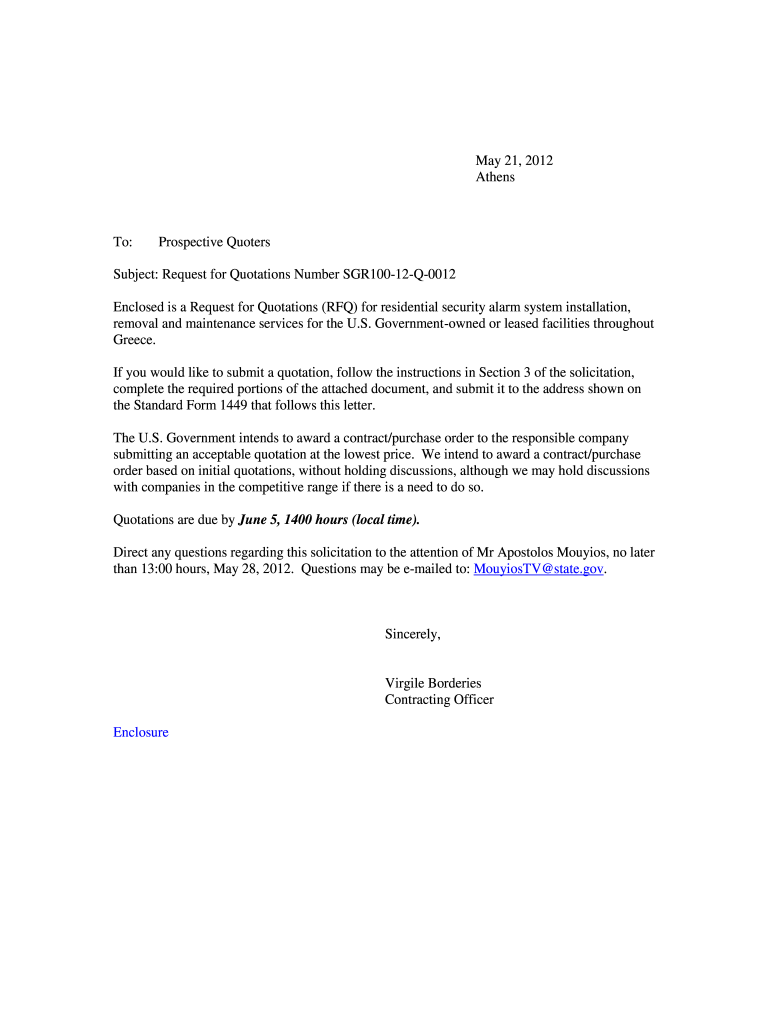
A sample letter for quotation request is a formal document used to solicit pricing and other relevant information from suppliers or service providers. This letter serves as an essential tool in procurement and can help businesses compare costs, quality, and service offerings before finalizing orders or contracts. The structure of such a letter typically includes specific items that the sender wants to inquire about, as well as any terms and conditions relevant to the pricing request.
Key Components of a Quotation Request Letter
When drafting a quotation request letter, it is vital to include key components that can facilitate a clear and concise response from potential suppliers. These components typically include:
- Contact Information: Include your name, title, company name, and contact details.
- Recipient Information: Clearly specify the name and address of the supplier or company from whom you are requesting a quote.
- Subject Line: A brief subject line or heading that states the purpose of the letter, such as “Request for Quotation for [specific goods/services].”
- Detailed Description of Goods/Services: Provide a clear and precise description of the goods or services you require. This should include quantities, specifications, and any special requirements.
- Deadline for Submission: Indicate a deadline by which the quotations must be received, allowing suppliers sufficient time to prepare their responses.
- Terms and Conditions: Outline any specific terms and conditions, such as payment terms, delivery requirements, and warranty information.
- Closing Statement: Politely express appreciation for their time and consideration, and encourage them to contact you if they have any questions.
Formatting Tips for a Quotation Request Letter
Proper formatting helps ensure that the letter is professional and easy to read. Consider the following formatting tips:
- Use a Professional Header: Start with your name and address, followed by the date, and then the recipient's details. This includes the name and address of the supplier.
- Select an Appropriate Font: Use a clear and professional font such as Times New Roman or Arial, typically in size 11 or 12.
- Use Formal Language: Maintain a respectful and formal tone throughout the letter. Avoid slang or overly casual language.
- Keep It Concise: Aim for clarity and brevity, ideally one page in length. This helps ensure that your request is taken seriously.
- Include a Call to Action: While not overly assertive, encourage the recipient to respond promptly.
Sample Quotation Request Scenarios
Several scenarios illustrate the use of a quotation request letter. For instance:
-
Scenario One: A small business looking to purchase office supplies may draft a request letter to multiple suppliers. They state specific quantities and types (e.g., pens, paper, staplers) and ask for bulk pricing to determine the most cost-effective supplier.
-
Scenario Two: A contractor may request a quotation from various suppliers for construction materials, clearly specifying the type and amount of each material needed, such as concrete, steel beams, and safety equipment.
Tips for Follow-Up After Sending the Request
Following up on your request can prompt suppliers to prioritize your inquiry. Here are some effective strategies:
- Set a Reminder: If your deadline is approaching and you have not received responses, set a reminder to follow up.
- Contact Suppliers Directly: A quick phone call can clarify any queries suppliers may have and demonstrate your genuine interest.
- Be Grateful: Whether you receive a quotation or not, express gratitude for their time and consideration. This fosters good relationships for future requests.
Importance of Clarity and Detail in Quotations
The accuracy of the details provided in a quotation request is crucial. Vague descriptions can lead to misunderstandings and inaccurate quotations, which might affect project timelines and budgets. Strive for:
- Precision: Clearly outline specifications to avoid confusion.
- Relevance: Adjust your request based on the supplier’s previous work or expertise, which ensures they can meet your needs effectively.
By ensuring that the letter for quotation request is detailed, clear, and professionally presented, businesses can effectively gather competitive pricing and make informed purchasing decisions.