




01. Edit your form online
Type text, add images, blackout confidential details, add comments, highlights and more.

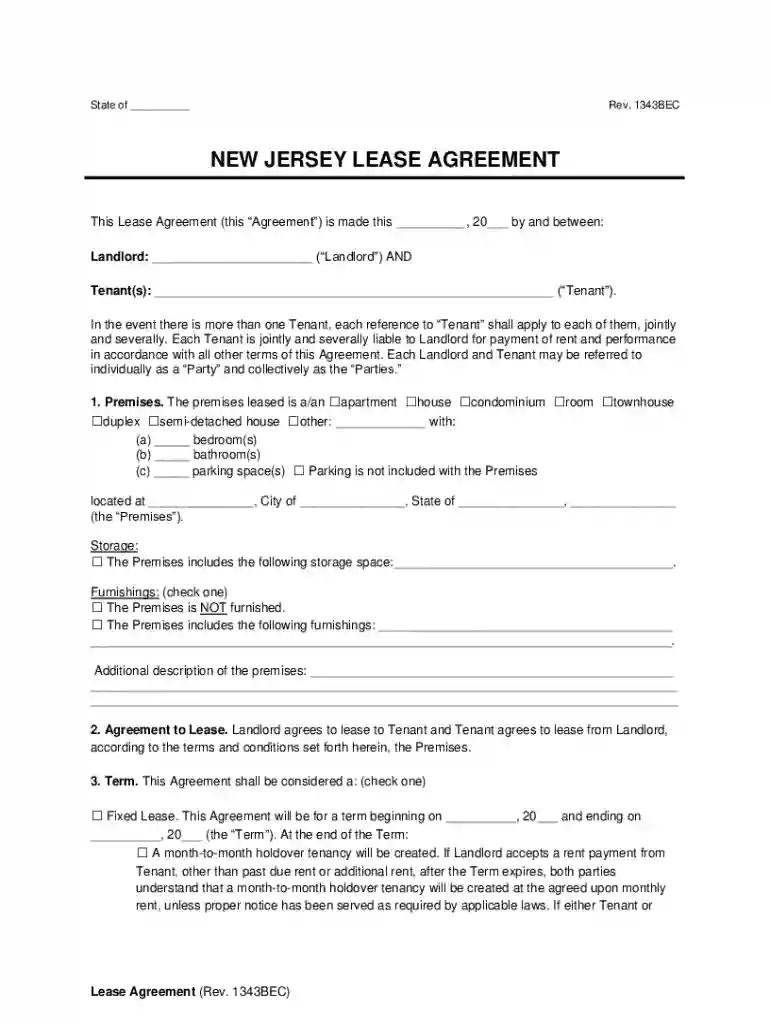
Type text, add images, blackout confidential details, add comments, highlights and more.

Draw your signature, type it, upload its image, or use your mobile device as a signature pad.

Send it via email, link, or fax. You can also download it, export it or print it out.
The New Jersey Lease Agreement is a legally binding contract between a landlord and a tenant, detailing the terms and conditions for renting property in New Jersey. It ensures that both parties are clear about their responsibilities and rights throughout the lease period. This agreement covers essential aspects such as rental amount, due dates, property maintenance, and the duration of the lease. It is crucial for establishing a fair relationship between landlords and tenants and provides legal protection for both parties.
A New Jersey Lease Agreement is a formal document used to outline the rental arrangements agreed upon by a landlord and tenant. This agreement sets forth the terms under which a property is rented, detailing obligations such as rental payments, security deposits, and tenant rights regarding the property's use. It serves as a safeguard to protect both parties' interests, clarifying expectations and reducing the potential for disputes.
Understanding specific legal terminology within the New Jersey Lease Agreement is crucial:
The lease agreement is not just a contractual obligation but is governed by state and federal laws to ensure fair housing practices. In New Jersey, it must comply with various regulations, such as the New Jersey Anti-Eviction Act and security deposit laws. Non-compliance can lead to legal repercussions, such as penalties or voided agreements, emphasizing the importance of accuracy and adherence to legislated provisions.
The primary users of the New Jersey Lease Agreement include:


The New Jersey Lease Agreement must adhere to state-specific rules designed to regulate the rental process:
In each scenario, the New Jersey Lease Agreement serves as a foundation to ensure clear communication and mutual satisfaction with the rental arrangement.
Bear in mind that while this guide provides a comprehensive overview, consulting a legal professional for specific situations or issues with the New Jersey Lease Agreement is recommended for personalized advice.
At DocHub, your data security is our priority. We follow HIPAA, SOC2, GDPR, and other standards, so you can work on your documents with confidence.
TERM: The Term of this Lease is for. 36 and ending on. ) (townhouse unit #. J. ) having a street address. New Jersey (referred to as the Property). (months)Read more
This bulletin provides basic information based on New Jersey statutory laws and case law regarding establishing and breaking leases for residential rentalRead more


