




01. Edit your trec amendment online
Type text, add images, blackout confidential details, add comments, highlights and more.

Type text, add images, blackout confidential details, add comments, highlights and more.

Draw your signature, type it, upload its image, or use your mobile device as a signature pad.

Send amendment to contract trec via email, link, or fax. You can also download it, export it or print it out.
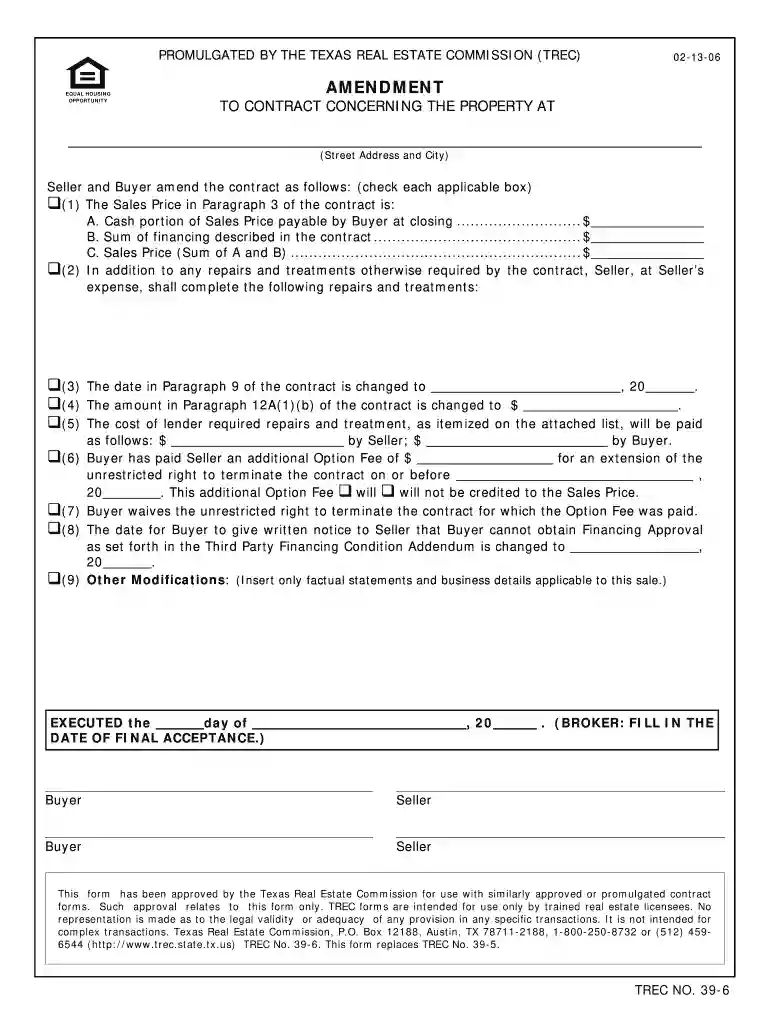
The TREC amendment is an essential document used in real estate transactions in Texas, particularly concerning modifications to existing contracts. Understanding its components and purpose can assist buyers and sellers in effectively navigating the complexities of their agreements.
The Texas Real Estate Commission (TREC) promulgates the TREC amendment form as a tool to modify previously agreed-upon contracts. This document typically includes changes regarding:
By utilizing a TREC amendment, both parties can document and confirm their mutual consent to these modifications, reducing the risk of misunderstandings.
There are various forms of TREC amendments, each serving a specific purpose within real estate transactions. Common types include:
Each type adapts to specific needs, ensuring all changes relevant to real estate agreements are legally documented.
Using the TREC amendment form involves several crucial steps:
The enforceability of a TREC amendment hinges on certain legal principles:
Understanding real-world applications can help illustrate the necessity of amending contracts:
The TREC amendment is a vital instrument in Texas real estate, allowing for flexible negotiations and modifications to contracts. Real estate professionals, buyers, and sellers benefit significantly from its use, ensuring clarity and legal protection throughout the transaction process. Understanding its functions, types, legal considerations, and typical usage scenarios will enhance your ability to navigate and manage real estate contracts effectively.
We've got more versions of the trec amendment form. Select the right trec amendment version from the list and start editing it straight away!
| Versions | Form popularity | Fillable & printable |
|---|---|---|
| 2006 | 4.9 Satisfied (507 Votes) |
At DocHub, your data security is our priority. We follow HIPAA, SOC2, GDPR, and other standards, so you can work on your documents with confidence.
39-10, Amendment to Contract. 22 TREC No. 39-10 approved by the Commission in 2024 for mandatory use as an amendment to promulgated forms of contracts.Read more
Amendment to Contract Description: This form is used to change or add terms to a contract that has already been executed. 39-10 Redline 11.2024. Related TermsRead more
Jun 29, 2018 The Task Force includes the Traffic Records Executive Committee (TREC) planned activity in the event a HSP amendment is needed to assist withRead more


