
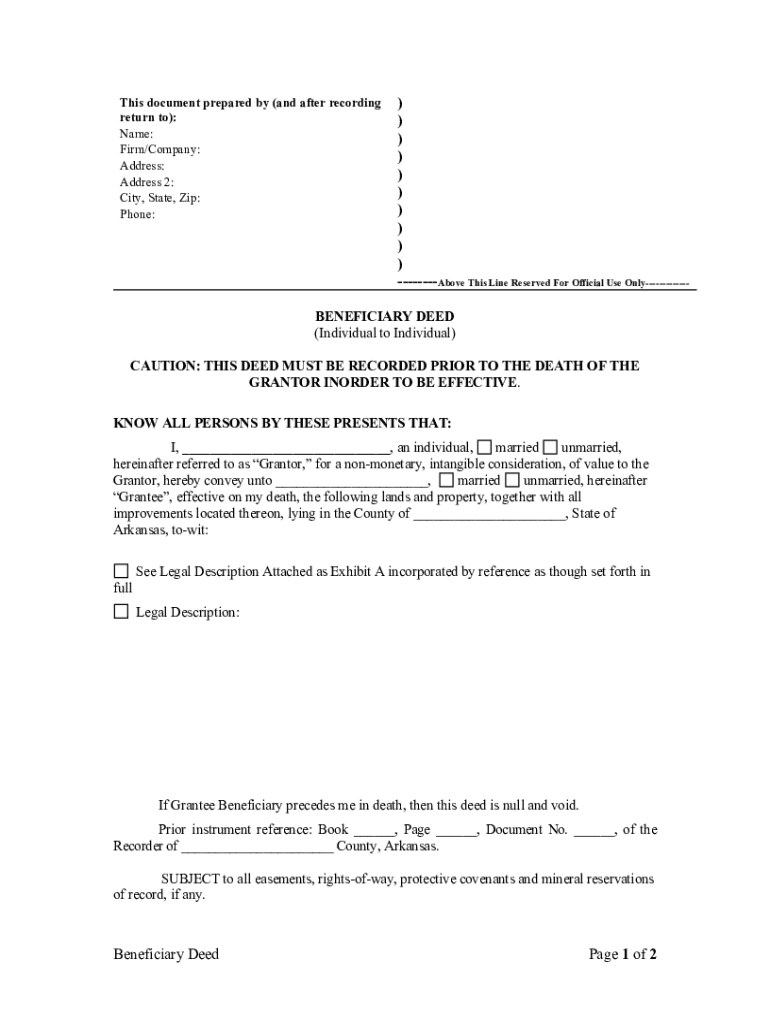







Definition and Purpose of the Arkansas Beneficiary Deed PDF
An Arkansas beneficiary deed, also known as a transfer on death deed, is a legal instrument that allows property owners in Arkansas to designate one or more beneficiaries to inherit real estate upon the owner's death without the necessity of probate. This document simplifies the transfer process, ensuring that the property is conveyed to the beneficiary without extensive court proceedings. This form is particularly beneficial for individuals looking to streamline estate planning and reduce the complexity and cost of administering an estate.
- Probate Avoidance: By using a beneficiary deed, property owners can manage estate transfers efficiently, bypassing the lengthy probate process, which can be costly and time-consuming.
- Flexibility: Owners retain full control over the property during their lifetime, including the right to sell or mortgage the property.
- Revocability: The deed can be revoked or modified at any time before death, providing owners with flexibility to adjust their estate plans as needed.
How to Use the Arkansas Beneficiary Deed PDF
To effectively use the Arkansas beneficiary deed, it is crucial to understand its application and the precise steps required to ensure its validity.
- Download and Complete the Form: Obtain the Arkansas beneficiary deed PDF from a trusted source and fill out the necessary fields, including the legal description of the property, the names of beneficiaries, and any conditions or reservations about the property.
- Ensure Proper Execution: The deed must be signed in front of a notary public to be legally valid. Consider consulting an attorney to ensure that the document is filled out correctly and aligns with your estate planning intentions.
- Record the Deed: After completion, the deed must be recorded with the county recorder in the county where the property is located. Recording the deed provides public notice of the beneficiary designation and is a critical step in ensuring the deed’s enforceability.
Steps to Complete the Arkansas Beneficiary Deed PDF
Completing the Arkansas beneficiary deed requires accuracy and compliance with state laws. Here are detailed steps to guide you:
-
Pre-Completion Checklist:
- Verify the legal description of the property.
- Decide on the beneficiaries and their respective shares.
- Determine if there are any conditions or entitlements.
-
Document Preparation:
- Fill in the owner’s name and address.
- List the beneficiary or beneficiaries, including names and addresses.
- Insert the complete and accurate legal description of the property.
-
Execution:
- Sign the deed in the presence of a notary public.
- Ensure all parties understand and agree to the terms on the deed.
-
Post-Completion Actions:
- File the deed with the relevant county recorder’s office.
- Keep a certified copy for personal records.
Legal Aspects and Considerations
Utilizing a beneficiary deed involves understanding the legal nuances and how it fits within broader estate planning.
- State-Specific Laws: Arkansas has specific laws governing beneficiary deeds, including requirements for notarization and recording. Familiarize yourself with these regulations to avoid future disputes or complications.
- Revocation and Amendment: Should you decide to change beneficiaries or conditions, you must execute a new deed to replace the previous version. This new deed should clearly state that it revokes the previous one.
- Impact on Estate: Consider how the transfer might affect estate taxes or existing mortgages and liens on the property. It might be prudent to discuss these potential impacts with legal and financial advisors.
Advantages of Using the Arkansas Beneficiary Deed
The Arkansas beneficiary deed provides numerous benefits for property owners concerned with effective estate management.
- Simplicity and Cost-Effectiveness: Avoid the expense and hassle of probate court.
- Immediate Transfer of Ownership: Ensures beneficiaries gain instant ownership upon the owner’s death.
- Privacy: Unlike wills, which become public record, transfer on death deeds can offer a more private method of transferring property.
Examples and Practical Scenarios
To provide clarity, consider these practical scenarios where an Arkansas beneficiary deed might be advantageous:
- Scenario 1: A single homeowner wishes to pass their property to a child without burdening them with probate proceedings. Using a beneficiary deed, they can designate their child as the beneficiary of the property, ensuring a smooth transition.
- Scenario 2: An individual with multiple properties might create separate beneficiary deeds for each property, specifying different beneficiaries for each, thus providing clarity and avoiding potential conflicts among beneficiaries.
Important Terms Related to the Arkansas Beneficiary Deed
Understanding key terminology associated with the Arkansas beneficiary deed can assist in correctly executing and interpreting the document.
- Grantor: The person who owns the property and executes the deed.
- Beneficiary: The person or persons designated to inherit the property upon the grantor’s death.
- Legal Description: A detailed description of the property that distinctly identifies it from other properties.
- Revocation: The process of officially canceling the beneficiary deed before the grantor’s death.
State-Specific Rules for the Arkansas Beneficiary Deed
Be aware of Arkansas-specific regulations that dictate the use of beneficiary deeds. These include:
- Recording Requirements: The deed must be recorded to be effective, serving as a public declaration of the beneficiary designation.
- Effect of Revocation: Any revocation must also be recorded to prevent ambiguity or invalid claims.
- Multiple Beneficiaries: Arkansas law allows for the designation of multiple beneficiaries and specifies how property interests should be divided among them.
It is always advisable to consult with an estate planning attorney to ensure compliance with all relevant state laws and proper execution of the beneficiary deed.




