





Definition and Purpose of the Accidental Injury Claim Form
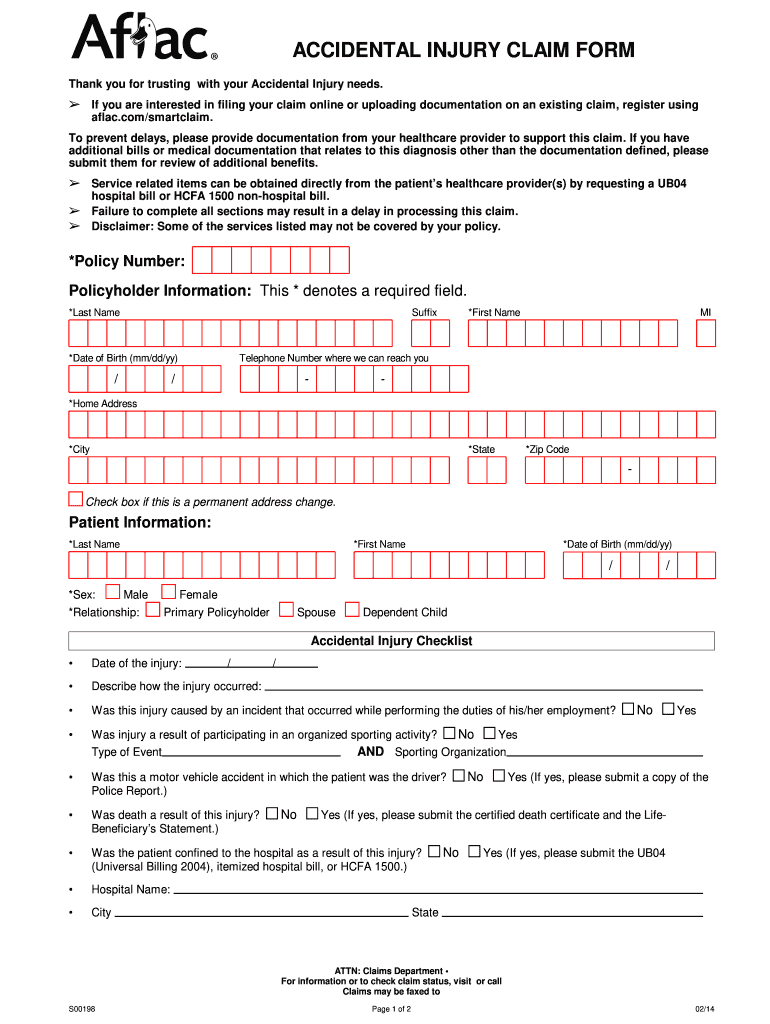
An accidental injury claim form is a crucial document used by individuals seeking compensation or benefits following an unintentional injury. This form serves as a formal request to insurance companies or relevant authorities to process a claim based on the incident specifics. Typically, it captures vital information such as the date and nature of the injury, medical treatments received, and any financial costs incurred due to the incident. Accurate completion of this form ensures the claimant's case is reviewed fairly and without unnecessary delays.
Key Components of the Form
- Personal details of the claimant, including name, contact information, and policy number.
- Specifics of the injury, such as causes, location, and date of occurrence.
- Medical treatment history and supporting documentation.
- Any additional expenses or losses, like lost wages or transportation costs.
How to Obtain and Complete the Accidental Injury Claim Form
Many insurance companies provide the accidental injury claim form through their websites, allowing for easy access and digital submissions. For instance, Aflac offers an online filing option via its SmartClaim portal. Claimants can also request physical copies from their insurer's customer service departments.
Steps to Complete the Form
- Collect Necessary Documents: Gather all relevant medical records, bills, and any police reports related to the injury.
- Fill in Personal Information: Begin by accurately entering your personal and policyholder details.
- Describe the Injury: Provide a detailed account of how and where the injury occurred. Be specific to ensure clarity.
- Attach Supporting Documents: Include copies of medical bills, treatment records, and any additional evidence of expenses.
- Review and Submit: Double-check all entries for accuracy before submitting the form through the specified method (online, mail, or in-person).
Who Typically Uses the Accidental Injury Claim Form
This form is predominantly utilized by individuals who have suffered an injury that is eligible for insurance claims. Common users include:


Employee Involvement
- Workplace accidents leading to injury covered under policies like workers' compensation.
- Policyholders participating in organized sports or recreational activities when the injury occurred.
Other Common Scenarios
- Incidents such as traffic accidents where the claimant was not at fault.
- Injuries occurring through slips, trips, or falls in public places.
Important Terms Related to the Accidental Injury Claim Form
Understanding specific terms is essential when dealing with claim forms to avoid confusion and ensure correctness in the filing process.
Critical Terms
- Policyholder: The individual under whose name the insurance policy stands.
- Beneficiary: Person designated to receive benefits if conditions are met.
- Deductible: The out-of-pocket expense before claims processing begins.
- Exclusions: Scenarios or conditions not covered by the insurance policy.
Legal Use and Compliance
Utilization of the accidental injury claim form must adhere to legal guidelines to ensure legitimacy and compliance with insurance frameworks. Here are some pivotal points:
Legal Compliance
- Honesty and Accuracy: Accurate information must be provided to prevent claims of fraud.
- Documentation Requirements: Submission of original or certified copies of requested documents.
- Timely Submission: Claims must be filed within a specified period post-incident to remain valid.
Required Documents for Submission
Different insurance companies may have varying documentation needs, but the following are commonly required:
Documentation Checklist
- Medical Records: Detailed reports from healthcare providers.
- Bills and Receipts: Proof of all expenses related to the injury, such as treatment costs and medication fees.
- Police Reports: If applicable, reports concerning the incident.
- Insurance Policy: Copy of the applicant’s insurance policy highlighting the coverage against accidental injury.
Variants and State-Specific Forms
The accidental injury claim form may vary depending on state regulations or specific insurance company requirements. States have unique guidelines dictating what constitutes an accidental injury and the necessary forms for submission.
Examples of Variants
- State Customizations: Some states require additional forms or specified notarizations.
- Insurance-Specific Versions: Companies might have proprietary versions that integrate specific policy terms.
Support and Integration with Digital Tools
Modern claim processes often involve digital tools for increased efficiency and security. DocHub, and similar platforms, facilitate seamless digital processing of these forms.
Digital vs. Paper Version
- Accessibility: Digital forms accessible from anywhere via the internet, mobile, or desktop platforms.
- Security: Enhanced data protection through encryption during online submissions.
- Convenience: Reduced turnaround time for processing due to instant document transfer capabilities.
Understanding the intricate details surrounding the accidental injury claim form can greatly enhance the accuracy and expediency of claim processing. By diligently following submission guidelines and aligning with legal requirements, claimants can ensure efficient handling of their claims.