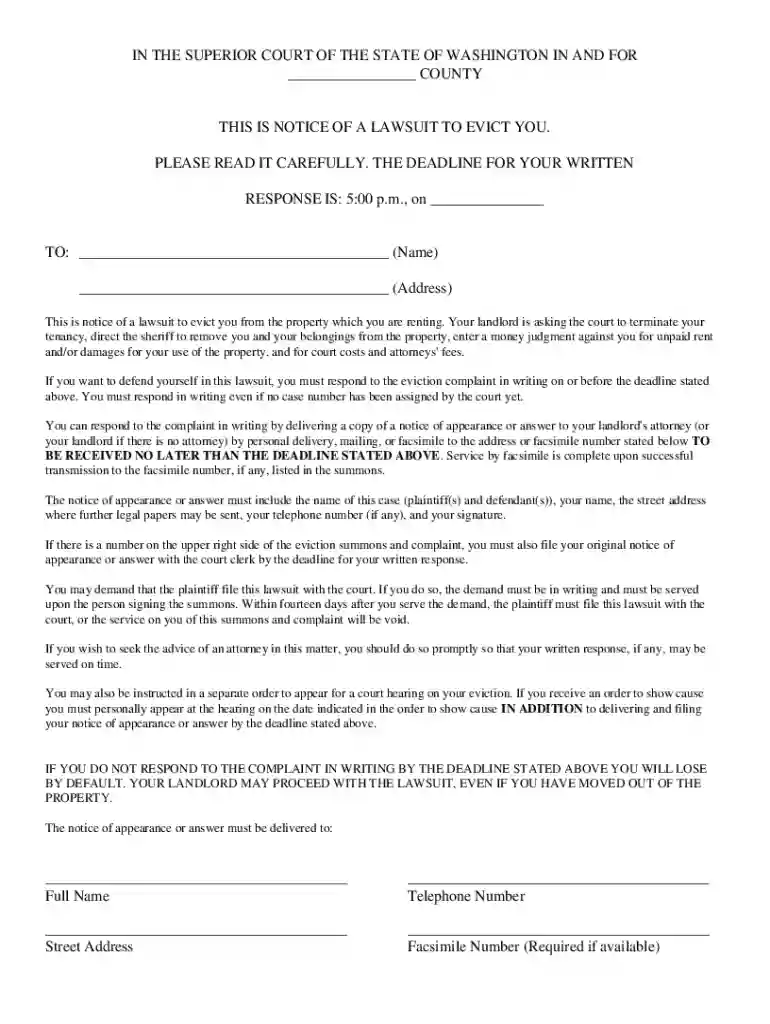
RCW 59 18 365 Unlawful detainer action Summons Form 2026

Get Form
RCW 59 18 365 Unlawful detainer action Summons Form Preview on Page 1

Here's how it works

01. Edit your form online
Type text, add images, blackout confidential details, add comments, highlights and more.

02. Sign it in a few clicks
Draw your signature, type it, upload its image, or use your mobile device as a signature pad.

03. Share your form with others
Send it via email, link, or fax. You can also download it, export it or print it out.

Definition & Meaning

The RCW 59.18.365 Unlawful Detainer Action Summons Form is a legal document used within the Washington State court system. This form is part of the process for landlords seeking to evict tenants who are unlawfully detaining premises. In the legal context, "unlawful detainer" refers to a tenant's failure to depart from the rented property after the lease has expired or been terminated, violating the landlord's rights to reclaim the property. This summons officially notifies the tenant of the legal action initiated against them and mandates a response or appearance in court.

How to Use the RCW 59.18.365 Unlawful Detainer Action Summons Form

Navigating the use of this form requires understanding its precise instructions. Landlords must complete the form with essential details, such as:

  • Names of parties involved: Include both the landlord’s and tenant’s full names.
  • Case number: Provided by the court clerk when filing the case.
  • Court information: Specify the court handling the case, including the court's location and contact details.
  • Attorney details: If applicable, include the names and contact information of legal representatives.

How to Obtain the RCW 59.18.365 Unlawful Detainer Action Summons Form

To access the RCW 59.18.365 form, landlords can:

  • Visit the local courthouse: Obtain the form in person from the clerk’s office.
  • Online resources: Access and download the form from official state judiciary websites.
  • Legal assistance: Request the form through an attorney specializing in landlord-tenant law.

Steps to Complete the RCW 59.18.365 Unlawful Detainer Action Summons Form

Completing the form requires careful attention:

  1. Fill in parties’ details: Accurate listing of names, addresses, and contact information.
  2. Specify the breach: Clearly state the grounds for the unlawful detainer action, such as non-payment of rent or lease expiration.
  3. Court details: Include case number and court address.
  4. Delivery and notice: Ensure proper delivery methods are used for serving the tenant with the summons, such as personal delivery or service by a sheriff.

Who Typically Uses the RCW 59.18.365 Unlawful Detainer Action Summons Form

This form is predominantly utilized by:

  • Landlords: Seeking eviction of tenants who overstay or breach lease agreements.
  • Property management companies: Managing eviction processes for rental properties.
  • Real estate attorneys: Assisting clients in preparing and filing the form as part of eviction proceedings.
decoration image ratings of Dochub

Important Terms Related to RCW 59.18.365 Unlawful Detainer Action Summons Form

Understanding key terminology is critical:

  • Unlawful Detainer: A tenant's continued possession of a rental property without legal rights.
  • Summons: An official notice to a tenant about legal eviction proceedings.
  • Eviction: The legal process of removing a tenant from a property.

State-Specific Rules for the RCW 59.18.365 Unlawful Detainer Action Summons Form

In Washington State, the form must meet certain criteria:

  • Compliance with RCW 59.18.365: Ensure form details align with state eviction laws.
  • Service requirements: Follow state-specific protocols for serving the summons, ensuring the tenant is adequately informed.

Examples of Using the RCW 59.18.365 Unlawful Detainer Action Summons Form

Practical examples include:

  • Non-Payment of Rent: A landlord files the form to initiate eviction when a tenant fails to pay rent.
  • Lease Expiration: Used when a tenant remains after the lease period without renewal or consent.
  • Violation of Lease Terms: If a tenant breaches significant lease terms, this form starts the eviction process.

These scenarios demonstrate common usages, ensuring landlords understand when and how to apply the form effectively.

be ready to get more

Complete this form in 5 minutes or less

Get form

Security and compliance

At DocHub, your data security is our priority. We follow HIPAA, SOC2, GDPR, and other standards, so you can work on your documents with confidence.

Learn more
ccpa2
pci-dss
gdpr-compliance
hipaa
soc-compliance
be ready to get more

Complete this form in 5 minutes or less

Get form