






Definition & Meaning
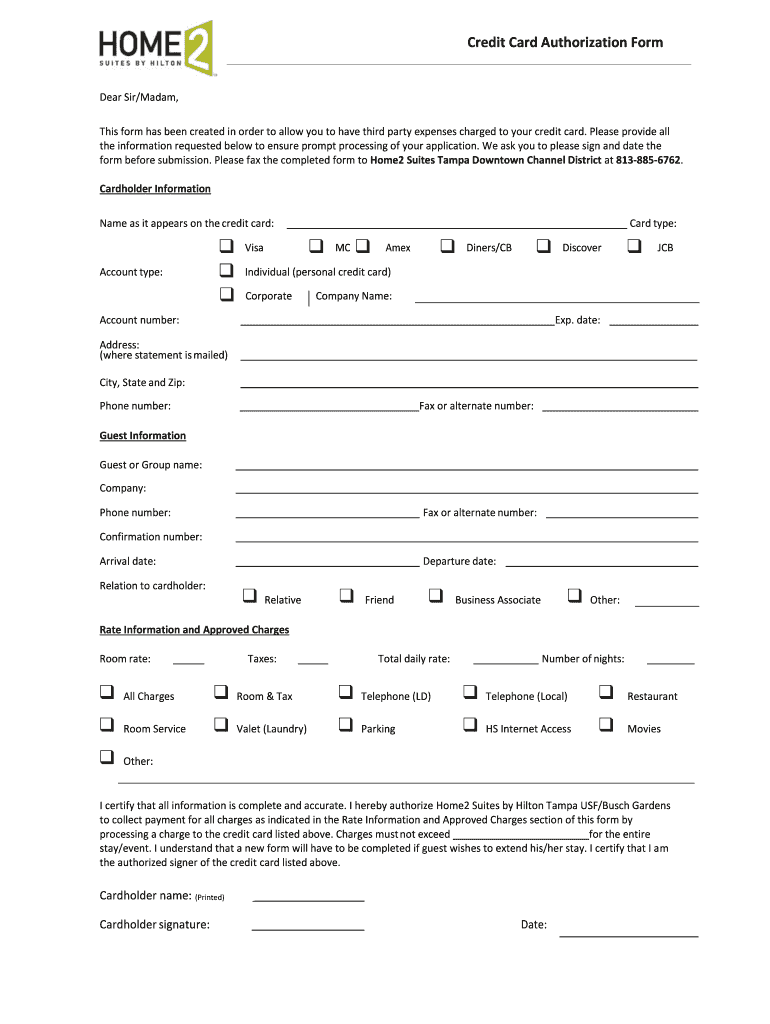
The Credit Card Authorization Form is a document used to grant permission to a third party to charge a credit card on the cardholder’s behalf. Typically, companies use this form to streamline payment processes for services rendered or products sold. By filling out and submitting this form, a cardholder provides explicit consent for recurring or one-time payments, reducing the risk of fraud or unauthorized charges.
Multiple practical examples demonstrate the form's use. For instance, corporate clients may use it to authorize employees' expenses during business trips. Subscription services also depend on this form to manage regular billing cycles efficiently. The form acts as a safeguard against potential disputes, offering clarity for both the cardholder and the service provider regarding transaction terms.
How to Obtain the Credit Card Authorization Form
Obtaining a Credit Card Authorization Form is straightforward. Businesses often provide a downloadable template on their website, ensuring easy access for clients and partners. Customers can also request the form directly via email or phone. In some instances, the form might be mailed along with contract documents when signing up for services where credit card payments are necessary.
Detailed instructions often accompany the form, guiding users through completion. Businesses streamline the request process via customer portals or Help Desk interactions, ensuring that clients can secure the necessary documentation without unnecessary delays.
Steps to Complete the Credit Card Authorization Form
-
Identify the Necessary Information: Begin by ensuring you have the credit card details on hand, such as the card number, expiration date, and security code. Gather other relevant information, including your contact details and billing address.
-
Fill Out Personal and Billing Details: Input your name as it appears on the credit card and specified billing address. Ensure all information is accurate to prevent processing errors.
-
Enter Company Details and Payment Amounts: Include the company's name, contact information, and specify the exact amounts authorized for charging. Outline whether the authorization is for a single transaction or recurring payments.
-
Read any Terms and Conditions: Before finalizing, carefully review any terms regarding transaction limits, duration of authorization, or liability agreements. It's crucial to understand the implications fully.
-
Provide Signatures: Ensure that the form is signed and dated. Confirm that any additional authorized users or parties sign as necessary.
-
Securely Submit the Form: Once completed, submit the form via the approved method, whether by mail, fax, or online submission systems. Keep a copy for your records.
Key Elements of the Credit Card Authorization Form
The Credit Card Authorization Form includes several critical elements:
- Cardholder Information: This section captures the cardholder's details, ensuring proper identity verification.
- Credit Card Details: Including the number, expiry date, and CVV ensures transaction validity.
- Payment Authorization Scope: Clearly defines if the authorization covers a single payment or a recurring series.
- Terms and Conditions: Outlines responsibilities, such as dispute protocol or chargeback procedures.
These elements combine to provide transparency for both parties, ensuring smooth transactional processes without miscommunication or unauthorized charges.
Importance of Credit Card Authorization Forms
Credit Card Authorization Forms are crucial tools for businesses to manage client transactions securely and efficiently. These documents act as protective measures, mitigating the risk of disputes or fraud. Accepting payments via these forms demonstrates a business's dedication to regulatory compliance and customer trust, essential in maintaining ongoing client relationships.
Businesses that depend on recurring client payments, such as subscription services or utility providers, particularly benefit. Credit card authorization ensures continuous service delivery without payment interruptions, streamlining revenue management while optimizing resource allocation.
Legal Use of the Credit Card Authorization Form
In the U.S., Credit Card Authorization Forms are valid legal documents under the ESIGN Act. They must include clear terms for cardholder agreement and explicit authorization signature. Misuse, such as altering terms without cardholder consent, is illegal and carries penalties. Businesses must maintain secure storage of these forms and adhere to PCI DSS regulations to protect cardholder data.
Form compliance helps establish transactional credibility, reassuring clients of legitimate and transparent financial dealings. To enhance legal validity, always consult legal professionals when structuring these terms and conditions, ensuring they're binding and enforceable.
Digital vs. Paper Version
Both digital and paper versions of the Credit Card Authorization Form have merits. Digital versions are efficient for electronic records, offering easy data management and retrieval. They allow straightforward integration with payment processors and customer management systems, enhancing streamlining workflows.
On the other hand, paper versions may be preferred for in-person transactions or when working with partners unfamiliar with digital tools. They provide tangible proof and are straightforward to complete without technical know-how. Whether choosing paper or digital, consistent treatment of sensitive data with strict adherence to security practices is essential.
Who Typically Uses the Credit Card Authorization Form
This form is prevalent across diverse sectors, including:
- Hospitality Industry: Hotels use it to secure payment details for reserving rooms.
- Subscription Services: Businesses offering periodic services or products require them for automatic billing.
- Real Estate Agencies: Landlords and property management firms use the form for automated rent payments.
Credit Card Authorization Forms are versatile, accommodating various payment arrangements and business models, fostering seamless client transactions.


Examples of Using the Credit Card Authorization Form
Real-world scenarios illustrate the form's benefits. Anecdotally, a freelance designer secured timely client payments by incorporating the form into contracts, minimizing delayed payments and ensuring project momentum. Similarly, a gym used it to automate member payments and streamline invoicing.
These examples highlight the form's efficacy in reducing administrative burdens and enhancing client relationships by assuring seamless transaction management.