
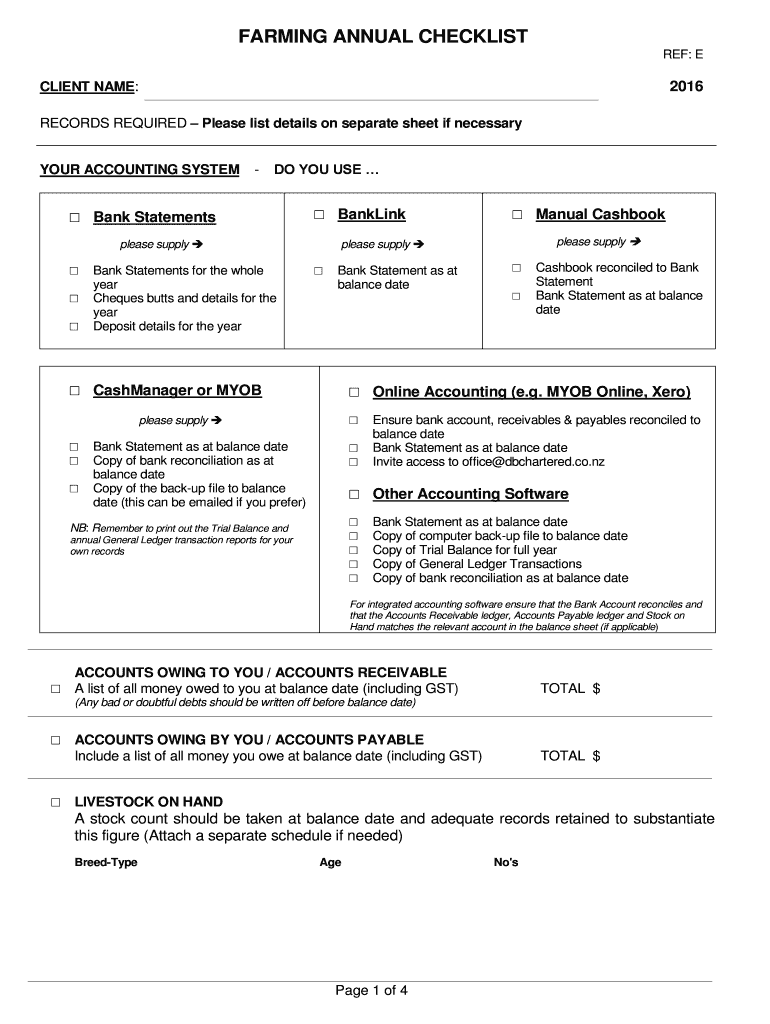







Definition and Purpose of the Farming Annual Checklist
The Farming Annual Checklist is a comprehensive tool designed to assist farmers in managing their yearly agricultural activities. This form ensures that critical tasks are not overlooked, promoting effective farm management. It typically covers a range of activities such as planting, harvesting, equipment maintenance, financial planning, and compliance with agricultural regulations. By systematically organizing these tasks, the checklist helps farmers optimize their operations and improve efficiency.
- Task Coverage: Planting schedules, irrigation plans, pest control measures.
- Regulatory Compliance: Ensures adherence to state and federal agricultural laws.
- Financial Planning: Assists in budgeting and financial analysis.
Steps to Complete the Farming Annual Checklist
Completing the Farming Annual Checklist involves several methodical steps designed to help farmers systematically manage their yearly tasks. Here's how to effectively complete the checklist:
- Preparation: Gather necessary documents such as last year's checklist, equipment records, and financial statements.
- Identification of Tasks: List all agricultural activities planned for the year, encompassing crop management, livestock care, and equipment servicing.
- Prioritization: Order tasks by importance and seasonality. Ensure time-sensitive processes are scheduled appropriately.
- Delegation: Assign tasks to appropriate team members to ensure efficiency.
- Monitoring and Adjustment: Regularly review progress and adjust plans as needed based on weather conditions, labor availability, and market demands.
Key Elements of the Farming Annual Checklist
The checklist's primary components ensure thorough coverage of all necessary farming activities. Key elements include:
- Crop Management: Schedules for planting, fertilization, and harvesting.
- Animal Husbandry: Plans for breeding, feeding, and health checkups for livestock.
- Equipment Maintenance: Regular inspections, servicing, and repairs to avoid breakdowns during peak seasons.
- Record Keeping: Documentation processes for all farming activities, financial transactions, and regulatory compliances.
- Safety Protocols: Guidelines for ensuring on-farm safety, including machinery operation and emergency procedures.
How to Obtain the Farming Annual Checklist
Farmers can access the Farming Annual Checklist through several channels:
- Agricultural Extensions: Many state agricultural extensions provide checklists tailored to local farming conditions.
- Online Agricultural Resources: Websites and agricultural forums are valuable sources for downloadable templates.
- Farm Management Software: Integrated within software packages, these digital checklists can be customized to suit specific farm operations.
Business Types that Benefit Most from the Farming Annual Checklist
The Farming Annual Checklist is particularly advantageous for certain types of agricultural businesses:
- Family Farms: Provides structure and guidance for multi-generational family operations.
- Commercial Crop Producers: Ensures systematic management of large-scale crop production.
- Livestock Farms: Assists in organizing care and management of herds for breeders and dairy operations.
Who Typically Uses the Farming Annual Checklist
The checklist is employed by a wide range of agricultural professionals, including:
- Farm Owners and Operators: Utilize the checklist for overall farm management and planning.
- Farm Managers: Implement the checklist to organize staff tasks and optimize resource allocation.
- Agricultural Consultants: Use the checklist to advise farmers on best practices and ensure compliance with regulations.


State-Specific Rules for the Farming Annual Checklist
Since agricultural practices and regulations vary by state, farmers must be aware of local requirements:
- Crop Restrictions: Some states have specific guidelines for crop rotation and pest control.
- Water Use Regulations: Varying regulations on irrigation and water rights.
- Environmental Compliance: State-specific rules on fertilizer use and runoff management.
Examples of Using the Farming Annual Checklist in Practice
Case studies illustrate the practical benefits of using the checklist:
- Example One: A Midwestern crop farm increased yield by 15% through enhanced planting schedules and maintenance routines.
- Example Two: A Southern poultry farm streamlined operations and reduced feed costs by systematically tracking and adjusting feeding protocols.
- Example Three: A diversified California farm improved compliance with state legislation by regularly updating safety protocols and environmental management practices.




