




NY State Tax not applicable for Canadian Tax Credit? 2026

Get Form
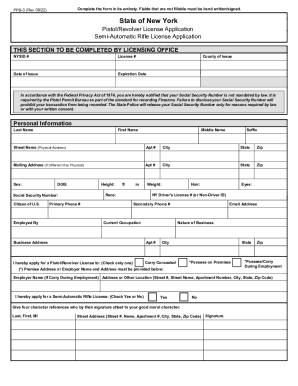
NY State Tax not applicable for Canadian Tax Credit? Preview on Page 1

Here's how it works

01. Edit your form online
Type text, add images, blackout confidential details, add comments, highlights and more.
02. Sign it in a few clicks
Draw your signature, type it, upload its image, or use your mobile device as a signature pad.
03. Share your form with others
Send it via email, link, or fax. You can also download it, export it or print it out.

Definition & Meaning of NY State Tax Not Applicable for Canadian Tax Credit

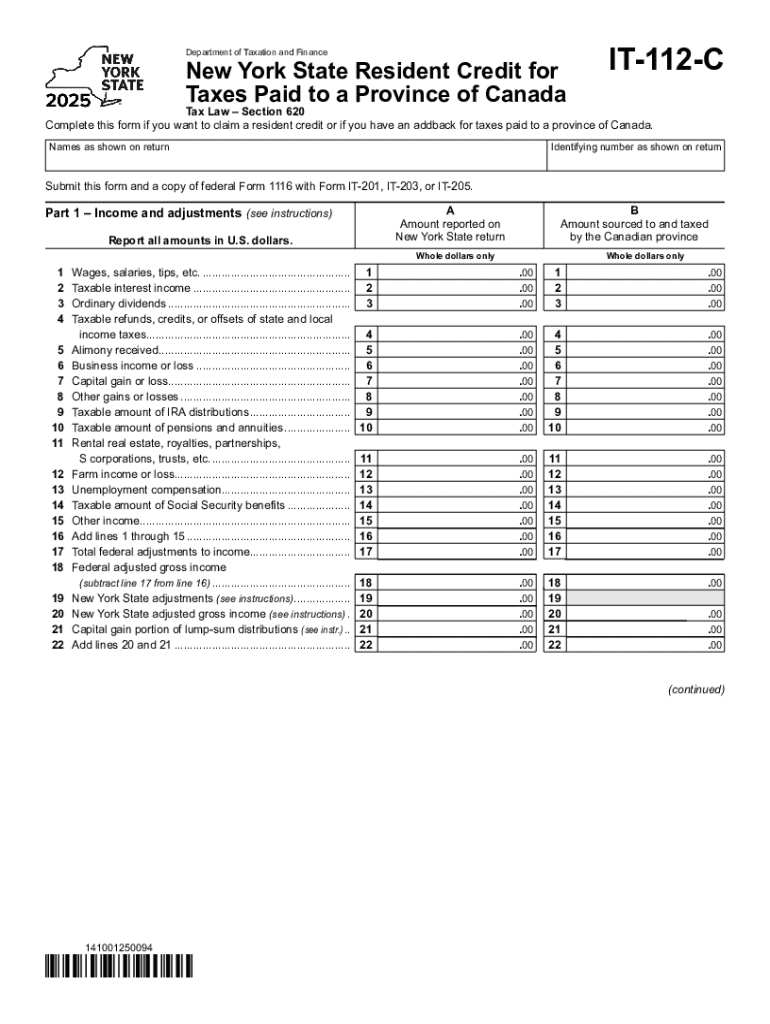
The term "NY State Tax not applicable for Canadian Tax Credit" refers to the specific conditions under which New York State taxes do not impact the eligibility or amount for claiming a Canadian tax credit. This involves understanding the nuances of how taxes paid to a province in Canada might influence a resident tax credit on a New York State tax return. It’s particularly relevant for U.S. residents who have financial dealings or income sources in Canada and wish to ensure compliance with tax regulations in both jurisdictions.

Key Elements of the Credit Application

  • Eligibility Criteria: Individuals eligible to claim this credit typically have cross-border income transactions. The primary requirement is proof of taxes paid to a Canadian province.
  • Applicable Tax Law: Section 620 of the New York Tax Law outlines the procedures and conditions for claiming resident credits due to taxes paid to a Canadian province.
  • Supported Documents: Taxpayers should prepare documents like IT-112-C to support their claim.

How to Use the NY State Tax Not Applicable for Canadian Tax Credit

To leverage the NY State Tax exemption in claiming a Canadian Tax Credit, taxpayers need to communicate their cross-border taxation details accurately. Here's how to do so:

  1. Assessment of Tax Paid to Canada: Determine the taxes paid to a Canadian province which you've already reported to the Canadian government.
  2. Filing the Correct Forms: Complete Form IT-112-C to reflect these Canadian taxes and illustrate why NY State Tax should not apply.
  3. Cross-Border Income Reporting: Ensure all income eligible for such claims is declared in both NY State and Canadian tax filings.

Step-by-Step Filing Instructions

  1. Document Collection: Gather all relevant tax documents from Canada, such as notices of assessment.
  2. Form Completion: Fill out Form IT-112-C, ensuring every entry aligns with your Canadian tax records.
  3. Review Cross-Jurisdiction Tax Treaty Benefits: Double-check any applicable tax treaties or agreements between the U.S. and Canada.

Steps to Complete the NY State Tax Not Applicable for Canadian Tax Credit

Completing the process involves several key steps that ensure full compliance and benefit optimization:

  1. Tax Identification: Begin by formally identifying all income sources and associated taxes paid to any Canadian jurisdiction.
  2. Documentation: Collect and verify each relevant document. This includes tax returns and any tax settlement documents from Canada.
  3. Form Submission: Submit Form IT-112-C alongside your New York State tax return.
  4. Verification and Audit Prep: Keep all records and documents ready for potential audits or requests for further information.

Potential Challenges and Solutions

  • Misreporting Risks: Be cautious of currency conversion errors when reporting Canadian amounts in USD.
  • Missing Supporting Documents: Contact Canadian tax authorities immediately if any forms are missing.

Important Terms Related to NY State Tax Not Applicable for Canadian Tax Credit

Understanding specific terminologies is crucial for accurately completing the tax credit process. Here are important terms:

  • Resident Credit: A credit given to New York residents for taxes paid to other jurisdictions, including foreign countries.
  • Tax Treaty: Bilateral arrangements between the U.S. and Canada to minimize dual taxation.
  • IT-112-C Form: The designated form used by New York residents to claim credits against Canadian taxes paid.

IRS Guidelines

While primarily a state issue, understanding IRS perspectives on foreign tax credits is essential:

  • Double Taxation Avoidance: IRS acknowledges claims for foreign taxes paid but requires proper documentation and the use of correct schedules.
  • Foreign Tax Credit Forms: Utilize IRS Form 1116, though this operates differently from state credits.

State-Specific Rules for the NY State Tax Not Applicable for Canadian Tax Credit

State-specific rules dictate how and when this credit can be applied:

  • New York-Specific Policies: Apply only if you're a resident of New York State with peer income taxation claims in Canada.
  • Province-Specific Agreements: Be aware of any unique agreements New York might have with specific Canadian provinces.

Navigating State-by-State Differences

  • Local Tax Law Understanding: For other states, investigate if similar credits or exemptions are available.
  • Regional Tax Cooperation: Explore how states potentially collaborate with provinces to facilitate smoother cross-border taxation processes.

Penalties for Non-Compliance

Failure to accurately follow through with NY State Tax credit applications linked to Canadian credits can lead to:

  • Fines and Penalties: Monetary penalties for filing inaccurate claims.
  • Audit Risks: Increased likelihood of audits and deeper investigations by New York State tax authorities.
  • Repayment Demands: State tax authorities may require repayment of improperly claimed credits, potentially with interest.

Best Practices to Avoid Penalties

  • Thorough Review: Regularly audit your documentation and tax filing processes.
  • Professional Consultation: Consult with a tax professional familiar with cross-jurisdictional tax regulations.

Filing Deadlines and Important Dates

Stay informed about critical deadlines to ensure timely submission:

  • Annual State Tax Return Deadline: Typically aligns with federal deadlines, unless extensions are granted.
  • Form IT-112-C Submission: Should coincide with your NY State Tax return to ensure credits are processed simultaneously.

Implications of Missing Deadlines

  • Loss of Credits: Missing a deadline might delay the application of credits, impacting cash flow.
  • Late Filing Penalties: Fines for late filings that escalate rapidly.

Form Submission Methods

There are various methods to submit the necessary forms for claiming the credit:

Online vs. Manual Submission

  • Online Filing: Expedites the processing of your claims and is more efficient for keeping digital records.
  • Mail Submission: Still an option but time-consuming and less reliable in terms of immediate feedback and processing times.

Digital Methods and Verification

  • E-Filing Platforms: Utilize secure platforms to submit electronically and receive immediate confirmation of submission.
  • Document Verification: Ensure all components of your claim are digitally verified by a professional to prevent errors during submission.
be ready to get more

Complete this form in 5 minutes or less

Get form

Got questions?

We have answers to the most popular questions from our customers. If you can't find an answer to your question, please contact us.
Contact us
Exemptions from New York State income tax apply to certain military income (like combat pay), specific pension/retirement income for nonresidents, and individuals who meet strict criteria for exemption from withholding (under 18/over 65/student with no prior liability) or qualify for disability/limited income benefits, with detailed rules for military spouses and specific organization types, often requiring specific forms like Form IT-2104-E. Who May Be Exempt Military Personnel Spouses: Combat Pay: Pay for active duty in designated combat zones is exempt. Nonresident Military Pay: If your permanent home (domicile) was in NY when you joined but youre stationed out-of-state and qualify as a nonresident, your pay is exempt. Military Spouse Income: Income earned by military spouses in NY may be exempt under the Servicemembers Civil Relief Act (SCRA). Seniors Students (for Withholding Exemption): Under 18, over 65, or full-time students under 25 who had no NY tax liability last year and dont expect any this year can claim exemption from withholding (not necessarily the tax itself). Nonresident Pensioners: Certain pension and retirement income (like from SEPs, IRAs, annuities) received by nonresidents isnt taxed by NY. Persons with Disabilities: Specific exemptions and benefits exist for people with disabilities and limited incomes, often related to property taxes but also relevant to income. Native Americans: Income derived from reservation sources may be excluded. Exempt Organizations: Certain governmental and non-profit entities are exempt. How to Claim an Exemption For Military Spouses Withholding: File Form IT-2104-E, Certificate of Exemption from Withholding with your employer. For Military Pay: Use New York subtraction modifications on your return, potentially Form IT-203 for nonresidents. For Other Exemptions: Consult NYS Tax Department forms and publications (like instructions for Form IT-201 or IT-203) for specific filing requirements. Key Distinction: Withholding vs. Tax Liability Claiming exemption from withholding (using IT-2104-E) means your employer stops taking out tax. This doesnt always mean you owe zero tax; you still must file a return (like Form IT-203) if you have other income or meet filing thresholds, and you might owe tax later. For financial advice, consult a professional. Federal State Withholding Exemptions - OPANYC.govForm IT-2104-E Certificate of Exemption from Withholding Year 2026This certificate will expire on April 30, 2027. you must be under age 18, or over age 65, or a full‑time student under age 25;Department of Taxation and Finance (.gov)
Canadas $7,500 Multigenerational Home Renovation Tax Credit (MHRTC) helps homeowners create a secondary unit for a senior or a disabled adult, requiring the claimant to be a Canadian resident homeowner, related to the qualifying family member, and the renovations must create a self-contained unit, meeting local codes for a senior (65+) or disabled (DTC eligible) relative to live in, with the credit being 15% of up to $50,000 in expenses for a maximum $7,500 refundable credit. Who Can Claim It? A Canadian resident who owns the home (or is the beneficiary of a trust that owns it). You must live in the renovated home (or intend to within 12 months of the renovation period). You must have a qualifying relationship (parent, grandparent, child, grandchild, sibling, aunt, uncle, niece, or nephew) with the person moving into the unit. Who Qualifies for the Unit? A senior (65+). An adult (18+) who qualifies for the Disability Tax Credit (DTC). What Kind of Renovations Qualify? Creating a self-contained secondary unit (like a basement apartment). Meeting local building codes and permit requirements. Expenses for renovations completed within the tax year you claim the credit. How Much is the Credit? Its a 15% refundable credit on eligible expenses. Maximum eligible expenses are $50,000. Maximum credit is $7,500 (15% of $50,000). Key Requirements: The renovation must allow a senior or disabled person to live with you. Keep all receipts and invoices for expenses. This credit helps families stay together by making it more affordable to create suitable living spaces, unlike past EV credits that have changed or expired. For financial advice, consult a professional. Line 45355 Multigenerational home renovation tax credit (MHRTC) - Canada.caJan 20, 2026Canada.caWho can claim - Canada.caJan 20, 2026 Any person claiming the credit must be an eligible individual. An eligible individual is a resident of Canada from JanCanada.ca
Here are the standard tax credits that you should know about and may be eligible for when filing your 2025 taxes. Canada Child Benefit (CCB) Canada Caregiver Credit (CCC) Canada Training Credit (CTC) Child Disability Benefit (CDB) Disability Tax Credit (DTC) GST/HST tax credit. Tuition Tax Credit (TTC) Jan 27, 2026
You may claim a resident credit against your New York State tax using Form IT-112-C if you had income sourced to and taxed by a Canadian province, and you were: a full-year or part-year resident of New York State, a New York State resident estate or trust, or. a part-year resident trust.Dec 12, 2025
Taxes paid to a foreign country that you were not legally obligated to pay or owe. Taxes imposed by and paid to foreign countries on which the U.S. does not have diplomatic relations with or countries not recognized by the U.S.

Security and compliance

At DocHub, your data security is our priority. We follow HIPAA, SOC2, GDPR, and other standards, so you can work on your documents with confidence.

Learn more
ccpa2
pci-dss
gdpr-compliance
hipaa
soc-compliance
be ready to get more

Complete this form in 5 minutes or less

Get form

People also ask

Does the State of NY allow IRS 911, the Foreign Earned Income Exclusion or Foreign Tax Credits? Yes, the State of NY allows you to exclude your foreign earned income if you meet the requirements on your Federal tax return.
You may be able to claim the federal foreign tax credit for foreign income or profit taxes that you paid on income you earned outside Canada and reported on your Canadian tax return. Tax treaties with other countries may affect whether you are eligible for this credit.Jan 20, 2026

Related links