






Definition & Meaning
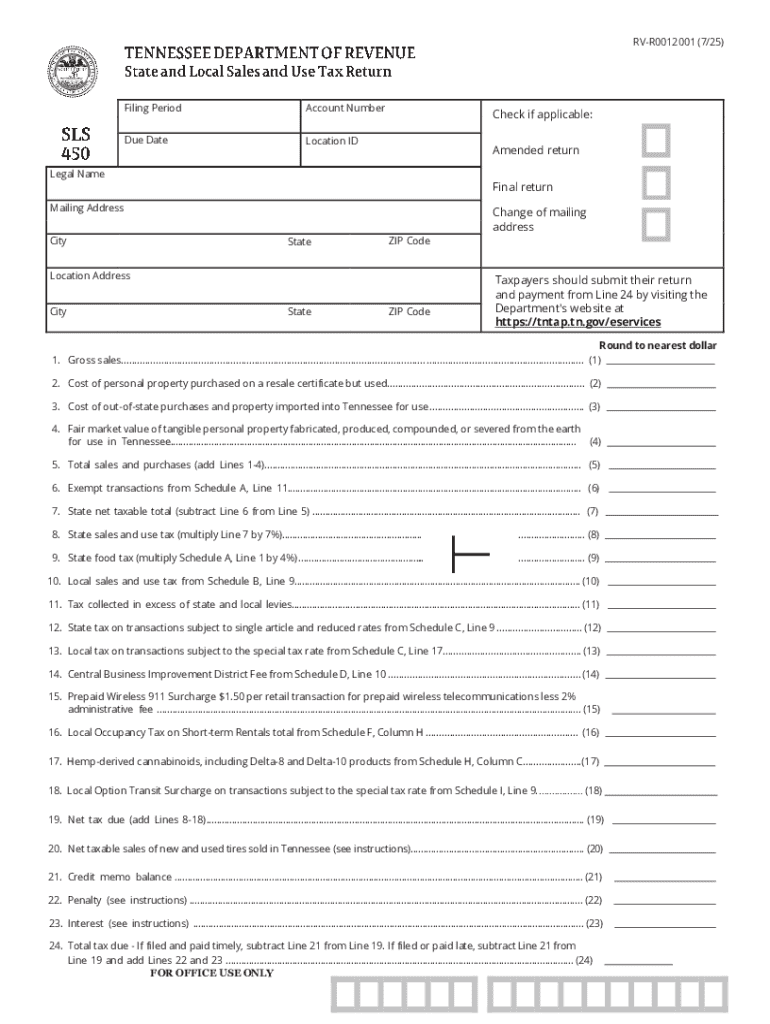
The Tennessee Sales and Use Tax Return is a mandatory document for businesses operating within Tennessee to report sales tax collected from customers and use taxes owed. Sales tax applies to transactions involving the sale of goods and certain services, while use tax covers the use, storage, or consumption of goods that haven't had sales tax paid in the state. This form ensures the accurate remittance of taxes to the Tennessee Department of Revenue, showcasing compliance with state tax laws.
How to Use the Tennessee Sales and Use Tax Return
Filling out the Tennessee Sales and Use Tax Return involves detailing the total gross sales, exempt sales, and the net taxable sales. Users must calculate the amount of sales tax collected during the reporting period and determine if any use tax is owed. Businesses are required to complete this form regularly, usually monthly, quarterly, or annually, depending on the sales volume and regulatory requirements. Accurate completion is crucial for avoiding penalties and maintaining good standing with the state tax authorities.
Steps to Complete the Tennessee Sales and Use Tax Return
-
Gather Required Information: Collect all relevant records of sales, including invoices and receipts, for the reporting period.
-
Determine Gross Sales: Total all sales made within Tennessee, excluding sales tax.
-
Identify Exempt Sales: Calculate sales exempt from tax, such as sales to tax-exempt organizations or out-of-state sales.
-
Calculate Net Taxable Sales: Subtract exempt sales from gross sales to determine the taxable sales amount.
-
Apply Tax Rates: Use the appropriate state and local tax rates to calculate the total taxes owed.
-
Report Use Tax: Declare any use tax for goods used, stored, or consumed that have not had taxes collected in Tennessee.
-
Complete the Form: Fill out all sections of the return accurately according to state guidelines.
-
Submit Payment and Form: Ensure timely submission of the form and any tax payment due by the prescribed deadline.
Filing Deadlines / Important Dates
The Tennessee Sales and Use Tax Return typically has different filing frequencies based on the business's total tax liability. Monthly filers usually submit returns by the 20th of the following month. Quarterly filers must file by the 20th of the month after each quarter concludes. Annual filers report by January 20th of the following year. It's essential for businesses to adhere to these deadlines to avoid incurring penalties and interest charges.
Important Terms Related to Tennessee Sales and Use Tax Return
- Gross Sales: The total revenue generated from sales within a designated period, excluding any deductions.
- Exempt Sales: Transactions not subject to sales tax under Tennessee law.
- Net Taxable Sales: The portion of gross sales that is subject to sales tax after exempt sales are deducted.
- Use Tax: A tax on the use of goods within Tennessee for which sales tax has not been paid.
- Remittance: The process of sending the collected tax to the state's Department of Revenue.
Legal Use of the Tennessee Sales and Use Tax Return
Businesses must utilize the Tennessee Sales and Use Tax Return according to the state's legal requirements. Filing this form accurately ensures compliance with tax obligations, preventing legal actions or penalties. The form enables businesses to report both sales and use tax liabilities, serving as a transparent declaration of tax responsibility to the state authorities.
Penalties for Non-Compliance
Failure to file the Tennessee Sales and Use Tax Return or incorrect reporting can lead to substantial penalties. Businesses may be subject to a penalty of up to 5% of the unpaid tax per month, capping at 25%. Interest on late payments accrues daily. Repeated offenses can result in further legal consequences, including audits and revocation of state business licenses. Accurate and timely filing is crucial for avoiding these repercussions.
Key Elements of the Tennessee Sales and Use Tax Return
- Taxpayer Information: Includes business name, address, tax identification number, and reporting period.
- Sales and Tax Calculations: Detailed accounts of gross sales, exempt sales, net taxable sales, and taxes owed.
- Exemptions: Specifications of the categories and amounts of sales exempt from taxation.
- Certification: A declaration that the form is accurate and submitted in adherence to Tennessee Department of Revenue guidelines.
Form Submission Methods (Online / Mail / In-Person)
Tennessee offers multiple avenues for submitting the Sales and Use Tax Return, including online, mail, and in-person. The preferred method is online filing through the Tennessee Taxpayer Access Point (TNTAP), promoting efficiency and accuracy. Online submissions offer immediate confirmation of receipt. Paper forms can still be mailed directly to the Tennessee Department of Revenue, though this method may result in longer processing times. In some cases, businesses may file in person at dedicated state offices, though this is less common with modern digital capabilities.