






Definition and Meaning
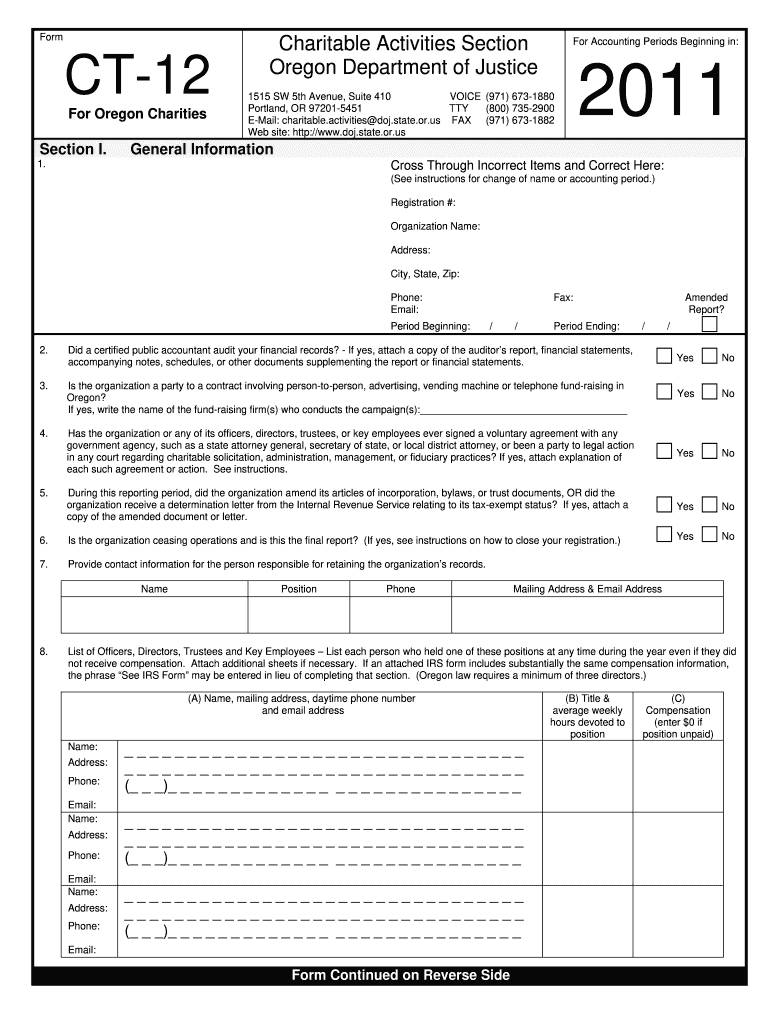
The CT-12 form, also known as the Oregon Annual Report for Charitable Organizations, is a mandatory document for charitable organizations operating within Oregon. This form serves as a financial and operational transparency measure that ensures these entities are in compliance with state regulations. Organizations are required to disclose a wide range of information, from financial data to details about their governance and operations. The objective is to provide the Oregon Department of Justice with relevant insights into each organization's activities, ensuring they serve public interests and abide by specific legal requirements.
Steps to Complete the CT-12
-
Gather Necessary Financial Documents:
- Collect recent financial statements, including revenue details, expenses, and net assets.
- Have records of any audits, if conducted, and fundraising contracts.
-
Fill Out General Information:
- Provide basic organizational details such as name, contact information, and registration number.
-
Calculate Fees Based on Revenue and Assets:
- Follow the provided tier system to determine the correct filing fee based on your organization's annual revenue and total assets.
-
Disclose Required Documentation:
- Include disclosures about audits, legal actions, and any significant changes within the organization.
-
Submit the Form:
- Submit the completed form along with the filing fee to the Oregon Department of Justice.
Important Considerations
- Make sure all financial data matches your records for accurate reporting.
- Consider utilizing the help of a financial advisor or accountant if the calculations or legal requirements are complex.
Key Elements of the CT-12
The CT-12 form has several critical components that organizations must complete accurately:
- General Information: Captures essential details about the organization, including contact information and tax ID numbers.
- Financial Statements: Requires a breakdown of revenue sources, expenditures, and assets.
- Fee Calculations: Utilizes a tiered system based on financial data to determine the filing fee.
- Disclosures: Must include information on audits, affiliations, and organizational changes to ensure transparency.
- Signature and Verification: Needs a signature from an authorized representative, affirming that all information provided is true and correct to the best of their knowledge.
Examples and Scenarios
- An organization with total revenue under $50,000 might have a different filing fee rate compared to one with over $1,000,000 in revenue.
- A nonprofit that recently underwent an audit needs to attach a summarized report to the form.
Who Typically Uses the CT-12
Charitable organizations registered in Oregon are required to file the CT-12. This includes:
- Nonprofit Corporations
- Charitable Trusts
- Religious Organizations dating when engaging in public fundraising activities
- Educational Institutions meeting certain criteria


Practical Examples
- A church initiating a public fundraising campaign would need to ensure compliance with the CT-12 requirements.
- A new nonprofit organization striving for transparency in operations through annual reporting on this form.
How to Obtain the CT-12
The CT-12 form is accessible through the Oregon Department of Justice’s official website. Organizations can:
- Download the Form: Access a digital copy in PDF format, allowing for printable and fillable options.
- Request by Mail: Contact the department directly to receive a physical copy.
- Online Resources and Support: Engage with the department’s online system for additional resources and frequently asked questions.
Online and Offline Access
Organizations preferring digital submissions can complete the form online, while others can opt to complete and mail a physical form, adhering to submission deadlines.
Important Terms Related to CT-12
- Annual Revenue: The total income generated by the organization within a fiscal year, crucial for fee calculation.
- Net Assets: Represents the organization's total assets minus liabilities, indicating financial health.
- Disclosures: Information that needs to be specified within the form, including audits and legal proceedings.
Terminology in Context
Understanding these terms ensures accurate completion of the form, as each section may impact fee calculations and compliance status.
Legal Use of the CT-12
The CT-12 form is a legal requirement for Oregon’s charitable organizations, providing a compliance framework that aligns with state laws ensuring ethical fundraising and operational practices within the sector. Failing to complete this form accurately or punctually results in penalties that can include fines, which underscores the importance of adherence.
Compliance and Legal Framework
- Organizations must ensure all information is accurate and complete to avoid legal complications.
- State laws dictate specific operational and financial transparency standards, which the CT-12 form helps monitor.
Filing Deadlines and Important Dates
The CT-12 form must be filed annually by the statutory deadline, which is typically within four months and fifteen days after the close of the organization's fiscal year. Missing this deadline can result in:
- Late Fees: Additional costs that may be incurred due to delayed filing.
- Compliance Risks: Jeopardizing good standing with the Oregon Department of Justice.
Preparation Tips
- Mark the deadline on a calendar well in advance.
- Set reminders leading up to the submission date to ensure timely compliance.