






Understanding Form 9423: Collection Appeal Request
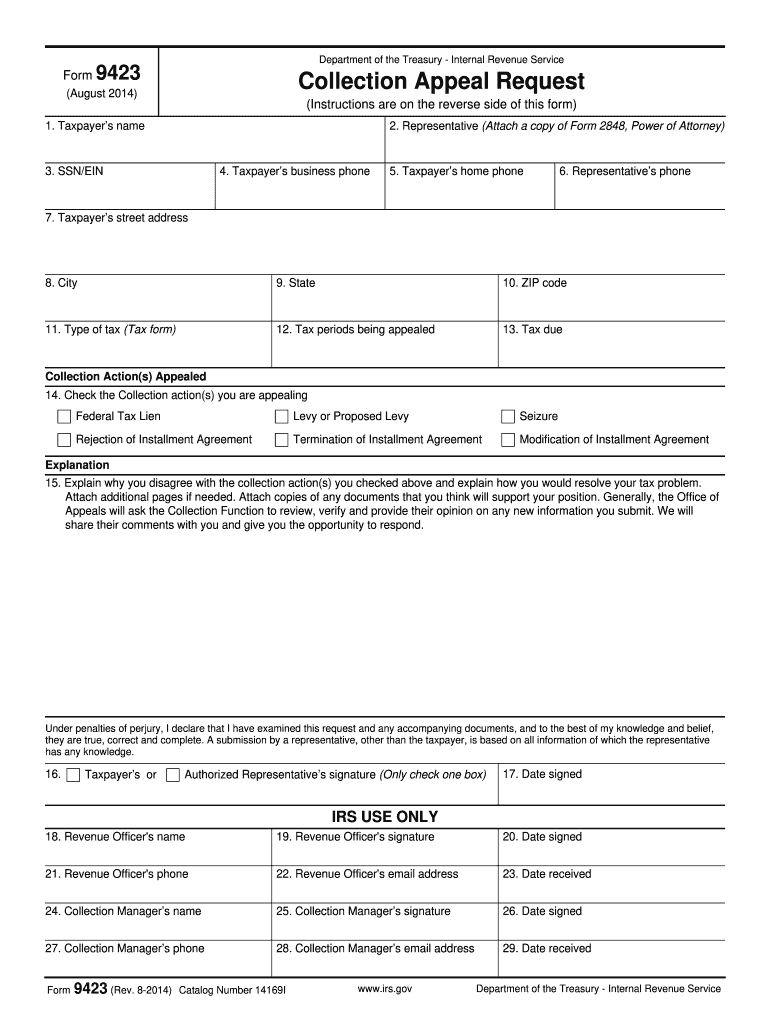
Form 9423, the Collection Appeal Request, is an essential document provided by the Internal Revenue Service (IRS) that allows taxpayers to appeal decisions related to their tax collections. The form covers various collection actions, such as levies, liens, property seizures, and installment agreements, offering taxpayers a means to contest these actions.
Purpose and Use of Form 9423
Resolving Collection Disputes
- Appeals against levies, liens, and seizures
- Challenging denial or termination of installment agreements
- Formalizing disagreements with IRS collection decisions
The primary function of Form 9423 is to provide taxpayers an opportunity to resolve disputes over IRS collection actions. By filing this form, individuals can formally contest the decisions, facilitating a more transparent and equitable resolution process.
Practical Scenarios
- A taxpayer receiving a notice of levy can halt the action by submitting Form 9423
- If a taxpayer's installment agreement is terminated, they can use this form for appeal
- Businesses disputing IRS seizure actions can also utilize this document
Steps to Complete Form 9423
Gathering Necessary Information
To accurately complete Form 9423, you will need:
- IRS notices related to collection actions
- Personal identification details: Social Security Number or Tax Identification Number
- Relevant financial records
Completing the Form
- Section 1: Provide general information, including taxpayer name, social security number, and address.
- Section 2: Detail the reason for the appeal, including a clear explanation of the disputed IRS action.
- Section 3: Explain the resolution you seek, whether it's the removal of a lien, reinstatement of an installment agreement, etc.
- Section 4: List any supporting documentation that substantiates your appeal.
Submission Methods: How to File Form 9423
Filing Options
- By Mail: Send the completed form to the address provided in the IRS notice
- In-Person: Submit at your local IRS office for added assurance
- Online Submission: As electronic options expand, confirm current feasibility with IRS support
It is crucial to choose a method that includes confirmation of receipt, particularly for time-sensitive appeals.
Eligibility Criteria for Using Form 9423


Who Can File
- Individual taxpayers facing collection actions
- Self-employed individuals with disputed IRS collections
- Businesses confronted with liens or seizure actions
Special Considerations
While broadly applicable, Form 9423 is crucial for those directly impacted by IRS collection measures. Ensure your situation aligns with the form's designated use.
IRS Guidelines and Policies
Protective Measures for Taxpayers
- Taxpayer Bill of Rights underlies the appeal process
- IRS provides detailed guidance to prevent unwarranted collection actions
- Clear instructions aim to help taxpayers navigate appeals efficiently
Understanding IRS policies regarding appeals is vital to ensuring effective use of Form 9423.
Important Terms Related to Form 9423
Common Legal and Financial Terms
- Levy: A legal seizure of property to satisfy a tax debt
- Lien: A claim on property as security for a tax debt
- Installment Agreement: A payment plan for tax debts
Familiarity with these terms aids in the accurate completion and argumentation required for Form 9423.
Required Documentation for Form 9423
Essential Forms and Records
- Official IRS notices (e.g., Notice of Federal Tax Lien or Levy Notice)
- Financial statements proving the claim, such as bank records or asset ownership details
- Correspondence records with the IRS
Having comprehensive documentation prepared can significantly streamline your appeals process.
Examples of Using Form 9423
Real-Life Applications
- A small business owner appealing a premature lien filed due to an incorrect tax calculation
- An individual contesting a levy on wages due to financial hardship
- A freelancer resolving an issue related to a terminated installment agreement
Practically, Form 9423 serves as a vital tool for addressing mistakes or undue collection pressures from the IRS.
Legal Implications and Compliance
Consequences of Not Using Form 9423
- Missed opportunities for appeal can result in enforced collection actions
- Potential loss of rights to contest wrongful IRS actions
Timely filing of Form 9423 ensures taxpayers can legally pursue an equitable resolution to disputed collection actions.