






Definition and Importance of an Individualized Home Instruction Plan (IHIP)
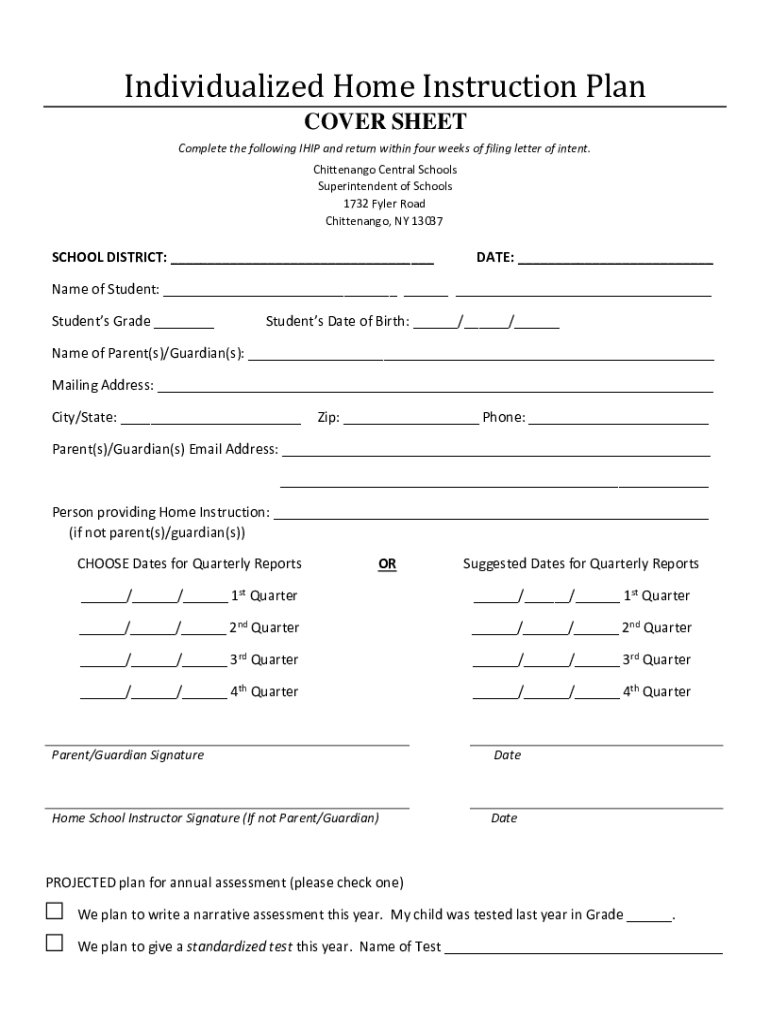
An Individualized Home Instruction Plan, commonly known as IHIP, is a customized educational framework designed for students receiving home-based education rather than attending traditional public or private schools. The primary goal of an IHIP is to ensure that students achieve educational outcomes similar to those provided by conventional school systems while accommodating specific learning needs and environments.
Key Components of an IHIP
An effective IHIP includes detailed information about:
- Curriculum: Outline of subjects covered, including basic instruction areas such as mathematics, science, language arts, and social studies. It may also incorporate elective subjects tailored to the student's interests.
- Instructional Methods and Resources: Description of the teaching strategies, educational materials, and resources utilized, such as textbooks, online resources, or hands-on activities.
- Assessment Measures: Explanation of how the student’s progress will be evaluated, including tests, quizzes, projects, and regular evaluations.
- Annual Goals: Clearly defined educational objectives for the year, reflecting the student's learning progress and development milestones.
How to Obtain an Individualized Home Instruction Plan (IHIP)
Acquiring an IHIP involves several steps:
- Research State Requirements: Each U.S. state has specific guidelines and requirements for homeschooling and IHIPs. Parents must familiarize themselves with these regulations to ensure compliance.
- Filing a Notice of Intent: Most states require a formal notification to the superintendent's office, expressing the intent to homeschool. This notice is typically submitted at the beginning of the school year.
- Developing the IHIP: Create a tailored educational plan that aligns with state standards and meets the unique learning needs of the student.
- Submission for Approval: Submit the IHIP to the relevant educational authorities for review and approval, usually a school district or educational board.
Steps to Complete the IHIP Form
Finalizing the IHIP involves a step-by-step process to ensure completeness and alignment with educational goals:
- Gathering Information: Compile comprehensive details about the student’s academic background, learning style, and educational needs.
- Drafting the Curriculum: Develop a curriculum plan, identifying core subjects and supplementing with electives relevant to the student’s interests and future aspirations.
- Choosing Instructional Methods: Decide on teaching methodologies that suit the student, considering various learning styles such as visual, auditory, or kinesthetic.
- Setting Annual Goals: Define specific, measurable educational objectives for the student to achieve over the academic year.
- Designing Assessment Strategies: Plan how to regularly assess the student’s progress through different evaluation tools and methods.
Who Typically Uses an Individualized Home Instruction Plan (IHIP)?
IHIPs are primarily used by:
- Parents and Guardians: Individuals who choose to homeschool their children due to personal preferences, philosophical beliefs, or specific student needs.
- Educators and Tutors: Professionals offering private education services, customizing plans for students they tutor.
- School Districts: Authorities that oversee educational compliance, ensuring homeschooling standards align with district regulations.
- Students with Special Needs: Families seeking alternative educational approaches better suited to meeting unique learning requirements.
State-Specific Rules for an Individualized Home Instruction Plan (IHIP)
State regulations governing IHIPs vary, with differences in:
- Notification Deadlines: Timeline for submitting the notice of intent or instructional plan to local education authorities.
- Content Requirements: State-mandated subjects and electives that must be included in the IHIP.
- Approval Processes: Procedures for the review and acceptance of the IHIP by educational authorities.
- Annual Reporting: Documentation required to demonstrate student progress, often submitted at the end of the school year.
Examples of Using the Individualized Home Instruction Plan (IHIP)
Real-world scenarios where IHIPs play a crucial role include:
- Specialized Learning Approaches: Implementing learning methods tailored to gifted students or those requiring adaptive teaching techniques.
- Travel-Based Education: Families who travel frequently and incorporate geographical, cultural, and language experiences into their child’s education.
- Performance-Based Learning: Students pursuing professional activities, such as acting or competitive sports, that require flexible education schedules.
Important Terms Related to an Individualized Home Instruction Plan (IHIP)
Understanding key terms is essential for developing an effective IHIP:
- Homeschooling: Educating children at home rather than in public or private schools, often necessitating an IHIP.
- Curriculum: The entire educational content and the materials used for instruction.
- Assessment: Tools and methods used to evaluate a student’s academic progress.
- Compliance: Adhering to state-determined educational standards and requirements.
Legal Use of an Individualized Home Instruction Plan (IHIP)
Ensuring lawful execution of an IHIP involves:
- Adhering to State Laws: Understanding and following all regulations pertaining to homeschooling and individualized instruction plans.
- Documentation and Reporting: Maintaining detailed records of the educational plan and student progress, as required by state educational departments.
- Evaluation and Updates: Regularly revisiting and modifying the plan to reflect the student’s development and changing educational needs.