






Definition and Meaning of Schedule H (Homestead Credit)
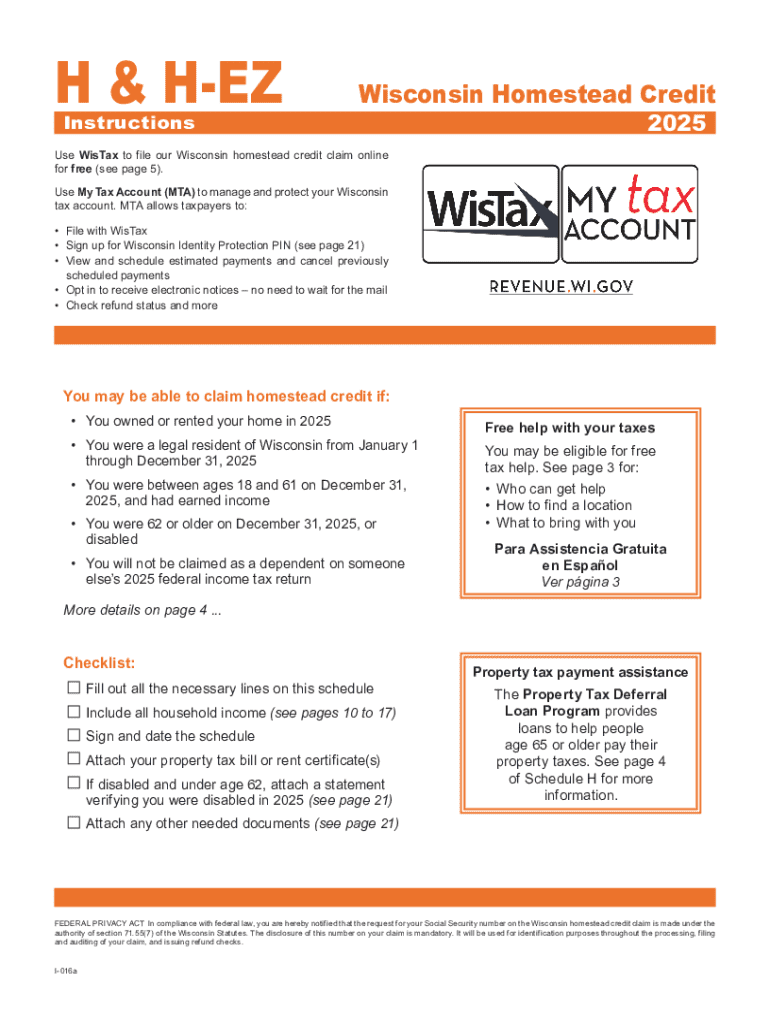
The Schedule H form, also known as the Homestead Credit, is a tax credit available to eligible Wisconsin residents. This credit is aimed at individuals with lower incomes to alleviate the tax burden on their primary residence. The Homestead Credit is part of Wisconsin's effort to provide financial relief to residents who earn less than a specified income threshold, ensuring that homeownership remains affordable. The credit calculation considers factors such as income, property taxes, or rent paid during the year.
Key Elements of Schedule H
- Eligibility Requirements: Determines who can apply, generally focusing on income levels, age, and residency status.
- Income Considerations: Includes different sources of income that are taken into account when determining eligibility.
- Property and Rent Details: Specifics regarding property taxes and rent amounts that impact the credit calculation.
How to Use the E-File Return and Paper-File Schedule H
E-filing and paper-filing Schedule H involve different processes. E-filing is done through authorized platforms, whereas paper-filing requires a physical submission to the Wisconsin Department of Revenue.
E-Filing Process
- Access an Authorized Platform: Use platforms like WisTax for a straightforward e-filing experience.
- Complete the Form: Enter relevant information such as income, property taxes, or rent.
- Submit Electronically: Once completed, submit the form digitally for quicker processing and confirmation of receipt.
Paper-Filing Process
- Download the Form: Obtain a copy via the Wisconsin Department of Revenue website or through mailed requests.
- Fill Out the Form: Complete the necessary sections manually, ensuring accuracy in all entries.
- Mail the Form: Send the completed form to the designated mailing address provided by the revenue department.
Steps to Complete the E-File Return and Paper-File Schedule H
Completing Schedule H involves several steps that ensure all necessary information is correctly reported.
Step-by-Step Instructions
- Review Eligibility: Check current eligibility criteria, including income limits and Wisconsin residency.
- Gather Documentation: Collect all relevant income documents, property tax statements, and rent receipts.
- Fill Required Sections: Input accurate data in all mandatory fields, including personal information and financial details.
- Calculate Credit: Follow instructions on calculating potential credits based on the provided data.
- Review and Confirm: Double-check all entered information for accuracy before submission.
- Submit: Either electronically file or mail the completed form based on personal preference.
Eligibility Criteria for Schedule H
To be eligible for the Homestead Credit, you must meet specific state-defined criteria.


Criteria Overview
- Income Limits: Total household income must fall below a set threshold as determined by the state.
- Residency Requirements: Applicants must have been legal residents of Wisconsin for the full calendar year.
- Property and Rent Thresholds: Homeowners and renters must meet certain criteria concerning the amount of property tax paid or rent paid.
State-Specific Rules for Schedule H
Wisconsin imposes unique guidelines for administering the Homestead Credit, impacting both eligibility and the filing process.
Wisconsin-Specific Guidelines
- Unique Income Definitions: The state may include or exclude certain income types differently compared to federal guidelines.
- Filing Deadlines: Specific deadlines are set by the state, requiring timely submission to qualify for the credit.
- Documentation Requirements: Additional or alternative documentation might be necessary, unique to Wisconsin’s requirements.
Who Typically Uses the E-File Return and Paper-File Schedule H
Schedule H is commonly used by various groups who benefit from the tax credit to ease housing costs.

Typical Filers
- Low-Income Households: Individuals and families who meet the income threshold seek relief through the Homestead Credit.
- Elderly Residents: Seniors on fixed incomes often apply to reduce the financial burden of homeownership.
- Disabled Individuals: Residents receiving disability income may qualify based on their specific financial and living conditions.
Filing Deadlines and Important Dates
Proper timing is essential when filing for the Homestead Credit to avoid penalties and qualify for the benefits.
Key Dates
- Annual Deadline: Typically aligns with federal and state tax filing timelines.
- Extension Options: While rare for this specific form, check if extensions are applicable under certain circumstances.
- Confirmation of Submission: Important to ensure the form is received and processed by the deadline.
Required Documents for Filing Schedule H
Successful filing requires providing a comprehensive set of documents to support the application.
Documentation Checklist
- Income Records: W-2s, 1099s, or other statements detailing all income sources.
- Property Tax Bills: Recent statements showing paid property taxes.
- Rent Receipts: Documentation of rent payments if rental property is claimed.
These detailed sections provide a comprehensive overview of the Schedule H (Homestead Credit), helping users understand its functions, requirements, and benefits effectively.