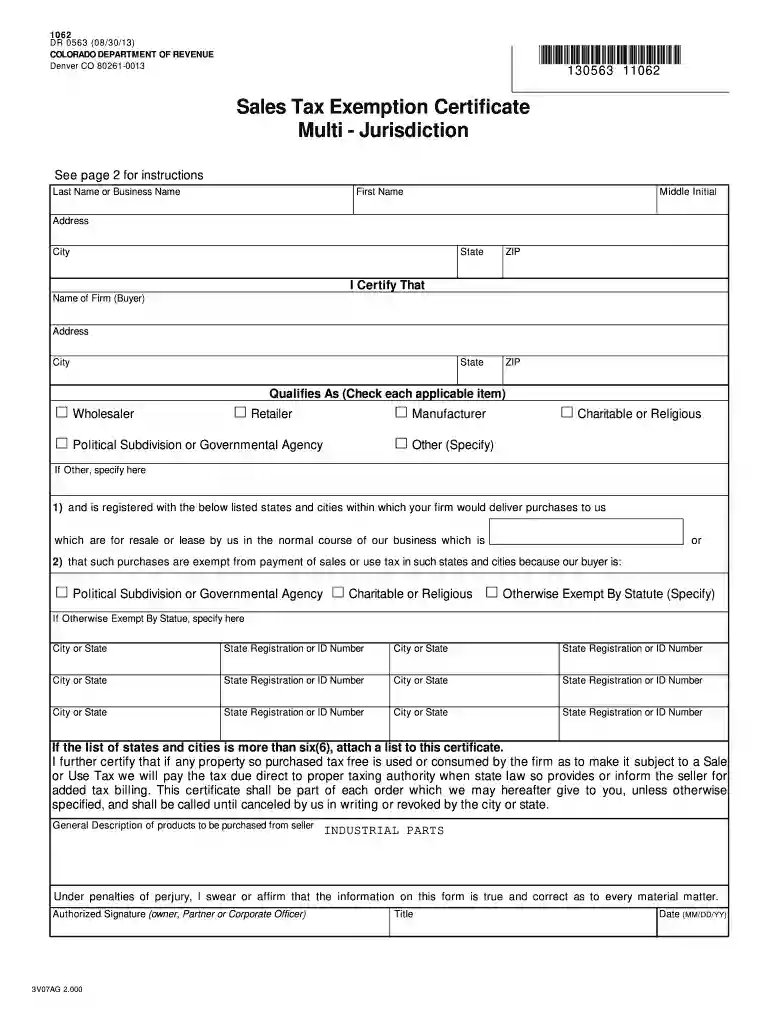
Sales tax exempt certificate 2025

Get Form
certificate of exemption form Preview on Page 1

Here's how it works

01. Edit your certificate of exemption form online
Type text, add images, blackout confidential details, add comments, highlights and more.

02. Sign it in a few clicks
Draw your signature, type it, upload its image, or use your mobile device as a signature pad.

03. Share your form with others
Send certificate of tax exemption form via email, link, or fax. You can also download it, export it or print it out.

Definition & Meaning of the Sales Tax Exempt Certificate

A sales tax exempt certificate is a formal document that allows qualifying buyers to make purchases without paying sales tax. This certificate is typically utilized by organizations or individuals who purchase goods or services for resale or certain exempt purposes. Each state in the U.S. has its own regulations governing the use and issuance of these certificates, which can differ in format and terminology.

This certificate serves as proof that the buyer is exempt from sales tax—common examples include non-profit organizations, governmental agencies, and certain educational institutions. When a vendor receives an exemption certificate from a buyer, they are permitted to refrain from charging sales tax on the transaction, thus facilitating the resale process.

How to Use the Sales Tax Exempt Certificate

Using a sales tax exempt certificate involves several key steps to ensure that the transaction qualifies for exemption.

  • Present the Certificate: Buyers must provide the sales tax exempt certificate to the vendor at the time of purchase. This document must be properly filled out and signed to validate the tax-exempt status.
  • Keep Records: Vendors should keep a copy of the certificate on file, which provides documentation in case of an audit.
  • Specify Exempt Purchases: The buyer should indicate the specific items or services that qualify for exemption. This clarity ensures compliance with state laws and minimizes any potential disputes.

For example, a non-profit organization purchasing a computer for educational purposes would present a sales tax exempt certificate issued by their state. This allows the organization to buy the computer without incurring sales tax.

Steps to Complete the Sales Tax Exempt Certificate

Completing a sales tax exempt certificate requires attention to detail to ensure accuracy and compliance with state regulations.

  1. Obtain the Correct Form: Identify the appropriate certificate of exemption form as dictated by the state in which the purchase is being made.
  2. Fill Out Buyer Information: Include the purchaser’s name, address, and tax identification number, which is often a requisite for completing the form.
  3. Declare Exempt Status: The buyer must specify the reason for tax exemption, such as a non-profit status or reselling goods.
  4. List Exempt Items: Clearly outline the goods or services being purchased that qualify for tax exemption.
  5. Sign and Date the Certificate: Ensure that the certificate is signed by an authorized representative of the buying entity to validate its use.

These steps form the basis of correctly completing a sales tax exempt certificate. For instance, in the construction industry, a contractor purchasing materials for a tax-exempt project would complete the form with relevant information before presenting it to the supplier.

Legal Use of the Sales Tax Exempt Certificate

Understanding the legal usage of a sales tax exempt certificate is essential for both buyers and sellers to avoid unwanted tax liabilities.

  • Validity of the Certificate: The certificate must be valid under state law, including being properly completed with up-to-date information.
  • Permissible Purchases: The items or services purchased under the certificate must align with the exemption qualifications outlined by the state.
  • Proper Documentation: Businesses should ensure adequate record-keeping practices are followed. This documentation can serve as evidence during audits and help defend against non-compliance claims.

Improper use of a sales tax exempt certificate—such as using it for ineligible purchases—can lead to penalties, including fines or back taxes owed. For example, if a non-profit organization incorrectly uses the certificate to purchase office supplies not related to their exempt purpose, they could be held liable for sales tax on that purchase.

Examples of Using the Sales Tax Exempt Certificate

Sales tax exempt certificates find application across various industries and scenarios, highlighting their versatility and importance in transactions.

  • Non-Profit Organizations: A charity purchasing furniture for their office can use a sales tax exempt certificate to save on costs associated with sales tax.
  • Wholesalers and Retailers: A retailer sourcing products from a wholesaler for resale would present a sales tax exempt certificate, thus avoiding tax on those goods.
  • Government Purchases: Local government agencies purchasing vehicles or equipment for public use can use the certificate to avoid unnecessary tax expenses.

These examples illustrate how using a sales tax exempt certificate can lead to substantial savings for qualifying entities while ensuring compliance with relevant tax laws.

Important Terms Related to Sales Tax Exempt Certificate

Understanding the terminology surrounding sales tax exempt certificates is vital for accurately navigating the tax landscape.

  • Certificate of Exemption Form: A standardized document that verifies a buyer's tax-exempt status for specific purchases.
  • Sales Tax Liability: The obligation to pay sales tax on taxable purchases, which can be avoided when using a valid exempt certificate.
  • Vendor Responsibility: The requirement for vendors to collect and remit sales taxes — unless a valid exemption certificate is presented by the buyer.
  • Exempt Use Certificate: A specific type of sales tax exempt certificate that confirms items purchased will be used in a manner qualifying for exemption.

Awareness of these terms can aid stakeholders in properly leveraging sales tax exemptions while remaining compliant with state requirements. For example, understanding vendor responsibility is crucial for businesses to avoid unexpected tax liabilities when failing to collect taxes on exempt sales.

be ready to get more

Complete this form in 5 minutes or less

Get form

Got questions?

We have answers to the most popular questions from our customers. If you can't find an answer to your question, please contact us.
Contact us
To be tax-exempt under section 501(c)(3) of the Internal Revenue Code, an organization must be organized and operated exclusively for exempt purposes set forth in section 501(c)(3), and none of its earnings may inure to any private shareholder or individual.
Who Does Not Have to Pay Taxes? You generally dont have to pay taxes if your income is less than the standard deduction or the total of your itemized deductions, if you have a certain number of dependents, if you work abroad and are below the required thresholds, or if youre a qualifying non-profit organization.
Generally, to obtain a sales tax exemption certificate, an exempt institution must first have a valid sales tax account. That account number is put on a form certificate issued by that state and the certificate can be used to purchase goods tax-free.
The Tax Law exempts purchases for resale; most sales to or by the federal and New York State governments, charitable organizations, and certain other exempt organizations; sales of most food for home consumption; and sales of prescription and nonprescription medicines. Sales tax also does not apply to most services.
Section 80C: Payment of premium towards life insurance. Payment of premium or subscription for deferred annuity for self or immediate family. Payment of premium (deducted from salary paid to government employee, limited to 20% of salary) or subscription for deferred annuity for self or immediate family.
be ready to get more

Complete this form in 5 minutes or less

Get form

People also ask

You can claim exemption from withholding only if both the following situations apply: For the prior year, you had a right to a refund of all federal income tax withheld because you had no tax liability. For the current year, you expect a refund of all federal income tax withheld because you expect to have no liability.
Complete Application Forms: Visit the tax departments website or office to fill out the necessary forms. Submit Supporting Documents: You may need to provide proof of status, such as business registration, non-profit status, or government affiliation.

exemption certificate form